Category Archives: Communication and Conflict Resolution
Breaking Double-Bind Intractable Conflict Relationships – Dialogue or Deliberation
Imagine the following double-bind relationship of an intractable conflict: An Israeli Jew feels so victimized by historical discrimination and anti-Semitism that the state of Israel was created as a consequence of the Holocaust. Moreover, he now feels doubly victimized by Palestinians who refuse to recognize Jewish cultural and historical rights and blame the Zionist entity for their oppression. At the same time a Palestinian feels victimized by Jews and Zionism. Each denies that he is the oppressor and they continue a pattern of accusation-counter-accusation that often leads to violence. Each considers the other responsible for its lived experience. And each time one group denies the claims of the other the denial is heard as additional oppression providing additional evidence for the truth of the claim in the first place. Every defense is an offense and thought to justify additional offenses. This is a classical double bind logic that cannot be escaped within its own system but must be redefined. What kind of communication helps the redefinition – is it dialogue or deliberation? Can you debate your way out of this problem? Is dialogue a special form of communication that allows for solutions to these double-bind conflicts?
Click here and take a look at debate-dialogue table.
The table is a nice distillation of the differences between dialogue and debate. It is reprinted from the book “Moral Conflict” by Pearce and Littlejohn. I take differences like the one described above as a given; that is, resources, skills, perceptions, and ideas are not equally distributed amongst people and this makes for the politics of difference. Hence the goal of communication and problem solution in general is to manage these differences – whether they are political, ideological, commercial, or ethnic – and communication is the primary mechanism for managing these differences, for reaching across the divides that separate people. Some form of communication has to be capable of breaking double-bind conflicts.
Traditionally, the type of communication most conducive to closing gaps between people has been termed “dialogue.” I tend not to use the word dialogue in my own writing very much because it carries a certain baggage. That baggage is mostly centered on a sense of unachievable authenticity and openness that includes deep engagement, attentive listening, empathy, and a host of other idealistic abstractions. I’ve resisted the word and you will not find it very often in anything that I’ve written. Moreover, there is sometimes the expectation that “dialogic” communication is of the highest form and most desirable, when in fact debate that it is contrasted with is an equally important and useful pattern of communication.
But over time I have become increasingly unable to distinguish dialogue as it is usually written about from other types of engaged interaction, namely, deliberation. As I write about deliberation (see my recent book here), which is a more controlled discussion, the lines that once separated dialogue and deliberation are blurring. Oh, distinctions can be made, and we will save those for another time, but those distinctions are less clear. I think the table that distinguishes debate from dialogue is a very good presentation of two types of communication. Certainly the presidential debates in the United States are more “debate like.” Nobody would call the exchanges between Romney and Obama a dialogue. Most discussions between international actors contain more of the qualities of debate rather than dialogue. The two participants (a) prepare cases designed to be presented, (b) represent positions that they want to force on the other, (c) present a dominating persona, (d) speak as representatives of groups (political parties, constituencies) rather than for themselves, (e) try to “win” rather than solve problems, (f) offer little new information, and (g) work to defeat the other side by winning argument strategies.
Deliberation is more “debate like.” It is concerned with evidentiary credibility, reasoning, consistency, and a tenacious concern for inclusion in legitimacy. But deliberationists recognize the limits of debate and that alternative forms of communication are often called for. Moreover, deliberation must still confront culturally grounded rhetorical forms of communication that do not meet standards of reason and rationality. Language and meaning are situated and designed to direct attention toward selected portions of reality. So deliberation, like dialogue, must confront talk that is required to transform how one understands others and themselves. If two competing groups or individuals seek to transform the other or develop new realities more shared between them then there must be a willingness to risk change. This is certainly true if any progress is to be made on double-bind conflicts
Deliberation turns out to require some of the same assumptions as dialogue. For example the recognition that communication is not linear but multifaceted. Or that deliberation always bumps into tangential issues of identity, emotions, and incommensurate attitudes and beliefs. This is perhaps the thorniest issue that deliberation and dialogue share. If problem-solving were automated and purely rational then cultural rhetoric’s and peripheral issues would not interfere and therefore not be a problem. But even the strictest deliberation practitioner runs into “real” people whose communication and lifeworlds must be accommodated.
An important point pertaining to dialogue, and one often overlooked or misunderstood, is that requirements such as finding “common ground” or “resolving differences” are not necessarily the central goals of dialogue. Rather, dialogue recognizes the maintenance of differences and that conflict and contradiction are natural enough such that a goal of unity or problem resolution is typically elusive. Deliberation is very grounded in its epistemic function such that deliberation results in new knowledge and new ways of seeing problems. This epistemic function can also apply to traditional notions of dialogue. Both deliberation and dialogue except that individuals or groups can hold their ground and defend a position, but only require them to remain open to engagement with the other. Both dialogue and deliberation also have a critical stance one that refuses to privilege a single perspective or ideology or at least insists on a serious confrontation with such a perspective or ideology. Although I do not want to completely conflate dialogue and deliberation they share more space than not. The role of each in solving double bind conflicts remains an empirical question.
The European Union Gets Nobel Prize for Conflict Resolution
The European Union just received the Nobel Peace Prize. This seems like an odd political unit to receive the Nobel Prize. It usually goes to an individual or organization making significant contributions to peace. But people often forget that the European Union, along with the legal and philosophical justifications, was created as a conflict resolution mechanism. The abstract political entity called the EU just received the Nobel Prize for peace. Can you imagine an integrated entity called the Middle East Union (MEU) one day receiving the same prize? Probably not, but take some comfort in the fact that a generation ago the same thing would have been said about Europe. Up through World War II European countries had fought one another on a regular basis at least once a decade for the previous 200 years. The development of common currency, economic cooperation, and promises to use established institutions to resolve conflicts was first and foremost an experiment in peace. And even though the EU has rejected Turkey’s membership they required Turkey to make a variety of political changes as preparation for membership and even that has had the salutary effects on Turkey and their relationship with European countries.
The primary goal when solving conflicts anywhere, whether it is in the Middle East or Europe, is to avoid segmentation and cultural and political distance. There is simply no substitute for quality human contact (read communication). I underscore the term quality because contact alone is not sufficient. After World War II secular political theorists fantasized about the unification of states and about how old differences would fade away. They thought that values would converge and political entities would harmonize. Coupled with new technology and less reliance on religion and ethnic identity, human institutions were supposed to recognize their dependence on one another for stability.
But alas, this dream is been deferred. And although new technology does increase contact and facilitates the values of weak ties and organization, it also permits increased parochialism and opportunities to reinforce existing beliefs and values rather than integrating them with others. Political polarization in the United States is a commonplace enough example. Citizens are even less informed than ever and more reluctant to encounter differences in a constructive manner. They have trouble making the distinction between bias and perspective, and are easily “upset” and put off by argument. Even those who endorse the whining generality that political campaigns are too negative are usually only being squeamish about drawing genuine contrasts between candidates. Americans consume almost 95% of news produced only in America and have very few opportunities and exposure to news from other countries.
Still, the EU is an important experiment. There are clear divides amongst European countries and certainly important differences that exacerbate pressures toward divergence and segmentation. But governing a divergent and multilateral set of organizations is very difficult and typically results in chaos. Nevertheless, integrated contact and interdependence is the only solution. We must not be naïve about convergence and recognize not only the inevitability but the naturalness of differences all the while energizing points of commonality.
New media are in a strong position to effect some of these changes necessary to increase convergence and decrease differences. Traditional mainstream media often perverts conflict and seeks not only violence but issue dualism. But new social media – even with all of the recognized limitations in mind – does present a public sphere capable of meaningful interaction where ideas are formed. New media can change the communication order by transforming traditional structures of communication (hub and spoke) into a more distributed model that maximizes connections. These do, as we have seen in places like Egypt and Tunisia, have innovative potential. A resonance and sense of shared experiences is an oft cited difference between political leaders and citizens in cultures in conflict. Citizens typically have more commonalities and a greater capacity for empathy. We have seen for example Israeli citizens use new media to reach out to Iranians during times of deep tensions over nuclear capabilities (go here for story). This is made possible by a networked public and not that different conceptually from EU integration.
Something interesting to read on social media’s potential for increasing integration between groups in conflict can be accessed here. It’s definitely a moment in media history when human volatility can be moderated.
Pro/Con One State or Two States
|
The below represents the two general reaction statements to the two state solution. They lack details and represent the general reactive position. It is from: Procon I invite reactions and comments. PRO Israel and/or CON Palestine Statements |
PRO Palestine and/or CON Israel Statements |
| PRO:“Well, there has emerged, over the course of the past ten years at least, a sense that the only way out of the situation in the Middle East is to establish a State of Palestine alongside Israel so that there will be an end of conflict. There is no other solution to end the conflict in reality.There is an international consensus about it as reflected by the so-called Road Map Quartet [the United States, the European Union, Russia and the United Nations], which is after all the whole world. You have the United States, you have Europe, you have the Russians and the United Nations, which is the whole world, and then there is the Arab League, which is twenty-two different states, and there is the previous Palestinian administration, and the Israeli administration, all of them committed to the two-state solution.”
— Ziad J. Asali, MD |
CON:“The paradigm of the Two States will not bring about stability. No! . . . (The Two-State solution) is not relevant. Not relevant . . . (The Palestinian state) will undermine the State of Israel. From there, the confrontation will go on.The State of Israel is ready to give the Palestinians an independent Palestinian state, but the Palestinians are not ready to give us an independent Jewish state . . . Every agreement you make will be the starting point of the next irredenta. The next conflict. The next war.The establishment of a Palestinian state will lead at some stage to war. Such a war can be dangerous to the State of Israel. The idea that it is possible to set up a Palestinian state by 2008 and to achieve stability is disconnected from reality and dangerous.”
— Moshe Yaalon |
| PRO: “The next diplomatic formula that will replace the ‘two states for two peoples’ will be a civilian formula. All the people between the Jordan and the sea have the same right to equality, justice and freedom.. [T]here is a very reasonable chance that there will be only one state between the Jordan and the sea – neither ours nor theirs but a mutual one. It is likely to be a country with nationalist, racist and religious discrimination and one that is patently not democratic… But it could be something entirely different. An entity with a common basis for at least three players: an ideological right that is prepared to examine its feasibility; a left, part of which is starting to free itself of the illusions of ‘Jewish and democratic’; and a not inconsiderable part of the Palestinian intelligentsia.The conceptual framework will be agreed upon – a democratic state that belongs to all of its citizens. The practicable substance could be fertile ground for arguments and creativity. This is an opportunity worth taking, despite our grand experience of missing every opportunity and accusing everyone else except ourselves.” | CON: “Although the one-state approach proposes a united entity between the Jordan and the sea, in fact it represents King Solomon’s original proposal to cut the baby in half. In reality, one state means that Israelis and Palestinians each receive a mutilated and unsustainable version of its national dream. The Palestinians will never get the national self-determination they seek in a Jewish-dominated single state. Jews will achieve neither the democracy and inner harmony they seek (or ought to), nor legitimacy from the world, as long as they obstruct Palestinian rights to national self-expression in their single state – even before Jews become a minority.Finally, this conflict is tragically likely to ignite again over ‘some damn foolish thing in the settlements’ (with apologies to Bismark). A one-state solution not only fails to prevent settlements from ripping into Palestinian land and courting violence, it legitimizes expansion – since there is no border. Sadly, we all need one.” |
Gingrich and the “Invented” Palestinian People
Speaker Gingrich caused a small stir the other day when he referred to the Palestinian people as “invented.” Gingrich typically prefaces these statements with phrases like “let’s be honest.” The preface “let’s be honest” is designed to signal the hearer that Newt has the truth and you are about to hear it. It implies that up until now all discussion about the point (in this case the construction of Palestinian national identity) has been tainted by indirectness, vagueness, avoidance of what’s “real,” and the dreaded political correctness.
Newt Gingrich considers himself an intellectual and a historian. And although I cannot imagine myself voting for Gingrich, I do enjoy listening to him and appreciate his argument-based approach to politics. Newt can make an argument and offer a perspective, something which I enjoy and appreciate always keeping in mind the difference between “perspective” and “bias.” But the speaker can tout his historian credentials all he likes; he remains shallow and incomplete with respect to a variety of issues – Palestinian peoplehood in particular this time. I’m waiting for one of Newt’s challengers to point out that all collectivities, all national identities, all “peoples” are invented.
Gingrich’s claim that the Palestinians were Arabs living on the outskirts of the Ottoman Empire and never constituted a national or political entity – complete with state institutions, internal infrastructure, and recognition – is defensible enough. He is sort of technically correct. When the state of Israel was declared in 1948 there was no existing Palestinian state in the full sense of the term that was displaced by Israel. In fact, there was no consistent and organized call for a Palestinian state until about 1967. Many Arab leaders in that region of the country considered themselves to be part of Syria. Evidence has been marshaled to defend this point, namely, that most of the land acquired by Israel up until 1948 was purchased legally, the Arab Muslim population was migratory, and that some testimony before the Peel Commission suggested that the word “Palestine” was a Zionist invention.
But none of this matters. Gingrich doesn’t understand that all political and national entities are “constructed” and come into being over time. 100 years ago there was no Saudi Arabia or Lebanon or Syria. These “peoples” were formed as a result of political alliances. The speaker has perhaps fallen into the trap of believing that because his own national group (American) is older and more established it is somehow more authentic. A society and its national institutions are constructed on the basis of cultural unity. If a group of people live amongst one another long enough they have the basis for inclusion and exclusion (ancestry, language, religion,). The attachment to a collective category such as national group (e.g. Palestinians, Canadian, French, Saudi) is primarily symbolic and utilitarian in some important ways. Thus, any time a collective group mobilizes in pursuit of goals and has a loyalty to this collectivity, including a preoccupation with its preservation, they are cementing their sense of peoplehood.
Even if we accept a conservative estimate the Palestinians have been organizing themselves around instrumental societal institutions for 50 years. They have constructed themselves in a manner consistent with acquiring control over resources, the solution to problems, and a defense against enemies. The basis for inclusion in the Palestinian national identity is no different than any other; it is by birth, language, and a commitment to the well-being of the collective identity. There are few, if any, national categories or groups in reality. There are always influences from other groups, languages, and ideologies and definitions of collective identities vary somewhat on the basis of emphasis or orientation. Hence, there are Christian Palestinians as well as Muslims and groups whose ethnic descent varies somewhat from others.
There are a few common characteristics that describe the development of a national identity. These characteristics tend to represent a pattern of evolution from scattered bands of people to a cohesive collective identity that has persistence. First communities undergo changes from a minority to majority conception of themselves. They see themselves as the dominant voice and presence in a geographic area. This process is still incomplete in the case of the Palestinians but is clearly moving forward. Gaza, the West Bank, and other disputed land must be settled first. Related to this, is the fact that Palestinians have moved from a pan Arab sense of themselves to a more precise definition of their own boundaries as a collectivity. Secondly, the Palestinians have increasingly focused their attention on development in the future rather than surviving the past. This too is still in the early stages and will progress as the Palestinians acquire structures and control of resources that have an impact on their own political well-being. Third, the act of inventing one’s sense of being a “people” is advanced as institutions advance for the realization of group interests. Turning to institutions as a mechanism to satisfy collective interests is superior to relying on tribal or ethnic affiliations and begins the process of transcending ethnicity and forging a civic identity rather than an ethnic one.
Speaker Gingrich needs to develop a more refined sense of how a people come to be. Why would a possible president of the United States even make such a statement? It is not only shallow but unproductive and certainly not conducive to a peace process. As of now, the speaker is stuck in simplistic categories of what groups are deserving of national identities. He thinks of these categories as finite and established; he thinks of them as nouns when in actuality they are verbs.
News Frames and the Israeli-Palestinian Conflict
If you drew a map of the world and you drew the size of each country proportionate to how much news attention it receives, Israel would be the size of the old Soviet Union. There are a variety of reasons for this, namely, that Israel is a democratic country in which it is possible to walk around and file a story. It is also true that the international appeal of the conflict as well as the prevalence of English make newsgathering easier.
But there is another slightly more insidious reason. Media coverage of Israel is often simply framed in an extreme way or in a regularly consistent manner such that the frame takes on “reality” or a strong sense of “truth.” News stories of Israel are almost always framed around “conflict.” A conflict frame includes “violence”, images of Israel as Goliath and the Palestinians as David, along with accusations about “apartheid,” settlements,” and “occupation.” These violence and conflict frames overwhelm the rest of Israel. In fact, it is frame incompatibility that defines the conflict. An act of violence will be framed as a “security” issue by the Israelis and an “aggression” or “occupation” frame by the Palestinians. Frame management is one important route to conflict resolution.
Arguments can be cast or “framed” in such a way as to direct attention toward a specific type of information or cognitive processing. Framing, wherein the frame casts the same information in either positive or negative terms, has been the focus of substantial research activity in the past three decades.The issue is whether framing an alternative in either a positive or negative manner influences the response. Frames are an alternative to classical rationality. Subjective issues form the cornerstone of framing theory. For instance, as Kahneman and Tversky first pointed out, gaining a hundred dollars by going from $100 to $200 is more significant than gaining hundred dollars by going from $1100 to $1200. The absolute gain in both cases is the same; however the gain in the first example is psychologically greater. The framing perspective for ethnopolitical conflicts is heavily influenced by the presence or absence of various psychological factors. That is, it is an alternative to classical rationality and the effectiveness of the argument is dependent on the qualities associated with accepting or rejecting a particular frame.
A framing effect occurs when, during an argument, relevant considerations of how the argument is framed causes individuals to focus on these considerations when constructing their opinions. The arguments of others are an important window on our own reality; that is, people are influenced by the opinions and arguments of others. Such informational influences demonstrate the value of argumentative exchange; arguments have an informational influence and can direct the development of attitudes about an issue.
For example, the blame frame and the cooperative frame are two typical ways to frame messages, especially between Palestinians and Israelis. Blame is based on the perception that someone is responsible for a failure to achieve a goal or a particular social condition. Blame is also associated with a sense of injustice that can be very motivating and even used to justify aggression. The act of blaming another person or group serves to exonerate one’s own actions. I can ignore my own problematic behaviors because by blaming someone else, attention is directed away from my own behavior, and I can even justify my behavior as a result of someone else’s actions. The attribution of blame serves as moral justification for my own behaviors. The attribution of blame toward a competing party creates a particularly intense reaction because of the negativity bias: the tendency to be more sensitive to potential losses or negative information than to gains or positive information. Negativity is an informational cue that carries a strong negative valence and may have a more powerful effect on attitudes and evaluations. We would expect, then, an argument between Israelis and Palestinians that is framed by “blame” to elicit a defensive tension reducing response that prevents attitude change in the desired direction. Moreover, a “blame” frame acts as a “loss” frame in the Kahneman and Tversky sense of the term. In other words, potential outcomes fall below a reference point, because accepting an argument means accepting responsibility for inappropriate and even immoral behavior. A blame frame is negative stimuli and attracts more attention; it induces more cognitive activity and increases the analytical tension an individual brings to a decision. We would expect, then, that when Israelis and Palestinians argue their respective positions, that couching the argument in blame would be counterproductive and weaken the conflict resolution process.
Message framing is usually a highly intentional activity and used mostly by communication professionals who are crafting messages designed to elicit a particular effect. In the flow of normal deliberative conversation participants are usually, though not necessarily, less conscious of the arguments they are making. Message frames have been described as either forward or backward looking, which are somewhat related to cooperation and blame frames. Backward-looking statements prefer compromises and emphasize the past, including the symptoms of the conflict and implying that the other party is responsible. Forward-looking message frames, in contrast, are characterized by an effort to create a new framework and build a constructive future. The focus is more on similarities and mutual responsibility. Message framing is a powerful component of argument because how a message is perceived is equally as important as the quality of the presumptive relationship. Deliberation relies on quality argument and message framing can be used for good or ill. Deployed deceptively, a message framed in a particular way can detract from proper consideration of issues. On the other hand, framing can elucidate an issue and help provide perspective and clarity.
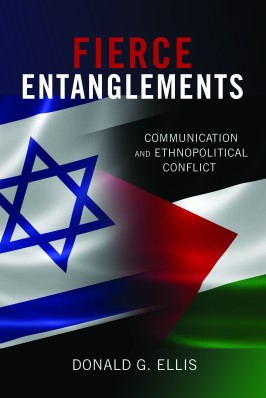
The Israeli-Palestinian conflict remains fiercely entangled and frame management is one way out of the morass.
Now Is the Time to Watch Egypt
If there were a moment in time when I was going to pay particular attention to what’s going on in Egypt, and trying to predict how its future will develop, it would be now. It’s a Monster’s Ball and the only couple dancing is the military and the Muslim Brotherhood (MB). I and others have been warning about the coming Islamic tide and what happens in the next few weeks could be the deciding factor. The elections are today. The public and the protesters in Tahrir square seem to have strong democratic impulses coursing through their veins. They are calling for the military to leave power, civilian control of the military, and limitations on the MB. At the moment, the military seems to be the biggest problem. They have tried to assign themselves special powers and protections under a Constitution including refusing civilian control of the military. How far beyond high school civics does one need to go before they understand the importance of civilian control of the military? Violence against protesters must cease, and security must come under clear civilian rule.
Both the MB and the military are naturally conservative and hierarchical. If Egypt is not careful they will end up with some version of Saudi Arabia – religious conservatism and authoritarian politics. The Central Security Forces have overreacted when trying to clear some protesters and incurred the wrath of many. The protesters have reason to be fearful. The military has been particularly recalcitrant and difficult mostly because they believe they have the support of the Egyptian people, but that support is waning. The military’s attempt to grab sweeping powers and maintain independence above the law is inconsistent with the Arab Spring. Still, the Egyptian “silent majority” may make it possible for the military to prevail. The protesters may have the strongest democratic impulses but their numbers are exaggerated by media coverage.
The MB clearly holds the upper hand and is easily the most influential political party. Their new Freedom and Justice party is well organized and financed and ready to reap gains stimulated by the brotherhood’s outreach and efficient organization. The MB can certainly be hierarchical and conservative but Islam is woven into the fabric of Egyptian society and no future state can ignore it. The brotherhood wants quick elections so that they can consolidate their strengths and begin to work on the nature and structure of the new constitution.
But the future of Egypt will not be represented by the military or the Central Security Forces and certainly not by a dominant controlling Muslim party. If the birth pangs of a new Egypt in Tahrir square are going to bring forth anything viable, than the protesters and the liberal political parties must have sufficient influence when writing a new constitution. The liberal parties want the military to delegate decision-making and to establish a temporary civilian government whose job it will be to put itself out of business; that is, the temporary civilian government will be charged with maintaining order and beginning the process of transitioning to the permanent government.
The structure of today’s elections is one problem. Many liberal voices will be drowned out by the rules of the elections. Groups representing women and minority rights have been pushed to the background and election officials in Egypt have denied the United Nations and other groups access to the election that could help guarantee fairness. The party list technique will mean that smaller groups such as Coptic Christians and liberals will be overwhelmed by larger groups such as the MB. Even smaller Islamic parties, which are often more liberal, will be silenced. Moreover the election reserves a certain number of seats for “workers and farmers” which means that even if smaller more liberal groups managed to win elections they could be sidelined because their seats are guaranteed to other constituencies. This is an election manipulation that has been used in the past to manipulate results.
American historians often point out that the period after the American Revolution is most important because that is when the infrastructure and foundation of America was established. Revolutions are quick, violent, and ideologically eruptive but the legislative processes that follow determine the true nature of the political culture. The same will be true in Egypt. Keep your eye on what is happening now.
Regime Change in Syria
Here’s hoping the Arab spring lasts a little longer so there is time for flowers to bloom in Syria. Regime change in Syria would be a good thing, and it looks like a real possibility. Last week the Arab League decided to suspend Syria’s membership, and to sanction President Assad for his acts of violence. The sense that the Syrian regime is failing to meet the expectations of its people is growing. The list of killed gets longer and human rights group discovered the bodies of 19 people kidnapped. The Syrian government is beginning to panic albeit slightly because they have recently released detainees as a humanitarian effort, including the well-known political activist.
The question becomes what is the next step. Some suggest a Libyan style intervention but the conditions on the ground are sufficiently different to make it unlikely. Other ideas include asking Syria to withdraw its armed forces from various communities, release more political prisoners, and meet with activists to try to solve contentious issues. Still other ideas suggest the UN intervention and the recall of foreign ambassadors.
All of these are a sort of first step which will probably lead to very little change. For now, Syria is requesting meetings with the Arab League mostly in an effort to stall for time. What is particularly incendiary is the fact that most of the Syrian population is Sunni while Syria is closely associated with Shiite Iran. A post Assad government should represent the majority Sunnis but no one expects Iran to tolerate such a representation. Any real transition for the Syrian government will confront the threat of the Muslim brotherhood and the rise of Muslim political parties.
It is too early to start making plans for a new government in Syria. As of now, the rare Arab consensus that led to Syria’s suspension from the Arab League is probably the most hopeful possibility. The decision by the Arab League is a direct confrontation with Assad and can be used for significant pressure. Even though Arab officials have held firmly and claim that their censure is no idle threat, there remains a strong tradition in this area of the world that would discourage any military engagement and surely back off of any direct intervention. This means that the United States will have to take the lead in destabilizing Syria but this also will not be on the White House’s agenda.
Syria is no friend of the United States, except with regard to formal international relations, and has spent its share of time espousing harsh words for the US and the West. But its big brother Iran is an even greater threat. It’s time to see the two of them in tandem. Iran is a world leader in exporting terrorism, is associated with Al Qaeda, and now we have discovered they plotted terrorist attacks on US soil, not to mention their pursuit of nuclear weapons. Confronting Syria and forcing significant change can be a precursor to challenging Iran in a significant manner. Syria has little choice but to continue trying to quash protests but represent itself as a legitimate government. Assad’s competence is increasingly in question in Syria is increasingly isolated. This is a potentially combustible mixture.
Why was Gilad Shalit Released Now?
The curious might speculate about why
Gilad Shalit was released now. He was captured by Hamas in 2006 and has been
held for 5 years in Gaza. The prisoner exchange – one Israeli soldier for more
than 1000 Palestinian prisoners – has been a point of discussion for a long
time. Yes, there were disagreements about who should be released and what
should happen to them after release. Hamas wanted Marwan Barghouti (a brutal
terrorist) released but Israel refused. Other released prisoners were required
to leave the area and settle somewhere other than the West Bank or Gaza. Still,
why now?
The exchange is actually quite
significant and expected to reshape various relationships in the area not to
mention the image of Benjamin Netanyahu. Gilad Shalit had become quite a cause
célèbre in Israel. His parents and tens of thousands of Israeli citizens
petitioned the government to do something about his imprisonment and organized
a large and successful social movement around gaining the release of Gilad. I
can remember once being stuck in a particularly nasty traffic jam on the road
to Jerusalem because of a protest march designed to draw attention to the
plight of Shalit. But as the intensity of the support for Shalit increased, so
did his value to Hamas. The more Israel wanted him returned, the more it was
going to cost them. I suspect that Hamas bided its time until Gilad reached
maximum value. Perhaps the rising tide of support for Shalit’s release ended up
extending his stay in the Hamas jail – although it probably saved his life.
Netanyahu was under considerable pressure
to do something about Shalit. His parents requested audiences with Netanyahu
and poured their hearts out in the media. Netanyahu commands respect amongst
Israelis, and his morally unambiguous and fluent English serves him well in the
United States. But Netanyahu is also seen as harsh and conservative by many and
one who does not care sufficiently about the failure of government to help
people: to improve housing and job opportunities. Gaining Shalit’s release on
his watch gave Netanyahu a serious boost. I suspect that Netanyahu figured it
was time to accept as many Hamas demands as he could stomach. It is also true
that the continual protests demanding Shalit’s release were gnawing at Netanyahu
and diminishing the image and effectiveness of this government.
The “Arab Spring” and the
turmoil in the region also play a hand in this game. Turkey who helped broker
the deal is apparently closer to Hamas then we thought. Although Turkey has
been clearly distancing itself from Israel, its connection to Hamas is
surprising. However, Hamas’s political base in Syria is tenuous given the
protests and perhaps Hamas is looking to Turkey for future relations. The
future of the relationship between Egypt and Israel is cloudy. If the Muslim
brotherhood increases its power Egypt will certainly be less congenial. Perhaps
Netanyahu and his conservative government figured it had something to gain by
acting now.
Finally, Hamas gets to look like it
cares about all Palestinians. The tense relationship between Hamas and the
Palestinian Authority is real. Hamas flatly rejects the existence of Israel and
the Palestinian Authority tries to negotiate with Israel; Hamas disagreed with
the United Nations declaration of statehood move by the Palestinian Authority;
yet, the Palestinian Authority gained the admiration of many Palestinians by
standing up to the Security Council and rejecting the American request to
withdraw the application.
It turns out that this particular moment
in time, this particular confluence of events, created a perfect storm of
issues such that both sides thought it was in their best interest to negotiate.
And that is just what conflict management is all about.
Israelis and Palestinians Should Work Hand-in-Hand at the UN
The commotion over Obama’s mention of 1967 lines was fabricated and perpetrated mostly by those who either oppose a Palestinian state out right or who are unfamiliar with the issues. For an explanation of how the borders can work go here.
The Israelis and the Palestinians are
together at the UN and something good should develop. Let’s look at a variety
of solution alternatives that ultimately lead to the selection of the two-state
solution as the only viable possibility. If both Netanyahu and Abbas are
serious about the peace they spoke so eloquently about then they should do
something about it now. The Israelis and Palestinians should go hand-in-hand to
the United Nations and seize the moment by both agreeing to support the other.
Consider some of the options advanced in the past but continue to drain the
energies of each even though they are not realistic. I will dispatch with a few
of these options quickly because they are nonstarters with no chance of serious
consideration.
Return
to Palestine: This is the Palestinian fantasy that
Israel goes away and historic Palestine is reconstituted. Hamas would support
such a position and seek the goal of an Islamic Palestinian territory free of
the alien contamination of the Jews. No one can imagine Israel simply packing
up and leaving and an insistence on such a position would result only in
violence.
Return
to Judea and Samaria: This is the settler fantasy of
greater Israel. It’s the opposite vision of the one above where the
Palestinians disappear. It calls for Israeli control of all territories in the
Jewish state composed of a minority group that are not citizens. The
Palestinians would return to Jordan and receive Jordanian citizenship. This is
equally as naïve since Palestinians don’t see themselves as Jordanian citizens
and, even more problematic, the Jordanians don’t want them. The solution would
leave many Palestinians homeless, with essentially no place to go. It’s a
recipe for mass confusion and violence.
A
Binational State: this is a position supported by
many on the left – the outskirts of the left – where both Palestinians and Jews
live together happily in a state composed of two dominant groups, Israelis and
Palestinians. This would mean the end of the Jewish state called Israel and of
course would not be a Palestinian state either. Israelis and Palestinians would
form a joint government and political institutions. This solution is also
supposed to solve the problem of Israel’s democracy. Israel cannot call itself
a fully articulated democracy when about 20 % of its citizens are
disenfranchised. The solution also has the problem of eliminating Israel as a
Jewish state. Those who believe any political culture associated with ethnicity
or religion is a remnant of ancient tribalism, from which we have evolved away,
are sympathetic to this position. This solution would probably exacerbate the
problem rather than resolve it. The disagreements and conflicts between the two
cultures would intensify and probably result in violence. This solution is
equally as naïve. It means the loss of a Jewish state as well as no state for
the Palestinians. The issues of Hamas in Gaza would be very difficult to
imagine. Israel also worries about the demographic factor; that is, over time
the population of Palestinians would overwhelm the Jewish population.
None of these solutions are realistic or
even in the realm of possibility in some cases. The two state solution is crucial
and the answer to the problems of both cultures. Neither side will get
everything it wants, but that’s how compromise and conflict resolution work.
The peace process has disintegrated, the spirit of Oslo has dissipated, and the
two sides engage in continual mistrust and blame. If the two state solution is
not implemented soon Israel will continue to be at a disadvantage with respect
to the demographic argument, international opinion, and security. True, there
is much yet to be worked out such as refugees, borders (see below), and rights of
return but this is what renewed peace talks must take up.
What
Should Happen: Israel must reverse course and support
the Palestinian aspirations. But do it on some preconditions. The first
precondition is that Palestinians return to the table and begin final status
discussions. Secondly, the Palestinians must agree to bilateral negotiations.
Third, both states must be recognized; that is, Israel as Jewish and Palestine
as the home of the Palestinians. Once issues such as refugees have been
resolved, and once the Palestinians accept a two state solution, they should
have no trouble recognizing Israel as “Jewish.”
The two state solution should affirm the
right of self determination for both Jews and Palestinians, and all historic
claims, and agree on territorial swaps and security arrangements that satisfy
both parties. Israel should assist the Palestinians with further security
developments in the West Bank, and settlement development, and freeze
construction of the security wall. The Palestinians should refrain from
international campaigns against Israel and reject the extreme positions
associated with Hamas.
Two states – one Jewish and one
Palestinian – are inevitable. It’s the only solution to the problem and the one
accepted by the majority of both Israelis and Palestinians. Israel should
support the Palestinians and get on with it.
Top 10 Reasons Why the Palestinian UN Resolution Should Be Discouraged
Two posts ago on September 6, I wrote
that the Palestinians were frustrated and expressed a certain amount of
sympathy with his frustration. Numerous commentators and pundits have made
the same point. Yet it remains the case that the UN resolution to declare
Palestine a state is seriously problematic and going to cause more trouble than
it’s worth. The list below just briefly highlights the potential problems:
- It will void the Oslo agreement,
which held that all decisions must be the result of bilateral negotiations
between Israel and Palestine. Even though Oslo is moribund, it provides a
framework for discussion and expectations. Sets of agreements that have
stimulated cooperation (such as security) will be in jeopardy. - It will inflame both the Israelis
and the Palestinians (albeit for different reasons) but could still result in
violence. The proposed Palestinian state will be like no state imagined by
Israelis. It will make it difficult for Israelis to control their own religious
sites, settlement blocs, and various other resources. This declaration could
create a very difficult atmosphere that triggers an Israeli or a Palestinian
backlash. - Whatever borders the resolution
declares will automatically define Israel as an occupier with no jointly
recognized outlets for resolution. But on the Palestinian side it would fix
their boundaries and make future boundary negotiations difficult. A unilateral
declaration of any boundary is by nature illegitimate. - The Palestinians will give up
their claim of being a stateless people, a status that has benefited them. The
Palestinians lose their international moral standing if the conflict becomes one
of simply border disputes. The PLO, according to one Palestinian consultant,
will lose its legal status as a representative of the Palestinian people. After
a state is declared refugees outside the boundaries of that state would be left
without recourse. - There is at this moment minimal
unity between Hamas and Fatah and hence the Palestinian state will include
about 40% of the West Bank. This leaves portions of the West Bank, East
Jerusalem, and Gaza, in the hands of Hamas. This is nothing but a combustible
situation that could explode at any time. - Interestingly, it is the Israelis
who have typically been blamed for acting unilaterally. It is now the
Palestinians who are acting unilaterally and if they set expectations that
cannot be met and the situation will be even worse. - The current security on the
ground is a real success for the Israeli-Palestinian conflict. It is essential
for any progress and has been the result of Israeli-Palestinian cooperation. If
the UN resolution results in the loss of this cooperation, then everyone’s
efforts will have been in vain. - It’s curious that in 2003 the
Palestinians were offered the opportunity to establish the state first, and
negotiate final status agreements later. They rejected this proposal because
they figured that they would lose negotiating power by establishing a state
without final status issues being resolved. Now, they have reversed course and
are pursuing this very goal but doing it outside the confines of agreements
with others. This seems to be to their own disadvantage. - The majority of Israelis support
a two state solution. The two state solution is very important and the only
sensible solution which can guarantee the national identity and dignity of both
sides. But such a solution must be the result of direct negotiations and
agreements between Israelis and Palestinians. This unilateral action
jeopardizes the two state solution, and might cause an Israeli diminution of
support. - Finally,
Israel puts its friend the United States in a difficult position and increases
the alienation and isolation from the Arab world. But the Palestinians are also
alienating a potential friend in the United States. Currently, the US is more
supportive of Palestinian interests than ever before. This unilateral
resolution interferes with the Palestinian US relationship.
Palestinian frustration with Israel –
Netanyahu in particular and the right-wing coalition – is justified. And the
two state solution is the only way to preserve the idea of real peace. It’s
crucial that the two states be established and Israel begin the process of
developing itself as a Jewish state alongside the Palestinians. The existence
of two states serves the interests of both parties – not to mention the
positive implications for the Middle East and the world. The two sides must
find a path back to negotiations, paths that cross one another and do not head
off on their own.
Next week, a modest solution proposal.



 Peace and Conflict Politics