Category Archives: Political Conflict
Me Talk Prettier Than You: Elite and Popular Discourse


One of the divides that has emerged more starkly from the Brexit debate and the candidacy of Donald Trump is the distinction between elite and popular discourse. Just being overly general for the moment, elite discourse is most associated with the educated and professional classes and is characterized by what is considered to be acceptable forms of argument, the use of evidence, the recognition of complexity, and articulation. Popular discourse is more ethnopolitical and nationalistic. It is typically characterized by binary thinking, a simpler and more reductive understanding of the issue, and an ample amount of cognitive rigidity makes it difficult to change attitudes. To be sure, this is a general characterization because both genres are capable of each.
Still, consistent with the well-known polarization of society is the withdrawal of each side into a comfortable discourse structure where the two codes are increasingly removed from one another and the gap between them cannot be transcended very easily.
Additionally, elite and popular discourses share some different sociological and economic orientations. Elites are more cosmopolitan and popular is more local and nationalistic. Elites live in more urban centers and are comfortable with and exposed regularly to diversity. Those who employ more popular discourse tend to live in smaller towns and are more provincial. They seem to resist cultural change more and are less comfortable with diversity.
These two orientations toward language divide the leave-remain vote over Brexit and the electorate that characterizes the differences between Clinton and Trump. But this distinction is more than a socioeconomic divide that reflects some typical differences between people. It symbolizes the polarization currently characterizing American politics and has the potential to spiral into dangerous violence as the “popular” form of discourse becomes more “nationalistic.” It lowers the quality of public discourse and typically degenerates into even more rigid differences and stereotypical exemplars of elite and popular discourse. Nationalist discourse substitutes close minded combativeness for elite debate which can be passionate but is geared toward deliberative conversation that can be constructive. Nationalism is the deep sense of commitment a group has to their collective including territory, history and language. When national “consciousness” sets in then one nation is exalted and considered sacred and worthy of protection even in the face of death. Trump’s catchphrase “make America great again” or “let’s take our country back” or his appeals to separation and distinctiveness by building walls that clearly demark “us” and “them” are all examples of a nationalist consciousness that glorifies the state.
The nationalism espoused by Trump and the “leave” camp during Britain’s vote on the EU question are the primary impediments to consolidating, integrating, and strengthening democracies. All states with any sort of diverse population must establish a civil order that protects those populations; that is, no society will remain integrated and coherent if it does not accommodate ethnic diversity. At the moment, Trump’s rhetoric is divisive and representative of a tribal mentality that clearly wants to separate in many ways various communities in the US. Trump’s references to Mexicans, Jews, Muslims, for example betrays his own nationalistic sentiments.
The two ways to handle ethnic diversity are either pluralistic integration or organizational isolation of groups. Isolating and separating groups is inherently destabilizing and foment ripe conditions for violence. Building a wall and making determinations about who can enter the United States and who can’t are all examples of isolating groups. Intensifying nationalist discourse and the privileging of rights for a dominant group is fundamentally unsustainable.
This gap in the United States between an elite discourse and the nationalist discourse has grown wider and deeper. Each side snickers at the other’s orientation toward language and communication and continues the cycle by reinforcing the superiority of his own discursive position.
Religion and Foreign Policy

In the modern era religion has played a relatively small or insignificant role in foreign policy, especially among academics and professionals. International relations are assumed to be subject to rational processes and the primary motivating force is not religion but maximization of gain and minimization of loss.
But the Iranians following the revolution of 1979 have been the first significant departure from this trend. Iranians have defined themselves as fundamentally Islamist and any effort to organize against them, any war or confrontation, is considered an attack on Islam. Global jihad and pressures on other Islamic countries not to partner with non-Muslim governments are part of the growing entanglements between foreign-policy and religion.
The United States is oblivious, and I don’t mean that as a compliment, to issues in religion in foreign policy. They miss theological underpinnings all the time and have naïvely misread and failed to grasp incidents such as the Iranian revolution, Islamists objections to our presence in Saudi Arabia, all while we blithely armed Islamists in Afghanistan because we thought we were thwarting communism. Even our efforts at democracy promotion have failed in the face of confrontations with religious tenets that we fail to understand, ignore, and consider to be little more than inconsequential background.
And probably the biggest blind spot for the United States has been the published documents by ISIS and Al Qaeda members detailing terrorism with a vision of Islam. These documents make reference to the creation of a global caliphate; foment a religiously apocalyptic narrative; and use religious motivations to recruit young believers. The US continues to fight the war on terrorism as a military and security matter and not a religious one. Theology animates ISIS such that killing them only creates more committed actors who will find new ways to subvert their enemy, namely, the US.
Interestingly, it is a form of political correctness that keeps the US from acknowledging the theological underpinnings of terrorism or any other foreign policy with a basis in religion. What I mean is that American leaders do not want to be perceived as attacking Islam or being critical of Islam even if it is religious tenets rooted in Islam that justifies violence in its name. Secretary of State John Kerry and Obama might refer to gun laws, history, morals, economic deprivation, or some aberration but they never tie violence or some aggressive behavior by another group directly to theological principles of Islam. I can understand the delicate diplomatic position of the President of the United States such that he does not want to prance around the world condemning world religions. In fact, organizations like ISIS want to divide the world into Muslims and non-Muslims and blaming entire religions would play right into their hands. They succeed at this to the extent that the US blames Islam or gets involved in military actions on land that is considered caliphate. Still, our policies will be ineffectual to the extent that they fail to consider religion in foreign policy.
It is not easy for the United States to all of a sudden adopt religious oriented policies or even to begin to use the language of religion in an effort to appease or seek a superficial identification with another political entity. That is why we must find other ways to weaken their theological basis. This includes empowering natural enemies, and providing improved social and economic progress in contested areas. We’re also losing the propaganda or information war as these religious oriented policies spread their beliefs. Organizations like ISIS and countries like Iran clearly embrace religion as part of foreign-policy. In the end, if we are to make progress in the information war we are probably left with Justice Brandeis’s adage about how “the remedy for bad speech is more speech.”
The Sunni-Shia Divide and Modern Consequences
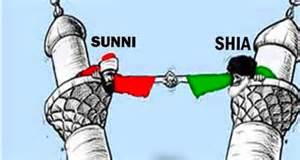
Mohammed revealed his new faith in 610 and it was known as Islam or submission to God. He gathered followers quickly and by the time of his death in 632 had set the stage for the building of an empire. But the Sunni-Shia divide was the result of disagreement over future leadership. The disagreement was simple. The Shia believe that only the descendents of Mohammed could rule, and the Sunni believe that being part of Mohammed’s bloodline was not necessary. The Sunni were more powerful and have a long history of persecuting Shia.
There were further splits within the Shia (e.g. “the Twelvers”), the details of which are not of concern here, but the result is the modern-day distribution of majority Shia in Iran, Iraq, Azerbaijan, and Bahrain and about 40 countries are Sunni.
This modern ethnoreligious conflict
The current sectarian and political differences between the two are due in no small part to the Ayatollah Khomeini in Iran who instituted an Islamic government based on Shia religious principles. Organizations like Hamas and the Muslim Brotherhood are Sunni and do not accept such a version of Islam. Saudi Arabia, a Sunni country, recently sent troops into Yemen (a key strategic concern to the United States) to repel Iranian supported agitators as well as the Houthis. Yemen shares a border with Saudi Arabia. And some scholars have argued that the Sunni puritanical sect known as Wahhbism was in response to Shia Iran. The tensions in Yemen, the Iran-Iraq war in 1980-1988, and the organization of militants in Afghanistan to fight the Soviet Union are all the result of Sunni-Shia tensions. And you might recall that Saddam Hussein was a Sunni ruling over a majority of Shia. Iran supports Bashar al-Assad even though he is an Alawite and a member of the Shia minority sect.
Sunni and Shia governments constantly worry about their grip on power, especially in the wake of protest movements in places like Tunisia and Egypt. The Arab awakening has spread along the sectarian divide especially when minority sects are the ruling power. This is true in Bahrain where Shia are the majority but there is a Sunni ruling family, and of course the Alawite in Syria rule over a Sunni majority. The Civil War in Syria is a classic sectarian tension and a proxy war between Sunni and Shia powers.
These authoritarian regimes, especially where a minority religious group rules over a majority, rely on authoritarian governments closely aligned with their military to maintain the order. These authoritarian governments are sometimes preferred because they result in stability. Sometimes leading scholars even suggest that these cultures are not going to be receptive to American reforms especially with respect to democracy creation. Consequently, they argue for the desirability of authoritarian regimes as illiberal as they are. But the Arab Awakening must be explained. Surely cultural, technological, and economic factors can be a combustible mixture. The Sunni and the Shia provide the spark for this mixture and bubble underneath most political change in the Arab world.
ISIS is for Real
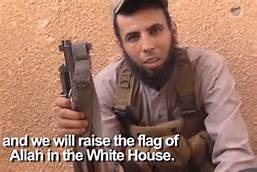 After drawing attention in last week’s post to the Scott Atran article on how ISIS is a genuine revolution and should be taken seriously, I had a friend observe that I sounded more like a conservative than in the past. It sounded more like I was taking ISIS seriously and perceived them as a genuine threat. I had posted once before (see entry for October 31, 2015) that ISIS was failing and underperforming. This was interpreted by some as not taking ISIS seriously and assuming that they were some sort of upstart movement that would die out easily and quickly.
Nothing could be further from the truth. I agree with Scott Atran that ISIS is a “real” revolution, that it is growing and increasingly attractive to many, that something should be done about it, and whatever we are doing now is probably not sufficient. Unlike many of the Obama haters I do not consider his patience, diplomacy, and slower hand to be signs of weakness. But there was recently a story in the New York Times making essentially the same point. What we are doing now to fight ISIS is not sufficient, but we should be approaching the problem from the long-game perspective and ultimate victory will take time.
ISIS’s violence is transcendental in that it is appeals to a sense of the sublime and gives serious meaning to its adherents with respect to their own destiny, power, and sense of the ultimate. ISIS does not need to see itself as composed of overwhelming numbers. No, it sees itself as a revolutionary vanguard leading the masses and informing them about what is to come. ISIS seeks a tremendous transformation. And the sublime appeal should not be taken lightly. ISIS is increasingly credited with technological and political sophistication and seems to be appealing to the 18-24-year-old group who report that they have some favorable attitudes towards ISIS. This is especially true among the downtrodden whose anger fits nicely into ISIS’s co-option of this anger. And, as Atran points out, these young people attracted ISIS are more willing to fight and engage in violence to defend principles they are not even sure of than are other young people willing to fight and defend democratic values against an onslaught.
ISIS is emerging as consistent with historical revolutions (e.g. French Revolution) where an abstract but powerful commitment to a spiritual force justifies about anything. Visions of universal equality or economic fairness have held equally as powerful sway as have dreams of the future governed by sharia law.
Finally, the rhetorical skills of ISIS and AQ must not be underestimated. They have, for example, reconstructed the concept of a caliphate – a political concept challenged by many historians – as an alternative to a meaningless material world. The caliphate justifies an expanded notion of jihad and holy war against infidels. ISIS leaders have changed maps and bulldozed territorial boundary signs as the remnant of Western colonialism and Sykes Picot rather than holy land that will be part of the caliphate.
Talking to ISIS will probably be futile for some time to come. The two sides are classically incommensurate in that the West engages in moral disagreement from a pragmatic perspective that is without foundational principles. And ISIS is steeped in Islamic foundational principles that are generative of its discourse. Perhaps one day there will be sufficient bridging discourse that the two sides have at least initial commonalities that can strengthen the bridge rather than only the supporters on each side.
Future Work in Deliberation Will Tackle the Problem of Religiously and Ethnically Divided Societies
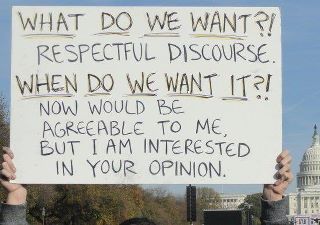 One of the biggest tensions in both politics and culture is the balance between membership in an ethnic community and the sense of belonging it provides versus a more capacious mentality with respect to respecting democratic ideals of inclusiveness and fairness. Many current cultural and political problems trace their roots to multicultural situations and settings where social cohesion is lost as settings become more diverse. Consequently, politics is essentially about the management of differences. And one of the most difficult differences to manage is ethnic identity which offers a strong sense of belonging but is quite dumbfounded when it comes to developing intergroup cooperation and an identity sufficiently broad enough to include both sides of a conflict.
The “received” deliberative democracy literature is mostly broad and normative focusing on abstractions about how to reconcile differences in a democratic manner. But one of the underappreciated difficulties of the more theoretical approach to deliberation is that it fails to sufficiently embrace the matter of power asymmetries. These are when values and interests are deeply entrenched and inequality is part of the natural state of affairs between two groups such that one side is economically and militarily superior.
The first and most important question is how one imagines deeply divided societies or groups coming together. Ethnopolitically divided societies might live near each other and tolerate a side-by-side existence, but they can’t share trust and a sense of community. The two sides must ultimately work to transform the context, the individuals, and their cultural differences in order to create a relationship rooted more in mutuality than rank group identification. On one level, this involves transforming identities – which is theoretically possible because identities are described as social constructions which means they can be constructed, deconstructed, and reorganized. This is the transformative and epistemic sense of deliberation which believes in the gradual process of creating new relationships and shared communities. Again, the question remains as to how this transformation happens. Or, what is the mechanism or interaction pattern responsible for achieving this new state of affairs.
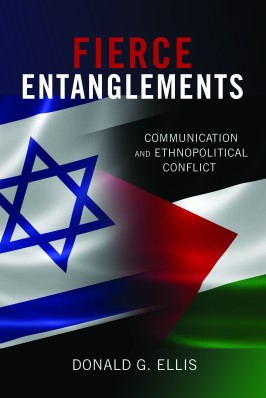
Rigorous and serious deliberation is an antidote to communication based on bargaining, trading off interests, and manipulations designed to achieve private goals. Deliberation is about interest and preference formation. But in the case of deliberation for divided societies power asymmetries must be accounted for. In fact, it makes little sense to ignore just the defining issue that is the root of the conflict. Differences between divided societies are usually moral and cultural in nature but it is close to impossible to arrive at moral consensus between ethnopolitically separated groups. This is where what I call “Reasonable Disagreement” (Chapter 3 in my most recent book Fierce Entanglements: Communication and Ethnopolitical Conflict) can be helpful. Reasonable disagreement – the details of which are beyond the concerns of this posting – begins by treating the other not as an enemy but as an adversary as Iris Young argues. Reasonable disagreement is simply the assumption that there is more than one defensible way to make an argument or hold a belief. It recognizes that one group’s worldview is not necessarily or clearly superior or correct. There is simply no way to manage differences and develop cultural sensitivity between groups without their remaining gaps of meaning and understanding that simply must be tolerated.
Viewing the other side of a divided society as an “enemy” requires vanquishing him or her because the other side is typically considered wrong and worthy of annihilation (either literally or symbolically). “Adversaries”, on the other hand, are respected worthy opponents that cannot be thoroughly vanquished. Reasonable disagreement has two senses: the first is as a political value to be nurtured and developed in a democratic society. It is a foundational plank of the requirements for tolerance and diversity in liberal democratic societies. The second sense is as an epistemic value responsible for new and creative decision-making.
I think the challenges of ethnopolitically divided societies are going to be the subject of increasing research and theoretical attention in the future – and rightfully so.
Language and its Power

Language certainly has the power to direct you towards pre-selected portions of reality. It makes it possible for false comparisons and confusion over categories of meaning. For example, there is a common statement that circulates in the public that is not only a facile generality but dangerous. If you actually believe this statement, if you are ensnared by its rhetorical trickery and literally accept the two propositions as being equal, then it reveals you as a less than rigorous thinker who cannot recognize or make important distinctions. If you accept the equivalence of the two propositions you are likely to put yourself and others in danger by being paralyzed with an inability to act and justify definitional clarity that allows for clear decision-making. The dangerous cliché I’m talking about is:
One man’s terrorist is another man’s freedom fighter.
If you believe this then Osama bin Laden and Al Qaeda are the same as what might be considered a defensible national liberation movement. The semantic foundation of the cliché implies that nothing matters except perspective. It’s a cliché championed by terrorists because they want to present their own causes as positive and justified. And the logical extension of this thinking is that no violent act can be too odious because it is all in the service of national liberation. Terrorists love this phrase because it blurs the distinction between goals and the means to achieve the goals, when in fact no political movement can serve as a justification for terrorism.
This issue has emerged again given the events in Paris. And interestingly, ISIS is so extreme there has been very little political justification for their violence.
This cliché cannot stand and we need more political leaders and public intellectuals to condemn it. There needs to be public discussion and argument. Freedom fighters who are truly struggling against oppression do not kill innocent people and sow panic and confusion – murderers do. Why would the democracies and liberal political regimes around the world allow the word “freedom” to be used in this way? ISIS does not bring freedom they carry fear and oppression. The best reading on this is by Boaz Ganor and can be found here. It is crucial to make the distinction between terrorism and national liberation.
Let’s try to be a little clearer about terrorism. As Ganor describes, terror is (1) violent. Peaceful protests and demonstrations are not terrorism. Terrorism is (2) political. Violence without politics is simply criminal behavior. And (3) terrorism is against civilians with the goal of creating fear and confusion. It mixes with the media to produce anxiety. So what is not terrorism? Terrorism is not accidental collateral damage when the original target is military. Using citizens as shields places the onus of responsibility on those manipulating the citizenry, not those who initiated the attack if it was against a military target. It is also important to recognize those situations where targets of violence are clearly military and uniformed soldiers. Using guerrilla tactics does not necessarily mean terrorism.
It is important, too, that motives be taken into consideration. The real thorny problem is the idea that any form of national liberation – believed sincerely by a presumably oppressed group – justifies violence that is not considered terrorism. This perpetuates the dangerous relativism of the cliché. The hard mental work of distinguishing terrorism from other forms of violence is important if we are going to pass legislation to protect the public, have effective international cooperation, and assist those states struggling with terrorism.
If enough people genuinely accept this relativist cliché then all bets are off. Any sort of violence can be justified and the international community will have a collective shrug of its shoulders essentially saying, “who cares” because someone considers the violent group “freedom fighters” wrapped in vacuous rhetoric designed to justify violence. As difficult as it is to fashion a precise definition of terrorism, it is equally as difficult to imagine accepting ISIS and jihadist attacks against the French as the work of “freedom fighters.”
Note: This post was first published December 23, 2013
Essentialism: Gender and Islam


 Look at the top picture first and notice the little boy in the wheelchair. He is clearly defined as “different” from the other children and is both spatially and psychologically defined by the chair. He is separate from the class and the chair fundamentally defines him. Now look at the bottom picture. The same little boy is on the right in the stripped sweater. The chair does not define his essence.
The basic tenet of psychological essentialism is the idea that humans have a core belief that unobservable essences are causally responsible for the surface features (behaviors) we observe. As such, the world is divided up into essences from which behaviors can be inferred. It’s the belief in an underlying reality or a true nature that cannot be observed.
At its ugliest, essentialism applied to ethnic groups is a form of racism because we assume that all members of a particular group share an unchangeable core reality with respect to physical or intellectual proclivities. It’s a pretty aggressive verbal attack to accuse someone of essentialism – especially in academia. Note what happened to Larry Summers, then President of Harvard, when he suggested that the scarcity of women in science and engineering might be because of gender differences in intrinsic aptitude. There was an outcry of protest and he no longer holds his coveted position. Moreover, if you believe someone’s behavior is governed by an essentialist property then other avenues of inquiry or explanation are eliminated. Why care about other explanations–social, economic, familial, political, educational–when this unseen essentialist quality explains everything.
Psychological essentialism can function as a “placeholder” in that one can believe that a given category possesses an essence without knowing what the essence is. Seen this way essentialism is a reasoning heuristic. But the reasoning is bad reasoning. The essentialist quality is mysterious and unknown and usually evolved as a result of inductive experiences that lead to mostly unjustified generalities.
One of the most common responses to essentialists is to pose a cultural explanation. But that has become problematic because it trades one orthodoxy for another. The essentialization of culture is no different than the essentialization of women or any other category. Women, for example, have been overgeneralized to the private sphere; that is, their domestic duties have been justified by essentialist explanations. They are assumed to be homogeneous. This has sanctioned the economic and sexual exploitation of women along with a host of distorted opinions, discriminatory practices, all known to be old-fashioned sexism.
In response feminist groups have demanded respect for the diversification of women and recognition of cultural differences resulting in categories such as “African Women,” “Muslim Women,” “Western Women,” “Third World Women,” and the like. These new cultural categories represent a homogeneous collection of heterogeneous people.
There is a conundrum in the feminist literature that depends on belief in women sharing certain properties but also seeks diversity and recognition for individuality. The feminists’ widespread rejection of essentialism has threatened to undermine feminist politics.
How legitimate is it to affix the modifier “Islamic” to some noun. Is there such a thing as “Islamic terrorism?” What essence are we drawing on when we refer to “Islamic art,” “Islamic politics,” “Islamic philosophy,” and “Islamic culture?” Do Islam, or Christianity, or Judaism, have an essence? Irfan Khawaja in his article on essentialism and Edward Said’s Orientalism, asked the question “how can one possibly talk about a single essence of Islam when what we see is irreducible variety?” Said goes about the business of claiming an essence for Orientalism while at the same time philosophically challenging essentialism.
In the end, essentialism is truly a psychological phenomenon in that we believe in essences because they are composed of a logic attributable to the “psyche.” The human belief in essences that represent terminal explanations becomes so reductionist that they are soon reduced to nothing.

9 Headlines You Will See in the Future
The below is from Tom Englehart and I thought it was particularly good and deserving of distribution so I reproduce it here on my blog. Tom runs TomDispatch.com and there’s information at the end of the text if you would like exposure to more of Tom’s thinking. Tom’s point in the second paragraph is well taken – whoever thought we would be on our way to a caliphate that out maneuvers us in social media. I think the issues for what America has to learn are pertinent.
Writing History Before It Happens
Nine Surefire Future Headlines From a Bizarro American World
By Tom Engelhardt
It’s commonplace to speak of “the fog of war,” of what can’t be known in the midst of battle, of the inability of both generals and foot soldiers to foresee developments once fighting is underway. And yet that fog is nothing compared to the murky nature of the future itself, which, you might say, is the fog of human life. As Tomorrowlands at world fairs remind us, despite a human penchant for peering ahead and predicting what our lives will be like, we’re regularly surprised when the future arrives.
Remind me who, even among opponents and critics of the Bush administration’s invasion of Iraq, ever imagined that the decision to take out Saddam Hussein’s regime and occupy the country would lead to a terror caliphate in significant parts of Iraq and Syria that would conquer social media and spread like wildfire. And yet, don’t think that the future is completely unpredictable either.
In fact, there’s a certain repetition factor in our increasingly bizarro American world that lends predictability to that future. In case you hadn’t noticed, a range of U.S. military, intelligence, and national security measures that never have the effects imagined in Washington are nonetheless treasured there. As a result, they are applied again and again, usually with remarkably similar results.
The upside of this is that it offers all of us the chance to be seers (or Cassandras). So, with an emphasis on the U.S. national security state and its follies, here are my top nine American repeat headlines, each a surefire news story guaranteed to appear sometime, possibly many times, between June 2015 and the unknown future.
1. U.S. air power obliterates wedding party: Put this one in the future month and year of your choice, add in a country somewhere in the Greater Middle East or Africa. The possibilities are many, but the end result will be the same. Dead wedding revelers are a repetitious certainty. If you wait, the corpses of brides and grooms (or, as the New York Post put it, “Bride and Boom!”) will come. Over the years, according to the tabulations of TomDispatch, U.S. planes and drones have knocked off at least eight wedding parties in three countries in the Greater Middle East (Iraq, Afghanistan, and Yemen) and possibly more, with perhaps 250 revelers among the casualties.
And here’s a drone headline variant you’re guaranteed to see many times in the years to come: “U.S. drone kills top al-Qaeda/ISIS/al-Qaeda in the Arabian Peninsula/[terror group of your choice] leader” — with the obvious follow-up headlines vividly illustrated in Andrew Cockburn’s new book, Kill Chain: The Rise of the High-Tech Assassins: not the weakening but the further strengthening and spread of such organizations. And yet the White House is stuck on its drone assassination campaigns and the effectiveness of U.S. air power in suppressing terror outfits. In other words, air and drone campaigns of this sort will remain powerful tools not in a war on terror, but in one that creates terror with predictable headlines assured.
2. Latest revelation indicates that FBI [NSA, CIA] surveillance of Americans far worse than imagined: Talk about no-brainers. Stories of this sort appear regularly and, despite a recent court ruling that the NSA’s mass collection of the phone metadata of Americans is illegal, there’s every reason to feel confident that this will not change. Most recently, for instance, an informant-filled FBI program to spy on, surveil, and infiltrate the anti-Keystone XL Pipeline movement made the news (as well as the fact that, in acting as it did, the Bureau had “breached its own internal rules”). In other words, the FBI generally acted as the agency has done since the days of J. Edgar Hoover when it comes to protest in this country.
Beneath such reports lies a deeper reality: the American national security state, which has undergone an era of unprecedented expansion, is now remarkably unconstrained by any kind of serious oversight, the rule of law, or limits of almost any sort. It should be clear by now that the urge for ever more latitude and power has become part of its institutional DNA. It has already created a global surveillance system of a kind never before seen or imagined, not even by the totalitarian regimes of the last century. Its end goal is clearly to have access to everyone on the planet, Americans included, and every imaginable form of communication now in use. There was to be a sole exception to this blanket system of surveillance: the official denizens of the national security state itself. No one was to have the capacity to look at them. This helps explain why its top officials were so viscerally outraged by Edward Snowden and his revelations. When someone surveilled them as they did others, they felt violated and deeply offended.
When you set up a system that is so unconstrained, of course, you also encourage its opposite: the urge to reveal. Hence headline three.
3. FBI [NSA, CIA, DIA, or acronym of your choice] whistleblower charged by administration under the Espionage Act for revealing to reporter [any activity of any sort from within the national security state]: Amid the many potential crimes committed by those in the national security state in this period (including torture, kidnapping, illegal imprisonment, illegal surveillance, and assassination), the record of the Bush and Obama administrations is clear. In the twenty-first century, only one act is a crime in official Washington: revealing directly or indirectly to the American people what their government is doing in their name and without their knowledge. In the single-minded pursuit and prosecution of this single “crime,” the Obama administration has set a record for the use of the Espionage Act. The tossing of Chelsea Manning behind bars for 35 years; the hounding of Edward Snowden; the jailing of Stephen Kim; the attempt to jail CIA whistleblower Jeffrey Sterling for at least 19 years (the judge “only” gave him three and a half); the jailing of John Kiriakou, the sole CIA agent charged in the Agency’s torture scandal (for revealing the name of an agent involved in it to a newspaper reporter), all indicate one thing: that maintaining the aura of secrecy surrounding our “shadow government” is considered of paramount importance to its officials. Their desire to spy on and somehow control the rest of us comes with an urge to protect themselves from exposure. As it happens, no matter what kinds of clampdowns are instituted, the creation of such a system of secrecy invites and in its own perverse way encourages revelation as well. This, in turn, ensures that no matter what the national security state may threaten to do to whistleblowers, disclosures will follow, making such future headlines predictable.
 4. Contending militias and Islamic extremist groups fight for control in shattered [fill in name of country somewhere in the Greater Middle East or Africa] after a U.S. intervention [drone assassination campaign, series of secret raids, or set of military-style activities of your choice]: Look at Libya and Yemen today, look at the fragmentation of Iraq, as well as the partial fragmentation of Pakistan and even Afghanistan. American interventions of the twenty-first century seem to carry with them a virus that infects the nation-state and threatens it from within. These days, it’s also clear that, whether you look at Democrats or Republicans, some version of the war-hawk party in Washington is going to reign supreme for the foreseeable future. Despite the dismal record of Washington’s military-first policies, such power-projection will undoubtedly remain the order of the day in significant parts of the world. As a result, you can expect American interventions of all sorts (even if not full-scale invasions). That means further regional fragmentation, which, in turn, means similar headlines in the future as central governments weaken or crumble and warring militias and terror outfits fight it out in the ruins of the state.
5. [King, emir, prime minister, autocrat, leader] of [name of U.S. ally or proxy state] snubs [rejects, angrily disputes, denounces, ignores] U.S. presidential summit meeting [joint news conference, other event]: This headline is obviously patterned on recent news: the announcement that Saudi King Salman, who was to attend a White House summit of the Gulf states at Camp David, would not be coming. This led to a spate of “snub” headlines, along with accounts of Saudi anger at Obama administration attempts to broker a nuclear peace deal with Iran that would free that country’s economy of sanctions and so potentially allow it to flex its muscles further in the Middle East.
Behind that story lies a far bigger one: the growing inability of the last superpower to apply its might effectively in region after region. Historically, the proxies and dependents of great powers — take Ngo Dinh Diem in Vietnam in the early 1960s — have often been nationalists and found their dependency rankling. But private gripes and public slaps are two very different things. In our moment, Washington’s proxies and allies are visibly restless and increasingly less polite and the Obama administration seems strangely toothless in response. Former President Hamid Karzai in Afghanistan may have led the way on this, but it’s a phenomenon that’s clearly spreading. (Check out, for instance, General Sisi of Egypt or Prime Minister Netanyahu of Israel.) Even Washington’s closest European allies seem to be growing restless. In a recent gesture that (Charles de Gaulle aside) has no companion in post-World War II history, England, Germany, and Italy agreed to become founding members of a new Chinese-led Asian regional investment bank. They did so over the public and private objections of the Obama administration and despite Washington’s attempts to apply pressure on the subject. They were joined by other close U.S. allies in Asia. Given Washington’s difficulty making its power mean something in recent years, it’s not hard to predict more snubs and slaps from proxies and allies alike. Fortunately, Washington has one new ally it might be able to count on: Cuba.
6. Twenty-two-year-old [18-year-old, age of your choice] Arab-American [Somali-American, African-American or Caucasian-American convert to Islam] arrested for planning to bomb [drone attack, shoot up] the Mall of America [Congress, the Empire State Building, other landmark, transportation system, synagogue, church, or commercial location] by the FBI thanks to a Bureau informer: This is yet another no-brainer of a future headline or rather set of headlines. So far, just about every high-profile terror “plot” reported (and broken up) in this country has involved an FBI informer or informers and most of them have been significantly funded, inspired, or even organized by that agency right down to the fake weaponry the “terrorists” used. Most of the “plotters” involved turned out to be needy and confused losers, sometimes simply hapless, big-mouthed drifters, who were essentially incapable, whatever their thinking, of developing and carrying out an organized terror attack on their own. There are only a few exceptions, including the Boston Marathon bombing of 2013 and the Times Square car bombing of 2010 (foiled by two street vendors).
What the FBI has operated in these years is about as close as you can get to an ongoing terrorism sting-cum-scam operation. Though Bureau officials undoubtedly don’t think of it so crudely, it could be considered an effective part of a bureaucratic fundraising exercise. Keep in mind that the massive expansion of the national security state has largely been justified by the fear of one thing: terrorism. In terms of actual casualties in the U.S. since 9/11, terrorism has not been a significant danger and yet the national security state as presently constituted makes no sense without an overwhelming public and congressional fear of terrorism. So evidence of regular terror “plots” is useful indeed. Publicity about them, which runs rampant whenever one of them is “foiled” by the Bureau, generates fear, not to say hysteria here, as well as a sense of the efficiency and accomplishment of the FBI. All of this ensures that, in an era highlighted by belt-tightening in Washington, the funds will continue to flow. As a result, you can count on a future in which FBI-inspired/-organized/-encouraged Islamic terrorism is a repeated fact of life in “the homeland.” (If you want to get an up-close-and-personal look at just how the FBI works with its informers in the business of entrapping of “terrorists,” check out the upcoming documentary film (T)error when it becomes available.)
7. American lone wolf terrorist, inspired by ISIS [al-Qaeda, al-Shabab, terror group of your choice] videos [tweets, Facebook pleas, recordings], guns down two [none, three, six, other number of] Americans at school [church, political gathering, mall, Islamophobic event, or your pick] before being killed [wounded, captured]: Lone wolf terrorism is nothing new. Think of Timothy McVeigh. But the Muslim extremist version of the lone wolf terrorist — and yes, Virginia, there clearly are some in this country unbalanced enough to be stirred to grim action by the videos or tweets of various terror groups — is the new kid on the block. So far, however, among the jostling crowds of American lone mass murderers who strike regularly across the country in schools, colleges, movie theaters, religious venues, workplaces, and other spots, Islamic lone wolves seem to have been a particularly ineffective crew. And yet, as with those FBI-inspired terror plots, the Islamic-American lone wolf turns out to be a perfect vehicle for creating hysteria and so the officials of the national security state wallow in high-octane statements about such dangers, which theoretically envelop us. In financial terms, the lone wolf is to the national security state what the Koch Brothers are to Republican presidential candidates, which means that you can count on terrifying headlines galore into the distant future.
8. Toddler kills mother [father, brother, sister] in [Idaho, Cleveland, Albuquerque, or state or city of your choice] with family gun: Fill in the future blanks as you will, this is a story fated to happen again and again. Statistically, death-by-toddler is a greater danger to Americans living in “the homeland” than death by terrorist, but of course it raises funds for no one. No set of agencies broadcasts hysterical claims about such killings; no set of agencies lives off of or is funded by the threat of them, though they are bound to be on the rise. The math is simple enough. In the U.S., ever more powerful guns are available, while “concealed carrying” is now legal in all 50 states and the places in which you can carry are expanding. Well over 1.3 million people have the right to carry a concealed weapon in Florida alone, and a single lobbying group in favor of such developments, the National Rifle Association, is so powerful that most politicians don’t dare take it on. Add it all up and it’s obvious that more weapons will be carelessly left within the reach of toddlers who will pick them up, pull the trigger, and kill or wound others who are literally and figuratively close to them, a searing life (and death) experience. So the future headlines are predictable.
9. President claims Americans are ‘exceptional’ and the U.S. is ‘indispensible’ to the world: Lest you think this one is a joke headline, here’s what USA Today put up in September 2013: “Obama tells the world: America is exceptional”; and here’s Voice of America in 2012: “Obama: U.S. ‘the one indispensible nation in world affairs.'” In fact, it’s unlikely a president could survive politically these days without repetitiously citing the “exceptional” and “indispensable” nature of this country. Recently, even when apologizing for a CIA drone strike in Pakistan that took out American and Italian hostages of al-Qaeda, the president insisted that we were still “exceptional” on planet Earth — for admitting our mistakes, if nothing else. On this sort of thing, the Republicans running for president and that party’s war hawks in Congress double down when it comes to heaping praise on us, making the president’s exceptionalist comments seem almost recessive by comparison. In fact, this is a relatively new phenomenon in American politics. It only took off in the post-9/11 era and, as with anything emphasized too much and repeated too often, it betrays not strength and confidence but creeping doubt about the nature of our country. Once upon a time, Americans didn’t have to say such things because they seemed obvious. No longer. So await these inane headlines in the future and the repetitive litany of over-the-top self-praise that goes with them, and consider them a way to take the pulse of an increasingly anxious nation at sea with itself.
And mind you, this is just to scratch the surface of what’s predictable in the American future. I’m sure you could come up with nine similarly themed headlines in no time at all. It turns out that the key to such future stories is the lack of a learning curve in Washington, more or less a necessity if the national security state plans to continue to gain power and shed the idea that it is accountable to other Americans for anything it does. If it were capable of learning from its actions, it might not survive its own failures.
Tom Engelhardt is a co-founder of the American Empire Project and the author of The United States of Fear as well as a history of the Cold War, The End of Victory Culture. He is a fellow of the Nation Institute and runs TomDispatch.com. His latest book is Shadow Government: Surveillance, Secret Wars, and a Global Security State in a Single-Superpower World.
Follow TomDispatch on Twitter and join us on Facebook. Check out the newest Dispatch Book, Nick Turse’s Tomorrow’s Battlefield: U.S. Proxy Wars and Secret Ops in Africa, and Tom Engelhardt’s latest book, Shadow Government: Surveillance, Secret Wars, and a Global Security State in a Single-Superpower World.
Copyright 2015 Tom Engelhardt
The Relationship between Israel and the US: Big Brothers and Little Brothers Fight
My conservative friends ask me how I can be supportive of Obama given his stance on Israel. I usually explain to them what friendship is like and point out how they are getting hysterical over little. His relationship with Israel is no different than that between two friends who argue politics, often think the other is crazy, but each is the first to call the other in time of trouble. Sure things are a little tough at the moment and Netanyahu’s visit certainly was an offense, but they still have each other’s back.
Conservative Republicans and blind Israel supporters continue to cast Obama in the role of Israel’s antagonist. They embrace Netanyahu and criticize Obama. Obama is regularly cast as unsympathetic toward Israel or, worse, ignorant of Israel’s true security needs. Those on the fringe end of the conservative spectrum, the ones that call Obama a socialist, continue to believe that Obama prefers international liberal rights to individual group rights. Consequently, they assume Obama is willing to kick Israel to the curb while placating Arabs and the international left.
Those of us who spend many waking hours thinking, or writing, or teaching about these issues are not surprised that the big brother and little brother fight. The suggestion that a two state solution use borders somewhere along the 1967 lines is so common in the literature and in discussions about resolving the conflict that the statement has little effect on me. Most people, including the majority of the Israeli public, prefer a two state solution with borders being defined as somewhere along 67 lines. Netanyahu is correct that those borders would not be sufficiently defensible. But with buffer zones, electronic surveillance, and swaps it’s possible to establish borders for a Palestinian state. To pounce on this single statement was simply inaccurate and unfair.
Moreover, Obama’s has made some very supportive statements throughout his presidency. And playing politics or simply grubbing for the Jewish vote does not explain these comments
because they commit Obama to a course of action. Hence Obama told AIPAC that “Jerusalem will remain the capital of Israel and it must remain undivided.” This is an unbelievably provocative statement and probably will not be included in some final two state solution. Obama has stated clearly that the two state solution is subject to negotiation between Israelis and Palestinians in order to determine a final status. But even with the latest moves in the UN I bet this issue just fades away. Any ultimate solution will be negotiated with the Israelis and Palestinians. I trust Israel will do nothing that undermines its own security.
Obama has chastised Assad; he has encouraged Yemen’s president Saleh to leave office; he has supported the people in the streets in Tunisia and Egypt. Calling on him to send in troops or overtly assert American power is simply politically irresponsible. Obama has recognized emphatically the special relationship between Israel and the United States.
Obama is not trying to appeal to everyone. He is encouraging the Israelis to make necessary movements in an effort to stimulate discussion. Right now nothing is going on. Netanyahu is not going to negotiate with a Palestinian government that includes Hamas; he’s adamant about 67 borders not being defensible so he wants to encroach into land east of Jerusalem toward the Jordan River. The Arab world is in flux so it does not seem to be the time for discussions. I credit Obama was trying to encourage additional contact.
Having said all this, it is clear that Netanyahu is not Obama’s favorite international leader. Obama does have a more accommodating and diplomatic style whereas Netanyahu knows exactly what he thinks and has little interest in modifying it. But Obama believes that he is serving the needs of peace and thereby the needs of Israel. He has acknowledged the problems of dealing with Hamas. He knows that the 67 borders will require adjustments and land swaps. And Obama supports and has stated as such Israel’s right to be a Jewish and democratic state, including its capacity to defend itself. This is important because the Jewish nature of the state remains problematic. Israel faces tremendous demographic pressures as well as political ones that threaten the Jewish and democratic nature of the state. Netanyahu is making a mistake if he thinks the special nature of the US – Israel relationship means he can behave any way he wants. The world grows weary of this conflict and is already turning its attention elsewhere, and everyone’s patience has limitations.
Obama was very helpful to Israel by avoiding issues such as the Arab Peace Initiative, settlements, and discussion of refugees. It takes leadership to talk about the Middle East “as it should be.” Obama recognizes that the current situation is untenable, and that any UN vote will precipitate many problems. Of course, Obama’s primary lesson is to value human
rights over locked-jaw nationalism. In the past Obama has recognized Arab freedom fighters and advocates for democracy and rhetorically positioned them along with Martin Luther King and Rosa Parks. Praise for Arab freedom fighters is good for Israel.
Post based on May 25, 2011 post



 Peace and Conflict Politics