How Group Membership Distorts Political Thinking and the Impossibility of Quality Political Communication
 Watching citizens yell at one another during debates and political discussion has reminded me of something more than the loss of civility. It prompts me to recall the distorted communication that occurs so often during political conversation. These distortions in meaning and argument result from the ingroup mentality of belonging to a particular political party. People cling to their own beliefs as driven by reasoned analysis of the real world while the beliefs of others are the result of ideology, emotions, and biases. We easily divide political rivals into simplistic binary categories: red states or blue states, Democrats vs. Republicans, liberals and conservatives. Add to this the combustible mix of bloggers, talk radio hosts, and TV pundits and political discourse becomes hot and hostile rather than deliberative and respectful. Actually, labeling oneself as a member of a preferred group (e.g. “I am a conservative” or “I am a Democrat”) is dangerous and results in information distortions.
Party identifications are the result of people categorizing themselves as a member of an ingroup defined by certain characteristics. By categorizing myself as say “a Republican” I adopt characteristics of similar others, and embrace a list of appropriate beliefs and behaviors. I start to speak and behave in ways that I believe are consistent with my membership in this group called “Republicans.” When my group membership is coupled with motivations to enhance my own group’s self esteem, then I will produce favorable judgments and evaluations about my own ingroup, and unfavorable evaluations about outgroups. Thus, as a Republican I would consider myself a patriot and Democrats as socialists. This is a dangerous situation that produces serious errors and failings in political discourse. Let’s examine a few.
One thing that happens with strong group identification is that the social norms of that group become overly influential. If I identify as a “Democrat” then I will be more than usually influenced by how I imagine Democrats think and behave despite the merits of an issue. I will be more influenced by party membership than policy. In one research study Democrats and Republicans were given a policy statement and told that the policy was supported by either a majority of Democrats or Republicans. Subjects in the study disproportionately favored a policy when it was identified with their own political party. This means that political judgment is too influenced by group identification and not sufficiently the result of objective consideration and analysis.
Secondly, being a member of a political party causes partisans to make biased conclusions. People explain and judge political behavior on the basis of their own political worldviews. Hence, a conservative when confronted with someone from poor economic circumstances will easily attribute this to laziness or lack of ability where a liberal will cite unfavorable social circumstances. Again, the explanations for political events should be based on deep consideration of issues and more complexity (many things explain poor economic circumstances), not simply on consistency with my own group’s ideology.
Excessive suspicion and negativity toward politicians is a third bias of political party membership. During the healthcare debate Obama was called a socialist and even likened to Hitler (a strange confluence of political ideologies!). These extreme negative judgments about a politician’s character result when a politician from the other party (the outgroup) presents a position inconsistent with your own group’s position. Under these circumstances there is a tendency to exaggerate differences and attribute personal blame to the other.
Finally, political party favoritism has a strong emotional reaction because partisans are so motivated to favor their own group. For Democrats, their strong negative emotional reaction to George W. Bush diminished their ability to arrive at logical conclusions. If Bush was for something, Democrats were against it.
The healthcare debate, for example, has to be won on its merits. The above problems can be overcome by increased communicative contact with members of the other party and a widening of goals such that people see themselves more interdependently. Proper political communication is difficult and challenging but given the alternative it is a challenge we must meet.
Just Pay Attention to the Data: Hillary Clinton is fundamentally Honest and Trustworthy
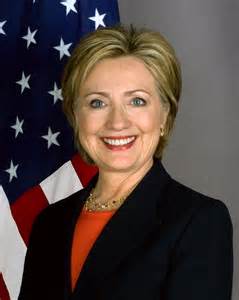
I hear plenty of people blurt out that Hillary Clinton is “untrustworthy” or “they don’t like her” or even that she is a “liar.” But when I press them on this, when I say give me examples and ask them to explain why in any detail they usually can’t tell you. The least prepared will say something like, “I don’t know, I just don’t like her.” (That’s a compelling analysis!) Others will rush to the examples of her email or Benghazi, or if they’re old enough they will mention Whitewater and Vince Foster. These are all attacks on Hillary Clinton designed to damage her even though they have no basis in truth or blaming her is unjustified. It is about time she combats this image with more enthusiasm. The below is as good start and is re-posted from The Guardian
It’s impossible to miss the “Hillary for Prison” signs at Trump rallies. At one of the Democratic debates, the moderator asked Hillary Clinton whether she would drop out of the race if she were indicted over her private email server. “Oh for goodness – that is not going to happen,” she said. “I’m not even going to answer that question.”
Based on what I know about the emails, the idea of her being indicted or going to prison is nonsensical. Nonetheless, the belief that Clinton is dishonest and untrustworthy is pervasive. A recent New York Times-CBS poll found that 40% of Democrats say she cannot be trusted.
For decades she’s been portrayed as a Lady Macbeth involved in nefarious plots, branded as “a congenital liar” and accused of covering up her husband’s misconduct, from Arkansas to Monica Lewinsky. Some of this is sexist caricature. Some is stoked by the “Hillary is a liar” videos that flood Facebook feeds. Some of it she brings on herself by insisting on a perimeter or “zone of privacy” that she protects too fiercely. It’s a natural impulse, given the level of scrutiny she’s attracted, more than any male politician I can think of.
I would be “dead rich”, to adapt an infamous Clinton phrase, if I could bill for all the hours I’ve spent covering just about every “scandal” that has enveloped the Clintons. As an editor I’ve launched investigations into her business dealings, her fundraising, her foundation and her marriage. As a reporter my stories stretch back to Whitewater. I’m not a favorite in Hillaryland. That makes what I want to say next surprising.
Hillary Clinton is fundamentally honest and trustworthy.
The yardsticks I use for measuring a politician’s honesty are pretty simple. Ever since I was an investigative reporter covering the nexus of money and politics, I’ve looked for connections between money (including campaign donations, loans, Super Pac funds, speaking fees, foundation ties) and official actions. I’m on the lookout for lies, scrutinizing statements candidates make in the heat of an election.
The connection between money and action is often fuzzy. Many investigative articles about Clinton end up “raising serious questions” about “potential” conflicts of interest or lapses in her judgment. Of course, she should be held accountable. It was bad judgment, as she has said, to use a private email server. It was colossally stupid to take those hefty speaking fees, but not corrupt. There are no instances I know of where Clinton was doing the bidding of a donor or benefactor.
As for her statements on issues, Politifact, a Pulitzer prize-winning fact-checking organization, gives Clinton the best truth-telling record of any of the 2016 presidential candidates. She beats Sanders and Kasich and crushes Cruz and Trump, who has the biggest “pants on fire” rating and has told whoppers about basic economics that are embarrassing for anyone aiming to be president. (He falsely claimed GDP has dropped the last two quarters and claimed the national unemployment rate was as high as 35%).
I can see why so many voters believe Clinton is hiding something because her instinct is to withhold. As first lady, she refused to turn over Whitewater documents that might have tamped down the controversy. Instead, by not disclosing information, she fueled speculation that she was hiding grave wrongdoing. In his book about his time working in the Clinton White House, All Too Human, ABC’s George Stephanopoulos wrote that failing to convince the first lady to turn over the records of the Arkansas land deal to the Washington Post was his biggest regret.
The same pattern of concealment repeats itself through the current campaign in her refusal to release the transcripts of her highly paid speeches. So the public is left wondering if she made secret promises to Wall Street or is hiding something else. The speeches are probably anodyne (politicians always praise their hosts), so why not release them?
Colin Diersing, a former student of mine who is a leader of Harvard’s Institute of Politics, thinks a gender-related double standard gets applied to Clinton. “We expect purity from women candidates,” he said. When she behaves like other politicians or changes positions, “it’s seen as dishonest”, he adds. CBS anchor Scott Pelley seemed to prove Diersing’s point when he asked Clinton: “Have you always told the truth?” She gave an honest response, “I’ve always tried to, always. Always.” Pelley said she was leaving “wiggle room”. What politician wouldn’t?
Clinton distrusts the press more than any politician I have covered. In her view, journalists breach the perimeter and echo scurrilous claims about her circulated by unreliable rightwing foes. I attended a private gathering in South Carolina a month after Bill Clinton was elected in 1992. Only a few reporters were invited and we sat together at a luncheon where Hillary Clinton spoke. She glared down at us, launching into a diatribe about how the press had invaded the Clintons’ private life. The distrust continues.
These are not new thoughts, but they are fundamental to understanding her. Tough as she can seem, she doesn’t have rhino hide, and during her husband’s first term in the White House, according to Her Way, a critical (and excellent) investigative biography of Clinton by Jeff Gerth and Don Van Natta, she became very depressed during the Whitewater imbroglio. A few friends and aides have told me that the email controversy has upset her as badly.
Like most politicians, she’s switched some of her positions and sometimes shades the truth. In debates with Sanders, she cites her tough record on Wall Street, but her Senate bills, like one curbing executive pay, went nowhere. She favors ending the carried interest loophole cherished by hedge funds and private equity executives because it taxes their incomes at a lower rate than ordinary income. But, according to an article by Gerth, she did not sign on to bipartisan legislation in 2007 that would have closed it. She voted for a bankruptcy bill favored by big banks that she initially opposed, drawing criticism from Elizabeth Warren. Clinton says she improved the bill before voting for passage. Her earlier opposition to gay marriage, which she later endorsed, has hurt her with young people. Labor worries about her different statements on trade deals.
Still, Clinton has mainly been constant on issues and changing positions over time is not dishonest.
It’s fair to expect more transparency. But it’s a double standard to insist on her purity.
Trump’s Racism: How He Morally Excludes Mexicans

Trump is not a smart politician who knows what he’s doing. He doesn’t craft his populist message and ill manners into some clever verbal strategy that is designed to have a particular effect. No, he’s authentic. When you hear him fumble over ideas, encourage violence, display a lack of knowledge, make fun of others, lie, and express his racist and sexist ways he is acting genuinely and organically. This is who he is, someone without the manners or temperament to be the Commander-in-Chief. When he states that a Mexican judge cannot be fair he is expressing an idea clearly representative of his thinking and natural consciousness. When Trump suggests punching a protester in the face, or tries to erase Obama by denying his birth certificate, or expresses disgust toward women and those with handicaps he is offering us the best and most reliable look into his thinking and thought processes.
The clearest and most direct path way into Trump’s consciousness is through his use of language and discourse. By discourse I mean how language is used as a tool for social life and how language carries meaning because it is the most direct link to reality.
For example, the well-known quip that “one man’s terrorist is another man’s freedom fighter” is a good example of the relationship between language and consciousness or the performative expression (the language) of cognitive, sociological, psychological, and political content. An individual act of violence can be framed with all of the assumptions and implications of the term “terrorist” or it can be a noble activity of a group struggling for freedom and human rights – the “freedom fighter.” The language used in particular situations is what evokes the semantic network of meanings, and assumptions, and interpretations that accompany the terminology.
Racists betray themselves through language. They will use a derogatory term to refer to a group (all groups have them, “the N word,” “spic”), associate a particular substandard behavior with a group (“Mexicans are lazy,” “Jews are cheap”) assume commonalities among group members that don’t exist (“all Muslims are violent” “those coming across the border are drug dealers and rapists”), expect bias and distorted interpretations because of group membership (“Israelis and Palestinians perceive things only in accordance with their own interests”), rely on historical stereotypes, and assume that the discriminated against group is less deserving of moral treatment.
There are, of course, volumes written about bias, discrimination, and old-fashioned racism. But one of the more interesting strands in this literature is the practice of morally excluding members of minority groups. In cases of extreme threat and violence (e.g. jihadists) the group is considered unworthy of moral treatment (see Opotow’s research).
Trump’s comment about Mexicans (not to mention women) betrays his attitudes about the moral standing of these groups and the extent to which they can be denied considerations of justice and fairness. Trump has essentially delegitimized Mexicans and by his statement that he could not get fair treatment from a Mexican judge, assumes them to be less developed and worthy. In cases of dangerous violence moral exclusion can justify genocide and extremes. But even if we give Trump more credit than that, he is still expressing an ideology of exclusion which justifies attributions of prejudice and discrimination to the “other” group.
Trumps racism is in line with the tendencies to treat an outgroup (Mexicans) as worthy of special consideration; that is, this group violates some standards assumed to be characteristic of his own ingroup and they are therefore problematic and outside the boundaries of democratic processes. Of course, his reference to the judge as “Mexican” rather than an “American” betrays Trump’s inclination to consider ethnicity as generative and a more explanatory category then being “an American.” That’s rank racism.
How Hillary Wins Especially If Trump Picks Charlie Sheen as His Running Mate
The above video poses a reasonably serious analysis of Trump’s stability and personality disorders. It is a fair campaign issue. Discrediting Trump needs to a key chapter in Hillary’s playbook.
There are two strategic directions that lead Hillary Clinton down a path to victory. The first is the basic campaign function of not only defining yourself but defining your opponent. The second is demographics and the Electoral College strategy. This post will be concerned with how Hillary Clinton should define Donald Trump; what is a winning strategy here and how does Hillary incorporate Trump’s longtime personal and corporate brand into an unacceptable election brand. Next week I will take up the Electoral College and demographic issues that Hillary must exploit.
Hillary, of course, needs to work on her presentation of self as well as her image as someone who is untrustworthy and entitled. But progress on this front will be difficult and I would not spend that much time on it. Secretary Clinton has been around a long time and deep seeded images of her trustworthiness will be difficult to dislodge. The Republicans have been persistent and successful for decades at attacking her and simply letting the attacks do the damage and later walking away from the truth.
Secretary Clinton should spend most of her time not defining herself but defining Donald Trump. And the campaign must be channeling me because last week she initiated attacks on Trump that were perfectly timed, consistent with his negative narrative, believable, and resonant with the electorate. It might have been a pivotal week in the campaign where Hillary Clinton finally captured command of the news cycle as well as the discursive infrastructure necessary to make progress on combating Trump.
I have made the point a few times in previous blog posts, as well as in my everyday discussions with friends and colleagues, that Trump can legitimately be defined as “unstable” in the clinical sense of the term. His instability, and ensuing danger, should be the commanding narrative or “brand” that defines Trump. This strategy is defensible in numerous ways:
First, most of what Trump is arguing is nonsense (wall between the US and Mexico, banning Muslims, sending back immigrants, trade war with China) and completely implausible. Clinton should speak to these things directly by challenging them and pointing out that Trump is incompetent and lacking the legislative skills to enact any policies. This will continue to define Trump as incompetent and by pointing out the logical consequences (even if it is reductio ad absurdum) of his proposals. This strategy will not destabilize his base, but it should be more effective for the rational others and those who do not fit squarely into Trump’s demographics.
Second, Hillary has to walk the line between not falling into Trump’s discursive traps and allowing him to define the rules of discourse but also being tough and finding the right street language to characterize Trump and his policies. This is another way of saying “Hillary can’t bring a knife to a gunfight.” She has to control the negative messages as much as possible.
Third, the “instability” strategy must be the driving theme of her campaign. And this must go beyond name-calling into actually branding Trump as lacking the manners and presidential standing necessary for the job. Successfully characterizing Trump as unstable requires a certain amount of subtlety because if the message is too aggressive there will be a boomerang effect and the message will be rejected as too extreme or implausible.
Soaring Oratory in the British Parliament
The soaring oratory of Tony Benn in defense of airstrikes against Syria harks back to the days when such speech making mattered. References for the material below and another perspective appears here.
So there will be another war. Last night, the House of Commons decided, by 397 votes to 223, to carry out airstrikes in Syria. After the result had been announced, after the morbid spectacle as hundreds of overstuffed suits cheered the news that people would shortly be dying at their hands, the Speaker and a few MPs congratulated each other on an orderly and decorous debate, on being sensible and well-mannered as they discussed whether or not to throw dynamite at people from out of the sky. We will bomb Syria, not because it’ll make anything better, but for purely symbolic and autotelic reasons: to be seen to be bombing, to kill for the sake of having killed. (Who else behaves like this?) So it’s not surprising that as the eternal war continues to spin out forever, all anyone wants to talk about is how great Hilary Benn’s speech was.
During the debate, Hilary Benn MP, son of the great socialist campaigner Tony Benn, delivered a 14-minute speech in which he defied Jeremy Corbyn to express his support for an air war in Syria, and seemingly everyone agrees that it was wonderful, statesmanlike stuff. He might be endorsing a thousand years of blood and slaughter, but what great rhetoric.
The reviews are pouring in, as if this were a West End musical instead of the overture to a massacre. “Truly spellbinding”, the Spectator gushes. “Fizzing with eloquence”, gurgles the Times. “Electric”, gloops the Guardian. The Telegraph‘s Dan Hodges, who can reliably be called upon to provide the worst possible opinion at any given time, goes further. “He did not look like the leader of the opposition,” he writes. “He looked like the prime minister.”
But none of this is true. It is, however, a very convenient stance for those who see failure to drool at the prospect of an aerial bombardment as an unpardonable offence, and something that they hope to turn into fact by constant repetition.
Hilary Benn’s speech was not the masterstroke of a consummate statesman; it was disingenuous nonsense. Even on the level of pure rhetoric: he imitated better speakers by occasionally varying his tone, rising from a sincere whisper to tub-thumping declamation without much regard for the actual content of what he was saying; this is now apparently what passes from great oratory. The speech was liberally garnished with dull clichés: “clear and present danger”, “safe haven”, “shoulder to shoulder”, “play our part”, “do our bit”. He said “Daesh” a lot, and mispronounced it every time.
As if the self-image of the British state were worth a single innocent life.
And then there’s what he actually said. Hilary Benn has form here: he voted for the 2003 war in Iraq (making him far more responsible for the rise of Isis than some of the people who will die in the airstrikes he’s so passionately promoting) and the disastrous 2011 air war in Libya. Much of his speech is familiar invocation of the just war doctrine: laying out the brutality of Isis, as if the eight British jets we’re sending could put an end to it; asking “what message would [not acting] send?”, as if the self-image of the British state were worth a single innocent life.
But along the way Benn made a few comments that were really startling, both callous and clunky. He mentioned the inevitability of civilian casualties only once. “Unlike Daesh”, he said, “none of us today act with the intent to harm civilians. Rather, we act to protect civilians from Daesh, who target innocent people.” Well, that’s fine then. As if our sincere good wishes mean anything when we’re lobbing bombs at a city from 30,000 feet.
He declared that the United Nations had been founded because, “we wanted the nations of the world working together to deal with threats to international peace and security,” rather than with the goal of abolishing wars altogether – wars like the one Hilary Benn MP helped start in 2003, which led to the one he helped start last night.
He gave a strange sort of credence to David Cameron’s absurd claim that there are 70,000 ground troops in the Syrian opposition ready and waiting to help Britain defeat Isis – while admitting that it’s simply not true, he insisted that, “whatever the number, 70,000, 40,000, 80,000,” their existence requires us to act now. Maybe there are a million, he may as well have said. Maybe there’s just one.
All of this was followed by a truly cackhanded coda. Addressing his colleagues in the Labour party, Benn said:
“We are here faced by fascists. […] And what we know about fascists is that they need to be defeated. And it is why, as we have heard tonight, socialists and trade unionists and others joined the International Brigade in the 1930s to fight against Franco. It is why our party has always stood up against the denial of human rights and for justice. And my view, Mr Speaker, is that we must now confront this evil.”
It’s a very strange comparison to make, especially as he aligns himself with a Tory war. During the Spanish Civil War, thousands of British left-wingers did indeed join up to fight against the fascists, but Benn’s new friends weren’t great supporters of the effort. George Orwell writes in The Lion and the Unicorn of the “frightening spectacle of Conservative MPs wildly cheering the news that British ships, bringing food to the Spanish Republican government, had been bombed by Italian aeroplanes.”
The British government choosing to attack a city halfway across the world for no good reason and to no great effect doesn’t have much in common with the heroism of the thousands who travelled to Spain, volunteering their lives against fascism. But there are other analogues. During the Spanish Civil War, the first mass aerial bombardment of a population centre was carried out by German and Italian pilots over the Basque town of Guernica. The town itself had little military importance; it’s possible the fascists committed their slaughter their just to see what their weapons could do. Up to 300 people died as they tried to go about their lives; the town was almost entirely destroyed. Afterwards, the massacre inspired a painting by Pablo Picasso, Guernica; a copy hangs in front of the General Assembly of the United Nations, put there to remind the delegates of the consequences of war. Clearly, as Hilary Benn’s speech shows, it isn’t working.
Trump is Wrong: Comparing the US to Other Countries

This entire article analyzes how the U.S. stacks up against the rest of the world. The data are clear. The summary below is from here by the Council on Foreign Relations. By way of example, these are the issues with respect to trade. Click on the link above for the entire visual data set. Trump is simply wrong about America and just fabricating stories to scare people and serve up red meat for his supporters.
In his recent State of the Union address, President Barack Obama said, “Anyone claiming that America’s economy is in decline is peddling fiction.” Some of Obama’s critics have countered that the United States’ standing in the world is slipping and that the country is losing out to rivals like China. So how does the United States actually measure up?
A new book from the Council on Foreign Relations (CFR), How America Stacks Up: Economic Competitiveness and U.S. Policy, examines how the United States has responded to global economic competition and benchmarks the United States against other advanced economies. The book is an invaluable resource in the 2016 presidential election cycle for assessing the Obama administration’s economic legacy and debating priorities for the next administration.
Clear infographic charts rate the United States against its competitors in eight areas: education, transportation, trade and investment, debt and deficits, worker retraining, corporate taxes, regulation, and innovation. It’s a good read.
The Commensurability Challenge
 The below is from Radical Conflict: Essays on Violence, Intractability, and Communication. Edited by Andrew Smith. Lexington Books, 2016.
The assumption that two groups are incommensurable, and locked in their culturally particular language, has some undesirable side effects such as cultural essentialism and parochialism. Moreover there is a tendency to focus on the past and the traditional which can lead increasingly to dualist dichotomies. The Israeli-Palestinian dualist narratives are classic examples of the consequences of moving toward incommensurability and differentiation. Neither side can escape the past and both are poor when it comes to establishing conditions for change. Because each side refuses to get beyond its own boundaries, and remains encapsulated in their particular cultural logic that is incommensurable with the other, they reproduce the exact conditions they are trying to avoid. Solving problems and moving toward some acceptable integrated consensus (becoming more commensurable) will only accrue with more generality rather than specificity.
Wang makes the argument that a cultural group confined by particularity is in fact in a position to achieve more universality through the workings of the particular. This is especially pertinent to my arguments because from this perspective the particular is not a matter of the opposite of universal but plays an active and vital role in constructing commensurability. The particulars, for example, of Palestinian and Israeli culture should be the stimuli for communication about more broadly shared commonalities. A simple clash of opinions and historical statements will never close up this divide. But a more organic approach, with greater interaction between paired concepts, including an open system mentality that continuously monitors the environment for information, can produce an understanding of history that is mutually constituted. As with the fled-expelled dichotomy, a new common ground as possible
The most basic challenge for incommensurability is to bridge differences and find ways to do it such that one paradigm can be translated into the language of another demonstrating that differences are not irreconcilable. It is important to underscore that commensurability is more concerned with similarity and equivalents rather than commonality. A particular culture might find commonalities with another culture quite difficult yet have enough similarities to facilitate communication. As Wang states, “no two human beings or cultures and societies are ‘the same’ at any moment, in any way.” This is true because all humans communicate and this communicative function re-conceptualizes their individuality into something more interdependent and other-oriented. Any constructivist perspective on communication, which challenges the Enlightenment notion of individual autonomy, by definition implies that attitudes, beliefs, and values are a consequence of interaction and thereby malleable enough to move from isolated incommensurate realities toward commonality.
A position that holds incommensurability as equivalent to incomparable or incommunicable is indefensible. It is certainly possible to immerse oneself in the language and culture of another and learn to translate that culture into something more broadly communicable. Ricoeur has made the argument that despite the challenges, confusions, and barriers to learning another culture and language it is possible to be multilingual and multicultural. It is possible, for example, for one day in the future Israelis and Palestinians to find new interpretive links and resonate with the culture of the other. No two cultures are completely different especially when each culture has been the recipient of deep hermeneutic interpretation that reveals hidden similarities and differences. Dialogue, when it is functioning properly, should move the two conflicting cultures toward improved historical background and cultural contexts that offer deeper clarification and understanding. Cultures present arguments differently and express worldviews on the basis of opaque cultural influences and traditions, but can still sometimes find commonalities. Everyday knowledge, shared experiences, and similar linguistic expressions are the tools for understanding incommensurability and then become the basis of new language worlds that unfold as commensurability is revealed.
The commensurability-incommensurability argument is an important theoretical and philosophical position because it speaks to a key conundrum in cultural conflict. The issue of each side in a cultural conflict having roots in its local soil but reaching out to connect to others has implications for research directions as well as managing difficult conflicts. This matter of roots in local soil and connections with broader networks is a fundamental characteristic of the type of political conflicts discussed here. Moreover, the theoretical power of the micro-macro link, which explores the reciprocal relationship between macro structural categories in society (e.g. race, gender, class etc.) and the micro interactions of individuals (real-time talk), remains ripe for research attention. If communication and dialogue are as effective as academicians and professionals would have us believe, then examination of these issues must continue until we reach a point of theoretical coherence.
Don’t be Fooled by Trump’s Use of Studied Sincerity

The video below is a dramatization (although not much of one) of “common sense” and part of its infrastructure, namely, “sincerity.” Donald Trump has been trying to capitalize on this deep-seated American value where “common sense” or “plain talk” or “telling it like it is” is glorified as the highest form of discourse. John McCain in 2000 termed his campaign tours as the “Straight Talk Express.” Bill O’Reilly’s “No Spin Zone” and the rhetorical technicalities of Bernie Sanders continue this effort to convince people that they are authentic and lack any pretenses. The Norman Rockwell image of the common man standing up to speak plainly is burned into our psyches and is an iconic image of communicative authenticity.
Well, I’m here to point out the dangers and the potential damage of this rhetorical shell game called “straight talk.” Trump is the worst perpetrator of this myth and he is successfully fooling millions into believing he is actually worth listening to. The assumption that one is “telling it like it is” or doing nothing but “talking straight” is a dangerous myth that weakens the quality of decision-making and directs attention away from substantive issues. Of course, for Trump directing attention away from substantive issues is just the point. Since he does not know anything about foreign policy, governance, or macroeconomics he has to redirect the conversation. Thus, he has spent his time trying to convince the populace that he is “sincere”.
Political communication is organized around language and symbols of various types so it is particularly important that we attend to words, their meaning, and how they are used. Otherwise we are confused about the state of political discourse and are likely to come to poor decisions. The myth of straight talk directs attention to a preferred ethical stance related to sincerity rather than the quality of reasoning. Sincerity is, of course, important because we do not want to believe our leaders or communicative partners are lying or manipulating us. But sincerity doesn’t have anything to do with the quality or truth value of what we are saying. You can “sincerely” say something stupid and inaccurate.
But it gets worse. Performing sincerity is designed to convince the listener that the source of the message is not only being truthful but also complete. The implication is that everything of importance and relevance is being said and nothing is left out. The speaker is providing all relevant information and nothing else is pertinent. This blunts the listener’s responsibility to pursue additional information. So when Trump says, “the economy is in terrible shape” (which it certainly and clearly is not) he wants you to accept that statement on the basis of his sincerity and not facts.
And it gets worse again. Convincing someone you are being sincere and speaking “straight” is designed to relieve the source of the message of any further responsibilities. The implication is you no longer need to inquire any further or challenge anything I have to say because I have “laid it all out.” It’s a way of saying a speaker is not responsible for what he says, and thereby sealing him from criticism, because he has fulfilled his responsibilities.
More than a few times I’ve heard people whom I know can barely pay their bills characterize the billionaire narcissist Trump as “telling it like it is” and a “man of the people.” To describe Donald Trump as “like the average guy” – meaning a sincere absence of artifice and symbolic trickery – means you have been thoroughly co-opted by the candidate’s studied sincerity.
Language and symbols are central to political communication, but so is critical inquiry. If leaders and political figures are going to be held responsible for their words, which is crucial to the democratic political process, then the capacities of the subject population must not be limited; it must be possible for them to interrogate leaders and satisfy truth challenges. Trump has skillfully convinced many to substitute his calculated sincerity for thoughtful critical inquiry. This can be dangerous and we have seen historical precedents for this danger.
I Don’t Think God is a Multiculturalist

Multiculturalism is the recognition of different ethnic, gender, and religious groups but also refers to political decisions. We begin with the assumption that natural resources, status, power, cultural qualities, and individual abilities are not equally distributed in society. People organize themselves into groups on the basis of particular categories (gender, ethnicity, common practices) and these groups develop what we term cultural differences with respect to language, dress, values, behaviors, etc. Sometimes these differences are small and easy enough to accommodate and other times these differences are deep and in opposition to other groups. Politics is the management of these differences.
A common assumption – especially in the United States – is that political decision-making should be neutral with respect to race, class, or creed. This is a natural extension of liberal democracy. From this perspective multiculturalism is steeped in human rights and central to the development of democratic citizenship. But there are problems with this conceptualization of multiculturalism that renders it unnatural (that’s why God has problems with it) and contradictory. Other arguments promote some special treatment for groups in order to compensate for historical injustices.
First, Gadi Taub has pointed out how an entire discourse of progressivism has developed around multiculturalism that glorifies diversity, encourages contact with others as growth promoting, and perpetuates a belief that we all share basic liberal values. This is underscored by contemporary academic theory (postmodernism, gender studies, cultural studies, critical theories, postcolonial studies) that relegates the most important cultural differences to the outcomes of power struggles between a dominant group (e.g. European white males) and the minority group. The dominant group of course sets the conditions of the discourse and defines the identity of the “other” group. As a consequence, about any minority groups can be or has been defined as oppressed.
Multiculturalism assumes a uniformity of values and liberal identity among different groups such that all humans are assumed to be equal as are their cultures. There is also the assumption of cultural contact or articulation being expansive of democracy. But as Taub asks, what about cultures that oppress citizens, use force indiscriminately, enslave women, or promote female circumcision? These are not democratic or worthy of cultural sensitivity.
There’s also a contradiction in multiculturalism, which has not been satisfactorily resolved, between pressures toward uniformity and respect for the maintenance of differences. Do we want cultures to converge or encourage differences? The United States is relatively successful at avoiding cultural conflict and encouraging multiculturalism because of the overarching “American” identity and allegiance to values (freedom, democracy, individuality, voting rights etc.) rather than being organized only on the basis of skin color, religion, or nationalism.
Furthermore, the multicultural debate spends little time making the distinction between a genuinely diverse society and the prescriptions for dealing with diversity. Diversity and cultural differences are inevitable and even biologically advantageous. Even those seeking the most pressure toward equality, assimilation, and democratization don’t argue for the obliteration of cultural differences. Given, then, the inevitability of differences and a more nuanced understanding of multiculturalism that is not knee-jerk political correctness the necessary forms of communication between groups must reflect bonding and bridging discourse more than simple assimilation.
A multicultural sense of democratic citizenship is admirable when cultures share deep consensus on certain values. But things fall apart with greater cultural distinctiveness. The Muslim immigrant in the outskirts of Paris is not a partner of African-Americans; the sealed world of Orthodox Jews has little to do with immigrants from Syria; Turks in Germany are viewed with increasing antagonism by Germans.
We must work more on the distinction between people and values. The “values” of freedom, democracy, participation, and equal treatment under the law are crucial to the maintenance of peace and cohesion. But such values cannot be encouraged by accepting all aspects of culture as equally worthy.
Religion and Foreign Policy

In the modern era religion has played a relatively small or insignificant role in foreign policy, especially among academics and professionals. International relations are assumed to be subject to rational processes and the primary motivating force is not religion but maximization of gain and minimization of loss.
But the Iranians following the revolution of 1979 have been the first significant departure from this trend. Iranians have defined themselves as fundamentally Islamist and any effort to organize against them, any war or confrontation, is considered an attack on Islam. Global jihad and pressures on other Islamic countries not to partner with non-Muslim governments are part of the growing entanglements between foreign-policy and religion.
The United States is oblivious, and I don’t mean that as a compliment, to issues in religion in foreign policy. They miss theological underpinnings all the time and have naïvely misread and failed to grasp incidents such as the Iranian revolution, Islamists objections to our presence in Saudi Arabia, all while we blithely armed Islamists in Afghanistan because we thought we were thwarting communism. Even our efforts at democracy promotion have failed in the face of confrontations with religious tenets that we fail to understand, ignore, and consider to be little more than inconsequential background.
And probably the biggest blind spot for the United States has been the published documents by ISIS and Al Qaeda members detailing terrorism with a vision of Islam. These documents make reference to the creation of a global caliphate; foment a religiously apocalyptic narrative; and use religious motivations to recruit young believers. The US continues to fight the war on terrorism as a military and security matter and not a religious one. Theology animates ISIS such that killing them only creates more committed actors who will find new ways to subvert their enemy, namely, the US.
Interestingly, it is a form of political correctness that keeps the US from acknowledging the theological underpinnings of terrorism or any other foreign policy with a basis in religion. What I mean is that American leaders do not want to be perceived as attacking Islam or being critical of Islam even if it is religious tenets rooted in Islam that justifies violence in its name. Secretary of State John Kerry and Obama might refer to gun laws, history, morals, economic deprivation, or some aberration but they never tie violence or some aggressive behavior by another group directly to theological principles of Islam. I can understand the delicate diplomatic position of the President of the United States such that he does not want to prance around the world condemning world religions. In fact, organizations like ISIS want to divide the world into Muslims and non-Muslims and blaming entire religions would play right into their hands. They succeed at this to the extent that the US blames Islam or gets involved in military actions on land that is considered caliphate. Still, our policies will be ineffectual to the extent that they fail to consider religion in foreign policy.
It is not easy for the United States to all of a sudden adopt religious oriented policies or even to begin to use the language of religion in an effort to appease or seek a superficial identification with another political entity. That is why we must find other ways to weaken their theological basis. This includes empowering natural enemies, and providing improved social and economic progress in contested areas. We’re also losing the propaganda or information war as these religious oriented policies spread their beliefs. Organizations like ISIS and countries like Iran clearly embrace religion as part of foreign-policy. In the end, if we are to make progress in the information war we are probably left with Justice Brandeis’s adage about how “the remedy for bad speech is more speech.”




 Peace and Conflict Politics