Blog Archives
Top 10 Anti-Semitic Slurs: Anti-Semitism or Legitimate Criticism of Israel
Below is the list of top 10 anti-Semitic slurs for 2012 from the Simon Wiesenthal Center. All but one of these contributions for the year concerns me. I always look at the statements and spend a moment chagrined and admittedly a little shaken that such discourse actually characterizes the consciousness of certain individuals and groups. But that aside, the slurs bring up the tension between legitimate criticism of Israel and anti-Semitism. This is a fine interpretive line that speaks to the issue of Israel as a legitimate target of political criticism, and the use of such criticism as an anti-Semitic tool. Moreover, it’s an excellent example of the distinction I like to make for students between perspective and bias. Top 10 Anti-Semitic Slurs.
Look at #9 by Jakob Augstein who is a contributor to Spiegel online. There is currently a bit of a fury in Germany over the decision by the Wiesenthal Center to list Augstein here. Augstein is a respected journalist and surely doesn’t belong in the same categories as the Muslim Brotherhood, Hamas, the Golden Path, and Farrakhan. Moreover the issues of Israel’s nuclear arsenal, powerful political lobbying, and conservative trends in the society are legitimate issues worthy of discussion and argumentation.
One can be a respected journalist raising legitimate issues and still be quite misleading, exaggerated, and uninformed. I do not think these comments by Augstein rise to the level of anti-Semitism and do not think he should have been lumped in with the likes of the other 9 contributors. His words and style are inflammatory and certainly lacked nuance. Comparing traditional observant Jews to the sort of “Islamism” that is triumphalist in nature and promotes violence is a silly comparison based more on exaggerated rhetorical strategies rather than fact. An unfair and unjustified moral equivalency is typically the rhetorical strategy used by those characterized more by bias than perspective. The same sort of exaggeration applies to the claims about the undue influence of the Jewish lobby. It is true that the Jewish lobby in the United States is effective and strong but it does little more than successfully defend its interests in a democratic manner. There is a Saudi lobby and a Pakistani lobby and on and on. The Jewish lobby engages in the democratic process and does so successfully. But the argument that Jewish influence distorts foreign-policy is based on the assumption that there is a “correct” foreign-policy that is being subverted. If a group wants to counter the influences of the Jewish lobby then organize and come up with better arguments.
Again, I think Mr. Augstein is critical of Israel and does not do a particularly good job of defending such a position – and there is plenty to disagree with – but the charge that the statement in #9 is anti-Semitic is unjustified. Jews and Israelis who are overly sensitive to the potentialities of anti-Semitism must also work to make the distinction between a perspective based on legitimate issues critical of Israel and anti-Semitism. Staining someone with the charge of anti-Semitism, when it is only a knee-jerk response and not clearly justified, shuts down legitimate debate about Israel as a political entity and strangles the communication process.
We have to do the hard work and make the distinction between anti-Semitism and criticism of Israel on the basis of argument and substantive issues. Sure, some critics of Israel are blatant anti-Semites. Showing movies of the Protocols of the Elders of Zion is clearly anti-Semitic; the vacant eyed whack job surrounded by guns holed up in a mountain cabin somewhere who blames the Jews for the world’s problems is anti-Semitic; comparing Israel to Nazi Germany is anti-Semitic. Even the apartheid comparison is problematic. A careful and considerate comparison between Israel and South Africa, on the basis of the best political theory and history, does not justify in any way such a comparison even though there are issues of difficult population concentration.
But making civil rights and political arguments about occupancy of the land, the status of Palestinians after their dispersal in 1948, refugees, borders, settlements, and security considerations is not anti-Semitic. These issues are not treated seriously when they are viewed as manifestations of racism and anti-Semitism. And sometimes anti-Semites attach themselves, like barnacles on the bottom of the boat, to those making legitimate criticisms of Israel. They attempt to move the discussion from quality argumentative confrontation to “delegitimization” of Isreal. Sometimes the difference between anti-Semitic intentions and fair criticism is difficult but it is a difficulty we must continue to grapple with.
Also posted in:
Palestinian Labor Pains
The vote in the United Nations to grant the Palestinians nonmember observer status was certainly as expected. Those supporting the move were overwhelming with 138 countries voting in favor, 9 against, and 41 abstentions. The vote was testimony to the international public relations campaign that has evolved over the decades to establish the Palestinians as a political and legal entity. But I do not mean that cynically. There is no simple state agency or decision-making mechanism that determines precisely when a collection of people have cohered enough to be considered a particular ethnopolitically identified group. There are rules of thumb and good practices such as a history of cultural continuity, recognizable borders, established political institutions, and a desire for statehood, but conclusions about when these things have been sufficiently achieved remain at least somewhat subjective. That’s why there’s always a little bit of “persuasion” or as I referred to it above “public relations” involved in convincing the world that official recognition is justified.
In earlier posts on this blog (April 17, June 5, September 19, and September 25) I argued against the Palestinian effort to achieve recognition by the United Nations. See those posts for details, but I essentially signed on to a series of disadvantages such as (1) making it more difficult to negotiate with Israel, (2) damaging or even voiding the Oslo accords, (3) confusing security arrangements, (4) failing to make progress on unity between Hamas and the PLA, (5) annoying Israel and the United States who oppose UN recognition, and others.
Yet, it is pretty difficult to be in favor of the two-state solution and be overly critical of this latest development. In one sense, Netanyahu got what was coming to him. He has been sufficiently difficult and intransient such that the Palestinians were forced to entertain alternatives. Part of the hue and cry by supporters of Israel is little more than the painful recognition that a Palestinian state, in the real sense of the term, might actually happen. The phrase “two-state solution” has become a cliché, a shibboleth that rolls easily off the tongue but doesn’t really taste very good.
I would still argue that the best solution is for direct negotiations between the Palestinians and the Israelis. But I have softened my position a little and believe that the new United Nations status for Palestinians might be early labor pains that will one day give birth to a state. I would reiterate that a two-state solution is best for the maintenance of Israeli identity and Israel’s democracy. No other political solution to the relationship between Israelis and Palestinians guarantees the unity of the State of Israel based on Jewish particularity. Netanyahu can claim to be amenable to a Palestinian state one day all that he wants, but he is simply incapable – to use an unfortunate metaphor – of pulling the trigger. You could never convince me that a Palestinian state will be established on Netanyahu’s watch.
This is a first step and a baby step to be sure. Of course, being designated an observer state is mostly symbolic but not completely. The Palestinians will improve their international standing, call greater attention to themselves, and have an internationally legitimate body from which they can express themselves. It will also give them access to the International Criminal Court as well as participation in certain UN agencies. It is not full membership or recognition, but it is not unimportant.
Not much will change, however. Mahmoud Abbas even in his formal UN speech was graceless enough to refer to Israel as racist and colonialist. Netanyahu announced that the UN action “will not change anything on the ground.” He strongly asserted that Israel will not compromise its security and that “peace can only be achieved through negotiation between the sides…” Abbas asked the United Nations to issue Palestinians a birth certificate and that is fair enough. But the Israelis have to prepare for the new arrival by controlling settlers, negotiating in good faith, and recognizing at least certain aspects of the Palestinian narrative. The PLA must find some way to control Hamas and continue their recognition of Israel. Nothing really has changed on the ground, but the Palestinians do have a new toy.
Someday Hamas and Israel Will Talk
There is only one solution to the current fighting in Gaza and that is some sort of negotiated agreement. It sounds naïve I understand but until that time we will have little more than the standard conflict resolution mistake of “more of the same.” Deliberation in any form is impossible until the two sides are sufficiently willing and we are certainly not there with respect to the Israelis and Palestinians, especially the Palestinians in Gaza. But if that day ever comes the deliberative conditions below will be important.
Deliberation is a powerful normative ideal to strive for and in its heart it is concerned with the careful and balanced consideration of alternatives under conditions of democratic fairness. To transform the deliberative ideal into actual communication is essentially to operationalize deliberation and lower its level of abstraction. It is to take a theoretical ideal and convert it to symbolic behavior. But this operationalization is never easy or direct. Deliberative democracy is also primarily concerned with democratic decision making, whereas deliberative communication is, shall we say, messier. Deliberative communication includes broader intersubjective meaning creation and is inclusive of many forms of discourse and linguistic structures. Moreover, the polysemic nature of communication, where messages can take on a variety of meanings depending on context and other factors, makes identifying qualities that make communication “deliberative” even more difficult. But as I have noted in other places, deliberation is not one big philosophy seminar characterized by rational argument only. It must include the possibility that judicious argument and sound decision making can take many communicative forms. In general, deliberative communication has the following five characteristics.
(1) There is a confrontation of perspectives and argument is the primary communication mechanism for adjudicating differences. Argument takes the form of reasoned opinion where a speaker is required to support reasons and defend against critique. This includes evaluating materials, judging the quality of sources, and defending background assumptions. It is also true that some forms of reasoning maintain ideological dilemmas.
(2) There is a relational component to deliberation whereas participants respect the other and genuinely listen to their perspectives. Participants actually engage one another and avoid monologues that do not take up the perspective of the other. Participants acknowledge autonomy and mutuality in a civil and respectful manner.
(3) Consensus is the goal to strive for. This includes will formation such that the collective is ultimately committed to decisions. In order for consensus to be a goal deliberators must be concerned with disagreement. Disagreement is an indication of the diversity that is inherent in divided groups. Deliberative communication should include participants having their own views critically examined because of the presence of disagreement. This improves the quality of opinions. Consensus is a goal but lower levels of agreement are acceptable.
(4) The position of authorities, tradition, and power are up for discussion in deliberative communication. Participants must meet the objective of the meeting but other foundational assumptions are acceptable topics for deliberation. As Young explains, “Truly democratic deliberation must not rule out self interest, conflicting interests, or relatively emotional or intuitive expressions. . .” (p. 472) (Young, 2000).
Deliberative communication must allow for equality and symmetrical power relations as much possible. People must be on equal footing and no one should unfairly dominate the interaction. Reciprocity would be an important indicator of equality. These forms of communication are specifically suited to diversity and pluralism that are consequences of ethnopolitical divides.
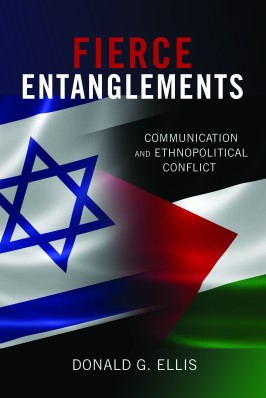
For more detail see Donald Ellis (2012). Deliberative Communication and Ethnopolitical Conflict. Peter Lang Publishers.
Obama’s Last Term and the Middle East: What’s Next?
It is common political wisdom that things change when a president is elected to a second term because he is no longer constrained by the need to be reelected. He can govern in a more freewheeling manner consistent with his most deeply held convictions and the next election be damned. This is a slight simplification since presidents have other obligations and limits on their behavior, but it remains true that a second term in office makes it more possible to legislate for one’s legacy. So how will Obama’s second term in office change his approach to the Middle East and Israel in particular? I think there are three changes we might see during Obama’s second term.
First, Obama and Netanyahu need to start over or at least recalibrate their relationship. During his first term Obama was not particularly energized by the Israeli-Palestinian conflict. Of course, he would like to be remembered as the president that achieved the elusive goal of peace but probably realizes that this is unlikely. Still, Obama will not forget that Israel is a true friend and he will continue to support it through good times and bad. Obama and Netanyahu will move closer together and work to achieve common goals and manage common threats. Obama mentioned Israel many times during the campaign and this was more than simple campaign rhetoric. It represented the importance of the Israel-US relationship.
Israel and the US have a long and strong relationship that has changed somewhat but remains a strategic advantage to both. Israel assists the US with security threats and increasingly influences US military research and development. The two countries not only cooperate economically but have strong cultural resonances. Despite the fact that the US jeopardizes its relationships with the Arab world because of its close relationship with Israel, the US continues to balance these relationships. For example the US still relies on stable but nondemocratic countries such as Saudi Arabia to influence interests in the area. This represents US pragmatism as well as fundamental foreign policy convictions. All of this is consistent with Netanyahu’s primary concern for Israel’s safety and security. The relationship between the US and Israel as well as the importance of cooperation (on issues such as a nuclear Iran, terrorist intelligence, foreign aid, and military readiness) will be the foundation for a renewed relationship between Obama and Netanyahu.
Secondly, Obama has other issues in the Middle East he must attend to. Syria is coming apart, a nuclear Iran is coming together, and the politicization of Islam is on the rise. Netanyahu and Israel will certainly be helpful with these matters but, ironically, Israel must be kept at bay otherwise their presence will inflame the situation. But there are limits to what Obama can do to resolve these conflicts. In the cases of Syria and Iran Obama must diplomatically pull strings from the background and this is always slower and more difficult. But one thing is for sure: Obama will be better in managing this than Romney. Obama is more interested in helping Israel with less violence and more compromise and this is important. This is a different perspective than the one from those who supported Romney for president because they thought Obama lacked a clear commitment to Israel.
Obama represents a more diplomatic and a slower foreign-policy hand than either Romney or Bush before him. A second term will ensure that he will be better able to express this agenda. I think Obama will spend more time working with moderate regional states to achieve interests on their own rather than waiting for the United States. For example, the US does not have a taste for supplying Syrian rebels with weapons; thus, Obama will work to triangulate interests of others to form blocks and coalitions that might be better able to achieve goals. Again, this is slower and more frustrating – and leads those with more macho foreign-policy tendencies to be critical – but is closer to an approach that will be successful. International alliances based on common interests of preventing terrorism and stopping those who would intimidate their own citizens are most able to build successes.
A third trend for Obama’s second term should be increased attention to human rights, especially with respect to foreign policy. Obama was actually not very vulnerable to attack from the right during the campaign with respect to strength in foreign policy. His killing of Osama bin Laden, the “surge” of troops in Afghanistan, and his rather casual acceptance of questionable security practices (under the guise of security and strength) have been roundly criticized. Obama has been lax with respect to the promise to close Guantanamo, warrantless wiretapping, and drone attacks. I am convinced that he continued these policies for fear of appearing to be a weak liberal and now that he has no more elections to condition his behavior, Obama will turn his attention to the recognition of human rights. Drone attacks have essentially replaced the interrogation room and courtroom. They deliver a death sentence without confronting the knotty legal questions about interrogation or innocence.
The campaign is over but not the resonances in the deserts of the Middle East. After the world is finished congratulating him on his election victory, they will look to the United States for assistance and guidance. Obama will be more puppetmaster than puppet.
The Two State Solution and the Next Four Years
The cynics among us will believe that nothing much will change in the next four years in the Middle East but that is a particularly narrow view. There have been important changes in the Israeli-Palestinian conflict along with the relationship between the US and Israel. The Bush administration was aggressive in their efforts to reshape the region and trapped in a narrow ideological position that always seemed to favor the military. Obama’s first four years were characterized mostly by patience and changes in certain political conditions such as the Palestinian economy, settlement construction, and security. But Obama did not foreground the Israeli-Palestinian conflict; he did not stake his presidency on it or claim that he had new ideas or directions.
The problem now, and Obama’s most prominent obstacle should he be reelected, is resuscitating the peace process and getting back to discussions about the political viability of the Palestinians. Benjamin Netanyahu’s coalition with the right wing parties is necessary for him to govern but brings about a mix of partners that is thoroughly incapable of making the necessary adjustments that will improve the situation. The tensions between Hamas and Fatah continue and keep the conflict inflamed such that Hamas can interfere with any progress on the part of Fatah. But if Obama gets another four years he might be able to play a more significant role in a two state solution because the main parties – the Israelis and Palestinians – are incapable of reaching an accord on their own.
Things have been quiet of late. There have been few efforts toward settlement and many believe it’s a calm before the storm. Of course the Israeli leadership has been waiting until after the elections (which will be just a few days from now) to see who they will be doing business with. But whomever is elected president must engage in a workable two state solution that addresses the history and aspirations of both sides. Romney, at present anyway, is thoroughly incapable of doing this. A significant campaign plank for Obama has been that a vote for Romney is a vote to return to a way of doing things more characteristic of the Bush administration. This will be equally true in foreign policy as in economic policy. And although Romney is probably more moderate than the campaign represents, I have still seen nothing in his policy or speeches to indicate the sympathy or nuance necessary for genuine settlement of this dispute. At present, the task of solving the conflict is made more complicated by a loss of confidence in the two state solution. The Israeli-Palestinian conflict has become even more dangerous and unsolvable because the most viable and politically legitimate option (the two state solution) is losing credibility.
In the earlier days of the conflict the Palestinians expressed little interest in the two state solution because they saw it as artificial and, more importantly, were clearly not inclined to offering the Israelis a parallel right to a state. Later they came to accept a two state solution but not with full enthusiasm. But a second Obama administration will be in a much better position to inaugurate a state even though conditions are more difficult. Interestingly, there is more enthusiasm for building a Palestinian state among global leaders and Europeans than from the Palestinians themselves. A Palestinian state in the future will provide one barrier against extremism and help with forging coalitions with Iran and other Islamists.
The next president will have to approach the Israeli-Palestinian conflict with skill and sensitivity. There’s a danger that a two state solution is an American solution or, even worse, an Israeli one rather than a mulilateral solution. Many Palestinians feel that the idea of statehood has been distorted and that anything they agree upon would be something other than their own.
There is a real chance that statehood could dissolve into the background as a Palestinian achievement. There’s so much cynicism and lack of confidence in the process that both sides see statehood is an impossible achievement. But Obama is actually in a better position than any previous president to resuscitate the two state solution because of his ability to speak to diverse audiences and thereby improve America’s standing. If Obama actually became engaged in the Middle East peace process and deployed all of his powers of diplomacy he just might succeed.
The world is growing weary of the endless repetition of issues such as security, refugees, Jerusalem, and borders. The entire peace process is filled with slogans and clichés about peace that does not get anyone any closer to goals. Obama is in a position to find a new language to reconnect both sides to their national aspirations and do it in such a way that all sides are strengthened. All of this of course is assuming he is reelected.
Breaking Double-Bind Intractable Conflict Relationships – Dialogue or Deliberation
Imagine the following double-bind relationship of an intractable conflict: An Israeli Jew feels so victimized by historical discrimination and anti-Semitism that the state of Israel was created as a consequence of the Holocaust. Moreover, he now feels doubly victimized by Palestinians who refuse to recognize Jewish cultural and historical rights and blame the Zionist entity for their oppression. At the same time a Palestinian feels victimized by Jews and Zionism. Each denies that he is the oppressor and they continue a pattern of accusation-counter-accusation that often leads to violence. Each considers the other responsible for its lived experience. And each time one group denies the claims of the other the denial is heard as additional oppression providing additional evidence for the truth of the claim in the first place. Every defense is an offense and thought to justify additional offenses. This is a classical double bind logic that cannot be escaped within its own system but must be redefined. What kind of communication helps the redefinition – is it dialogue or deliberation? Can you debate your way out of this problem? Is dialogue a special form of communication that allows for solutions to these double-bind conflicts?
Click here and take a look at debate-dialogue table.
The table is a nice distillation of the differences between dialogue and debate. It is reprinted from the book “Moral Conflict” by Pearce and Littlejohn. I take differences like the one described above as a given; that is, resources, skills, perceptions, and ideas are not equally distributed amongst people and this makes for the politics of difference. Hence the goal of communication and problem solution in general is to manage these differences – whether they are political, ideological, commercial, or ethnic – and communication is the primary mechanism for managing these differences, for reaching across the divides that separate people. Some form of communication has to be capable of breaking double-bind conflicts.
Traditionally, the type of communication most conducive to closing gaps between people has been termed “dialogue.” I tend not to use the word dialogue in my own writing very much because it carries a certain baggage. That baggage is mostly centered on a sense of unachievable authenticity and openness that includes deep engagement, attentive listening, empathy, and a host of other idealistic abstractions. I’ve resisted the word and you will not find it very often in anything that I’ve written. Moreover, there is sometimes the expectation that “dialogic” communication is of the highest form and most desirable, when in fact debate that it is contrasted with is an equally important and useful pattern of communication.
But over time I have become increasingly unable to distinguish dialogue as it is usually written about from other types of engaged interaction, namely, deliberation. As I write about deliberation (see my recent book here), which is a more controlled discussion, the lines that once separated dialogue and deliberation are blurring. Oh, distinctions can be made, and we will save those for another time, but those distinctions are less clear. I think the table that distinguishes debate from dialogue is a very good presentation of two types of communication. Certainly the presidential debates in the United States are more “debate like.” Nobody would call the exchanges between Romney and Obama a dialogue. Most discussions between international actors contain more of the qualities of debate rather than dialogue. The two participants (a) prepare cases designed to be presented, (b) represent positions that they want to force on the other, (c) present a dominating persona, (d) speak as representatives of groups (political parties, constituencies) rather than for themselves, (e) try to “win” rather than solve problems, (f) offer little new information, and (g) work to defeat the other side by winning argument strategies.
Deliberation is more “debate like.” It is concerned with evidentiary credibility, reasoning, consistency, and a tenacious concern for inclusion in legitimacy. But deliberationists recognize the limits of debate and that alternative forms of communication are often called for. Moreover, deliberation must still confront culturally grounded rhetorical forms of communication that do not meet standards of reason and rationality. Language and meaning are situated and designed to direct attention toward selected portions of reality. So deliberation, like dialogue, must confront talk that is required to transform how one understands others and themselves. If two competing groups or individuals seek to transform the other or develop new realities more shared between them then there must be a willingness to risk change. This is certainly true if any progress is to be made on double-bind conflicts
Deliberation turns out to require some of the same assumptions as dialogue. For example the recognition that communication is not linear but multifaceted. Or that deliberation always bumps into tangential issues of identity, emotions, and incommensurate attitudes and beliefs. This is perhaps the thorniest issue that deliberation and dialogue share. If problem-solving were automated and purely rational then cultural rhetoric’s and peripheral issues would not interfere and therefore not be a problem. But even the strictest deliberation practitioner runs into “real” people whose communication and lifeworlds must be accommodated.
An important point pertaining to dialogue, and one often overlooked or misunderstood, is that requirements such as finding “common ground” or “resolving differences” are not necessarily the central goals of dialogue. Rather, dialogue recognizes the maintenance of differences and that conflict and contradiction are natural enough such that a goal of unity or problem resolution is typically elusive. Deliberation is very grounded in its epistemic function such that deliberation results in new knowledge and new ways of seeing problems. This epistemic function can also apply to traditional notions of dialogue. Both deliberation and dialogue except that individuals or groups can hold their ground and defend a position, but only require them to remain open to engagement with the other. Both dialogue and deliberation also have a critical stance one that refuses to privilege a single perspective or ideology or at least insists on a serious confrontation with such a perspective or ideology. Although I do not want to completely conflate dialogue and deliberation they share more space than not. The role of each in solving double bind conflicts remains an empirical question.
Pro/Con One State or Two States
|
The below represents the two general reaction statements to the two state solution. They lack details and represent the general reactive position. It is from: Procon I invite reactions and comments. PRO Israel and/or CON Palestine Statements |
PRO Palestine and/or CON Israel Statements |
| PRO:“Well, there has emerged, over the course of the past ten years at least, a sense that the only way out of the situation in the Middle East is to establish a State of Palestine alongside Israel so that there will be an end of conflict. There is no other solution to end the conflict in reality.There is an international consensus about it as reflected by the so-called Road Map Quartet [the United States, the European Union, Russia and the United Nations], which is after all the whole world. You have the United States, you have Europe, you have the Russians and the United Nations, which is the whole world, and then there is the Arab League, which is twenty-two different states, and there is the previous Palestinian administration, and the Israeli administration, all of them committed to the two-state solution.”
— Ziad J. Asali, MD |
CON:“The paradigm of the Two States will not bring about stability. No! . . . (The Two-State solution) is not relevant. Not relevant . . . (The Palestinian state) will undermine the State of Israel. From there, the confrontation will go on.The State of Israel is ready to give the Palestinians an independent Palestinian state, but the Palestinians are not ready to give us an independent Jewish state . . . Every agreement you make will be the starting point of the next irredenta. The next conflict. The next war.The establishment of a Palestinian state will lead at some stage to war. Such a war can be dangerous to the State of Israel. The idea that it is possible to set up a Palestinian state by 2008 and to achieve stability is disconnected from reality and dangerous.”
— Moshe Yaalon |
| PRO: “The next diplomatic formula that will replace the ‘two states for two peoples’ will be a civilian formula. All the people between the Jordan and the sea have the same right to equality, justice and freedom.. [T]here is a very reasonable chance that there will be only one state between the Jordan and the sea – neither ours nor theirs but a mutual one. It is likely to be a country with nationalist, racist and religious discrimination and one that is patently not democratic… But it could be something entirely different. An entity with a common basis for at least three players: an ideological right that is prepared to examine its feasibility; a left, part of which is starting to free itself of the illusions of ‘Jewish and democratic’; and a not inconsiderable part of the Palestinian intelligentsia.The conceptual framework will be agreed upon – a democratic state that belongs to all of its citizens. The practicable substance could be fertile ground for arguments and creativity. This is an opportunity worth taking, despite our grand experience of missing every opportunity and accusing everyone else except ourselves.” | CON: “Although the one-state approach proposes a united entity between the Jordan and the sea, in fact it represents King Solomon’s original proposal to cut the baby in half. In reality, one state means that Israelis and Palestinians each receive a mutilated and unsustainable version of its national dream. The Palestinians will never get the national self-determination they seek in a Jewish-dominated single state. Jews will achieve neither the democracy and inner harmony they seek (or ought to), nor legitimacy from the world, as long as they obstruct Palestinian rights to national self-expression in their single state – even before Jews become a minority.Finally, this conflict is tragically likely to ignite again over ‘some damn foolish thing in the settlements’ (with apologies to Bismark). A one-state solution not only fails to prevent settlements from ripping into Palestinian land and courting violence, it legitimizes expansion – since there is no border. Sadly, we all need one.” |
Obama Support for Israel Is Strong
One of the least defensible arguments levied against Barack Obama is that he is weak on Israel and does not properly support the security of Israel. This is simply an indefensible position. Essentially the Republican attack machine has made it its business to distort Obama’s record with respect to Israel in an effort to capture Jewish voters. As usual, the strategy has been to take Obama’s recognition of complexity, diplomacy, and slightly more complete understanding of the issues and turn it into a weakness. I grant you that Obama talks about Israel and the Middle East with greater nuance and understanding of what it will really take to solve problems but this does not detract from his support for Israel. He recognizes that Israel is essentially a mirror of the United States and, of course, the importance of security issues for Israel. Those who question Obama simply have to look at the record. Some months ago Obama said that “the United States will always have Israel’s back” and he meant it. I cite just some of the evidence below for how Obama has operationalized his support for Israel.
Apparently, those questioning Obama support for Israel missed the signing ceremony last week of the United States-Israel Enhanced Security Cooperation Act. This was a bill reaffirming the special relationship between United States and Israel and, more importantly, ensuring that Israel has all the necessary weapons and assistance to protect itself. The Enhanced Security Cooperation Act extends loan guarantees to Israel, boosts Israel’s credit rating, and authorizes the sale of $1.6 billion in US weapons available whenever needed. Moreover the law requires that Israel maintain its military superiority in the region and affirms US commitment to defend Israel in the United Nations Security Council.
Obama’s support for a two state solution, consistent with comments made by Netanyahu, is in line with the most prevalent thinking about how to resolve the problem with the Palestinians and maintain the Jewish nature of the State of Israel. The two state solution is increasingly problematic and difficult to impose but it represents strong support for the ethnoreligious core of the Israeli state.
The debilitating sanctions against Iran, who at this time represents the most direct threat to the State of Israel, are mostly the work of President Obama. Iran is now cut off from financial markets, cannot land in many airports around the world, and has oil sales that are a trickle compared to the previous flows. Obama has built an international coalition and stood on the world stage in defense of Israel’s security needs.
Obama’s presidential leadership and staff challenged the international community and prevented the statehood move by the Palestinians in the United Nations. This represented the correct argument that Palestinian statehood should be the result of negotiations between Israel and Palestine, that the establishment of the state through procedures separate from the political realities in which it is embedded would not be recognized by the other nor considered legitimate.
The Obama administration challenged the discredited Goldstone Report which was noteworthy in its biases against Israel and partially responsible for its author distancing himself from his own report. Obama stated clearly that Israel had a right to defend itself when Israel was criticized for its defensive actions off its coast.
It took tremendous courage for Obama to confront the Arab League in Cairo in 2009 and unabashedly declare US support for Israel. Obama told them our support for Israel was steadfast. Expressing some well-placed defensible criticism of Israel (e.g. with respect to the West Bank) should be viewed as part of our support for Israel and its future state; it is certainly no sign of weakness.
A variety of strong Israel supporters, Zionists, and political leaders, from Edgar Bronfman to Ehud Barack call Obama a friend and the leader who has deepened and strengthened the relationship between United States and Israel.
Israel is constantly plagued and harassed by terrorist groups such as Hamas and Hezbollah and Obama supported Israel’s refusal to negotiate with such groups by announcing that “no country can be expected to negotiate with a terrorist organization sworn to its destruction.” Israel’s Dome Missile-Defense System was developed in cooperation with United States and is effective for intercepting Hamas and Hezbollah rockets. It is a security system received during the presidency of Barack Obama.
Obama is a thoughtful and decisive leader who recognizes the importance and cultural resonance of Israel. The argument that he insufficiently supports Israel simply does not hold water. The State of Israel is stronger and more secure today because of Barack Obama.
Netanyahu, Leadership, and the Peace Process
After issues in a conflict are explored and analyzed, and after positions are established and defended, a leader needs to step forward and initiate new directions. The matter of leadership is sometimes underappreciated with respect to its role in solving difficult political conflicts. Conflicts require bold leaders who are able to set new directions and initiate solutions before his or her constituency is even sufficiently supportive. Benjamin Netanyahu has been a staunch conservative all of his life but even he has now admitted the possibility of a two state solution to the Israeli-Palestinian conflict. This is his chance to be a peacemaker; it might be his last chance to truly establish a positive lasting legacy that will accompany him into the future. But it is also possible that violence will soon break out in Israel and the West Bank and Gaza and derail any chance Netanyahu now has to be a peacemaker.
The formation of a unity government that includes Kadima was a brilliant move on Netanyahu’s part that makes it more possible for Netanyahu to pass legislation and, perhaps even more importantly, not be so dependent on the right wing parties. Netanyahu now controls enough seats in the Knesset to pass legislation and control an agenda. But this new coalition will require leadership. If the formation of a unity government merely allows Netanyahu to pass internal legislation and increases his control over his own party and the government then there will be little reason to believe in significant change with respect to the Israeli-Palestinian conflict. Also, some have suggested that a unity government is designed to increase the justification for an attack on Iran. Perhaps, but Israel is increasingly unconvinced that a preemptive attack on Iran is worthwhile or justifiable. We will see.
There is plenty of apathy and denial in the current peace talk environment. Many Europeans simply do not want to invest politically in the peace process, and many Israelis are “fed up.” Having just returned from 2 1/2 months in Israel, I can attest to the fact that Israelis are increasingly detached from the conflict as a result of many years of false starts, rejections, painful discussions, and the general lack of trust that characterizes the relationship between the two sides.
If Netanyahu simply wants to continue settling in the West Bank on the belief that the Palestinians will one day give up then his leadership legacy is in trouble. But if he uses a unity government as an opportunity to speak with a broader voice and represent a greater variety of people then his leadership will be a lifeline to Abbas and the Palestinians. But as of now, Netanyahu is doing little more than speaking to people without engaging in substantive deliberations or clear movement toward a final status.
The importance of the coming elections in the United States also cannot be underestimated. Israelis have a strong and intimate relationship with United States and they expect their leaders to maintain that relationship. There is one analysis floating around from 1999 when Netanyahu lost to Ehud Barak that a significant number of people voted against him because of his poor relationship with Clinton, mainly because Clinton accused him of another failure of leadership when he undermined the peace process. Given that the relationship between Obama and Netanyahu is even worse – because of Netanyahu’s condescending treatment of Obama – and not very easily fixable, Netanyahu feels it is necessary to broaden his base of support with a unity government.
It is probably true that the reasons for forming a unity government were more oriented toward internal politics than the peace process. Nevertheless, the unity government should have important diplomatic consequences if the leadership decides so. But Netanyahu must signal his interest – he must express his leadership. Otherwise it is pointless to talk about the peace process as long as Netanyahu is Prime Minister.
Finally, it’s important to note that Mofaz the leader of Kadima who joined Netanyahu’s government is associated with a hopeful interim peace plan that a number of people consider viable. This creates a Palestinian state with temporary borders (on the basis of the 2002 roadmap to which both Israelis and Palestinians agreed) and the possibility for a final status agreement. The formation of a unity government was smart on Netanyahu’s part, but if he wants to be really smart he will use the unity government to facilitate the peace process. That’s leadership.
Troubling Brotherhood Document Jeopardizes 1979 Peace Treaty
The hope has always been that the Muslim Brotherhood would handle power responsibly. That they would pay attention to economic development and providing a better life for Egyptian citizens rather than to the length of women’s skirts. But there’s this disturbing document reported on the website for the Jerusalem Center for Public Affairs located here: http://jerusalemcenter.wordpress.com/2012/03/15/the-new-egyptian-parliament-takes-aim-at-the-camp-david-accords/.
The Egyptian Parliament has released a statement that jeopardizes the 1979 peace accords withIsrael. Again, as the Muslim Brotherhood began to take control the hope was that they would have more important things to worry about then taunting Israel. That appears not to be the case. The document is provocative and seriously capable of undermining the cold peace that has characterized the relationship between Israel and Egypt. Below are some of the qualities and themes of the document.
1. The document does not refer to the “State of Israel” but to the “Zionist entity.” This perpetuates the myth of Zionist conspiracies in the Arab world. The use of the word “Zionist” is designed to incite fear and stimulate images of Jewish manipulation and colonizing settlements. It clearly is not the language of any genuine peace process represented by the historic treaty of 1979.
2. Palestinian terror is referred to as “resistance.” In a peaceful relationship betweenEgyptandIsraelboth sides have denounced violence. To justify it as legitimate resistance is to justify violence.
3.Israelis officially defined as an enemy and any possibility of cooperative relations is rejected. This language is slippage into an “us” versus “them” mentality that seems to be the purpose of the document. These categorical group identifications lead to psychological and communicative distortions that exacerbate problems.
4. There is a suggestion of cutting off diplomatic relations. Such relations are important for maintaining a balance of power and the necessary lines of communication to prevent mistakes and misinterpretations. Cutting off diplomatic relations is usually a final insult before resuming violence.
5. There is a call for supporting the armed struggle against Israel including boycotts. Again, violence is justified.
6.Jerusalemis clearly defined as a Muslim holy place and the presence of the Jews is completely denied and ignored. A call to take up the cause of Jerusalem is designed to activate religious passions, especially amongst the lower and middle classes. Jerusalem is a symbol of loss and sometimes humiliation in the Arab world and reference to the city draws attention to this loss.
7. There is a frightening call to explore the possibilities of nuclear Egypt. Even if the Brotherhood is bluffing this is a dangerous game. How the nuclear standoff will play out in Iran remains to be seen.
The document was accepted unanimously by the Arab Affairs Committee and represents a new tone of confrontation and tension.Israelis defined as a major enemy and responsible for Palestinian suffering and instability in the Arab world. There are strong statements of support for Hamas and rejections of any direct negotiation or peace process withIsrael.
The relationship between Egypt and theUnited States remains hopeful. TheUnited States has supportedEgyptboth financially and militarily for a long time and is in a position to apply pressure. Nevertheless, if the Muslim Brotherhood foregrounds its religious convictions over political practicality then the “rational” influences theUnited Stateshas to bring to the table will be diminished. Difficult as it is to imagine, and just as unpleasant, Egypt could slide into becoming the next Iran if it pursues a nuclear scenario that is undergirded by religious convictions rather than political ones.



 Peace and Conflict Politics