Blog Archives

The Empty Signifier and the Construction of Group Distinctiveness
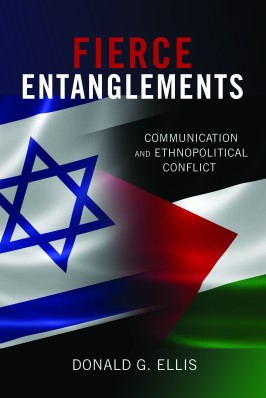
Concepts acquire distinctiveness by using their category dimensions as a measure of meaning. The analysis in this article used religious discourse as an example of the development toward distinctiveness, which is the concept related to group identity. Distinctiveness creates a sense of differentiation between an ingroup and its rival. It sharpens intergroup differences because it describes the other group as delegitimate; consequently delegitimization is exaggerated because one’s own group is praised while the outgroup is vilified. Moreover, each group considers itself a victim of the conflict.
Because the conflict is intractable, the other side is blamed for a disregard of human life and the brutalithttps://peaceandconflictpolitics.com/about-2/y of the other side. Societal beliefs about the delegitimization of the other side characterize them as beyond common humanity, all the while maintaining their own purity and description of themselves in glorifying terms. There develops a sharp contrast between the ingroup’s positive image of itself and the presentation of the outgroup as subhuman. This creates a rigid separation between the two groups and allows for the exaggeration of each side’s point of view, consequently making the conflict even more intractable than it already is.
|
This research particularizes religious-based conflict by applying dimensional analysis to demonstrate how constructs acquire distinctiveness. The goal is to explain how the concept of “religion” utilizes the signifier to assign content to the idea of religion. More specifically, the theoretical approach utilizes the concept of the “empty signifier.” Five dimensions are unearthed from the analysis in which it is informed by symbolic interactionism and grounded theory.https://peaceandconflictpolitics.com/about-2/https://peaceandconflictpolitics.com/about-2/ | |
The language used to characterize the ingroup includes positive terms such as pride, decency,and responsibility while terms such as evil, violent, aggressive, and vicious are applied to the outgroup. These intractable conflicts begin by characterizing the other side as violent and responsible for the conflict while the in group is described in positive language.
This blog post serves as an introduction to this type of research. In brief, the concept or piece of terminology begins as an empty signifier; that is, a signifier begins with no linguistic content but gradually gets infused with semantic content.
For example, the word “freedom” is a signifier. It evokes a strong sense of personal liberty and autonomy, it lacks a fixed definition. The concept of freedom is often used to justify political, social, and economic positions, but its meaning can be elusive and contested. The divides and distinctions among signifiers accounts for their unique definitions. So, for example, empty signifiers are an important part of the linguistic environment. The meaning is signified and managed through communication systems. The flexibility and struggle for meaning emerges from the possibility for emergent structure formed out of the discourse that constitutes different realms of linguistic reality. So, for example, symbols in literature are typically taken from the natural world (rain indicates sadness, sunlight implies happiness, and storms demonstrate interior turmoil). Over time, empty signifiers “fill up” with meaning.



 Peace and Conflict Politics