Category Archives: Communication and Conflict Resolution
Why Turkey Matters
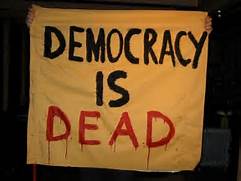

It’s pretty easy for most Americans to pay little attention to Turkey. It seems to be a faraway exotic place that has little effect on their lives. But the truth is otherwise. Turkey has been a partner to the United States and Israel and informed a set of relationships with these two countries that help stabilize that area of the world. But more important than that, Turkey has been a model for Islamic democracy.
Ataturk established modern Turkey as a secular, European, Westernized state. He used the government to establish educational and political policies to shape the nation into a political culture that was close to gaining entry into the European Union. Ataturk literally outlawed many symbols of Islam and tried to relegate it more to the private sphere.
But there was a referendum last week on constitutional changes and Erdogan and his political supporters won a narrow victory. Now the country is about to be shaped in Erdogan’s image rather than Ataturk’s. Erdogan will move Turkey more toward centralized power supported by Islamic parties. None of this bodes well for Turkey. Moreover, and even more dangerously, Turkey is divided. Erdogan won a narrow victory. Just about half the population voted for him and the other half dislikes him intensely. These are the conditions for future contentious political behavior.
It appears that Erdogan knows how to distribute rewards making important constituents happy; a fairly large number of people have benefited from Erdogan’s largess. But these benefits are not merit-based or the result of significant contributions to economic, commercial, or political policies in Turkey. They are the result of payoffs to those who are more supportive of Erdogan and constitutional changes. And now the AKP (Erdogan’s political party) can continue its program of returning to Islamizing the state. Yet, there are some hopeful signs.
Turkey it is now quite diverse demographically, and too big economically to be easily redefined on the basis of one person. And despite Erdogan’s cronies, who always rear their ugly heads from the system of political payoffs, the real economic power in the country is dependent on secular, democratic, pro-Western liberal values. So if Turkey stays Democratic much of its progress will be maintained. But the worisome part is that Erdogan may realize full well that democracy is his primary enemy and therefore become more autocratic.
So why should the average American care about any of this? Well a couple of reasons. First of all the only way we are going to make some stable peace with Islamic nations is through elements, minimum as they need to be, of shared Democratic processes. If Erdogan becomes less democratic then the state becomes more Islamic and increases its distance and alienation from Western states and Israel. Turkey could have been a model for future Islamic democracy. Secondly, the Kurds have been a very supportive culture for the United States and we owe them our best efforts to establish a Kurdish state. This is of course very complex and an intractable issue but moves no closer to some sort of resolution if Turkey retreats into conservatism and religiosity. Third, Turkey demonstrated to the Arab world that some decent relationship with Israel was possible. Given the combustible relationship with our ally Israel, any indicator of stability is welcome.
“don’t know much about history, don’t know much biology”
Go ahead, click on the video and enjoy the music before reading below. Sam Cooke predicted in 1960 an attitude that is gaining momentum.
A diminished expectation of ability or preparation is one under discussed consequence of Donald Trump’s election to the presidency; in short, we now believe anybody can do the job. But this is thoroughly consistent with the recent death of respect for ability or expertise. The February 2017 edition of Foreign Affairs has an article on the loss of respect for expertise and superior levels of knowledge in America. The basic argument, which was well defended, is that Americans have increasingly lost their respect for achievement and the sense that somebody actually knows something more than others and should be listened to. The article can be found here. Moreover, those confronted with their ignorance are fierce in defense of their own opinions.
The article reports an interesting, and depressing, experiment where subjects were asked if the United States should intervene militarily in the Ukraine. Only one in six of the respondents could actually identify the Ukraine on a map and most of them were off by about 1,800 miles. But the real news value of the study was the correlation between the strength of one’s intensity for intervention and how far off they were from being able to identify the location of the Ukraine. In other words, those who are most ignorant about the geographic location of the Ukraine and perhaps thought it was in South America were also the most enthusiastic about military force. In another study Democrats and Republicans were asked whether or not they would support the bombing of the country of Agrabah. About 1/3 of Republicans said they would and 36% of Democrats were opposed. There is no such country as Agrabah.
Again, the issue is not so much that people are ignorant of geography or foreign relations. That’s another issue. The bigger problem is that many people don’t respect established knowledge and are sometimes even proud of rejecting the advice of an actual expert. There is an increasing belief that all information is manipulated and perceptual (note “fake news” or the Trump campaign’s use of “alternative facts”). In this era of post-truth everyone figures that language is unstable so every person’s knowledge or meanings are as good as the next.
There are more than a few reasons for this loss of faith in expertise. The disrespect for experts is one of the more insidious. There is now a segment of the population that takes pleasure in challenging expertise not on the basis of superior knowledge or argument but because they see elites as evil and cannot tolerate being told anything. I grant you that sometimes elites can be insufferable and arrogant but that doesn’t detract from their better knowledge. Journalists, pundits, opinion writers, and professors have lost favor over the decades with the population and are now seen as antagonists rather than sources of reliable information.
It is also true that the world of information is complex and it is easy to feel insecure about one’s control of information. Nobody could be in command of everything and we are all relianton experts and those who know more than we do. One of the skills of the educated – and should be even more emphasized in schools – is the ability to identify reliable sources of information; the ability to judge and evaluate and make educated decisions about the quality of information.
It’s okay if Sam Cooke’s love struck friend “doesn’t know much about history, or biology” as long as somebody does and we as a society recognize that expertise.
Get Over it! Israel is Not an Apartheid State

A couple of weeks ago the United Nations Economic and Social Commission for Western Asia (ESCWA) issued a report equating Israel with apartheid. The ESCWA is charged with promoting economic and social development in Western Asia but spends much of its time bashing Israel. This is easy enough since the committee is composed of 18 Arab states each of which is eager to delegitimize Israel. But the “apartheid” analogy continues to rear its ugly head and has become an effective weapon against Israel and its legal and moral standing. You can learn more about ESCWA here.
Since Israelis and West Bank Arabs live separately and there is an asymmetrical relationship between Israel and the Palestinian territories it becomes quite easy, albeit sloppy thinking, to turn the word apartheid into a convenient hammer in order to bruise the Jewish state. Labeling the Israeli-Palestinian conflict as apartheid stretches the meaning of the term beyond recognition and out of its historical context. It is like calling any human violence a “holocaust” or “genocide.” There are differences.
And my guess is that the apartheid analogy is often motivated by anti-Semitism but we will set that aside for the moment and consider some more compelling historical and political theory reasons for why Israel is not an apartheid state. If someone wants to just “name call” and lash out at the despised other, then the word apartheid is a good place to start because of its inherent implication of racism. And if you repeat it often enough people will believe it.
But the apartheid accusation is more than just name-calling. Language has power and consequences and cannot be divorced from specific behaviors. Thus, the apartheid accusation is used to justify violence against Israel and deny Israelis basic human rights of self-defense. It is a way of dehumanizing Israelis which makes it easier to justify violence. The apartheid accusation also distorts information and data and makes it more difficult to understand the truth or new information because attitudes and perceptions of the other become entrenched and impossible to unfreeze.
Some differences between Israel and apartheid
- Apartheid is a system of inequality based on racial ideology. The Israel-Palestine example is a failure to negotiate agreed-upon solutions. Racism is not what motivates Israel. Israeli Arabs can vote and serve in the Knesset in Israel. This was not true in apartheid South Africa.
- The Palestinians regularly reject compromises and good faith efforts. Partition has been considered the most fair-minded approach but is rejected by the Palestinians.
- Palestinians in the West Bank and Gaza are not governed by Israel. They are governed by the Palestinian Authority.
- Skin color, voting rights, restrictions on movement, and geographical separation are not based on racist attitudes but on security concerns the goal of which is to one day eliminate, not perpetuated as a permanent definition of the political relationship.
- Zionism is certainly concerned with the development and defense of the Jewish people but is not rooted in racist ideology as much as – like any other political entity – national defense.
- Israel does not want to oversee and control Palestinians. On the contrary, Israel would like to help the Palestinians launch their own independent state and free themselves from the Israelis.
- Actually, apartheid is just what Israel is trying to avoid rather than perpetuate. The demographic threat along with pressures for bi- national and uni-national states threatens Israel’s existence as a democratic and Jewish state.
- Equating Zionism with colonialism is one reason the apartheid accusation seems plausible. But the Zionist movement was never part of the designs of an outside state on Palestine, and Zionist immigration was more interested in investing in Palestine rather than exploiting it.
- Apartheid in South Africa was based on the absolute domination of a racially defined minority (Whites) over an indigenous majority (Blacks). The Israelis and Palestinians are engaged in the clash of nationalisms.
- Finally, the Palestinians have been offered numerous opportunities to negotiate a compromise from the 1930s to the present. They have regularly rejected these opportunities and consequently have a clear role in the responsibility for maintaining the present situation.
Israel is certainly not blameless with respect to the Palestinian-Israeli conflict, but equating Israel with apartheid is little more than denying Israel its fundamental right to self-defense and a national identity.
The Latest Big Idea for the Israeli-Palestinian Conflict – Sovereignty

This week’s Jerusalem Post had a 25 page insert that was a political journal sponsored by the “Women in Green” who are a very conservative grassroots group concerned with advancing the interests of Israel. This is an interesting document and not something you would see in the United States, at least not typically. The entire document – or political journal as it is called – is devoted to the issue of declaring sovereignty in the West Bank and Gaza. Because the two-state solution is losing favor and fading in the eyes of some, the right wing has seized the moment and is trying to kill off the two-state solution once and for all. Moreover, the election of President Trump has empowered the right wing because he is seen as sympathetic to their issues and the best chance for the United States to be more aggressive in the defense of Israel’s conservative environment. The election of Trump is considered a game changer because he is perceived as willing to find alternatives to the two-state solution and will be “tougher” in his defense of Israel. Note the appointment of Friedman as the ambassador to Israel who is very conservative and pro-settler.
A proposed solution that is receiving increased talk time anyway is the issue of sovereignty. Political sovereignty is when a political authority has power over independent states. That power is established through some sort of enabling law or Constitution. Governments maintain the integrity of the sovereignty relationship and ensure that the administered groups keep their rights and cultural freedoms.
Now there are different types of sovereignty and numerous complexities but we don’t want to send everybody scrambling to find their old political science books. Go here for more on sovereignty. Suffice it to say that Israel would be the primary overseer of a collection of communities that maintain their independence but had limits on citizenship rights, military, and certain other conditions that might damage the standing of the primary sovereign. Here is an outline of the sovereignty plan.
- There would be the establishment of Arab “autonomies” subject to the rule of the Israeli sovereign.
- Security and national issues will be under the control of the State of Israel.
- The autonomies would be bound together in an infrastructure that supports water, electricity, and a host of municipal services.
- Members of the autonomies would be eligible for health benefits, insurance, education, and freedom of movement. This grants the right of permanent resident but not citizenship.
- Martial law will be canceled and normal government services will be returned to civil society.
- The Oslo Accords, which turned out to be unsuccessful, will be canceled.
- The UN refugee organization will be released and refugees will have the right to settle in any autonomy.
- Ultimate responsibility for the protection and maintenance of holy sites will be with the State of Israel. All holy sites will be accessible to believers of all religions.
- No foreign country would have special status over holy sites anywhere in the country.
- The Gaza Strip is part of historical Israel that would ultimately have to become part of the sovereign relationship with Israel.
Suffice it to say that reasonably fulfilling and satisfying relationships can develop under conditions of sovereignty. Still, the success of sovereign relationships is dependent on the history of the relationship between the dominant political authority and the weaker party. Why do those supporting sovereignty believe that the Palestinians will be any more accepting of a sovereign relationship than of outright Israeli control. This conflict has been complex and delicate for a long time. The Palestinians have honed their own consciousness into images of a cohesive collective with all the requirements of nationhood – ethnic identity, religious orientation, national boundaries and borders, and the possibility of a proper functioning political system. The proposal of sovereignty is subject to the same deficiencies of any other proposal – the Palestinians still end up in the weaker position. That’s why a two-state solution remains the only hope for a mature political relationship between Israel and Palestine.
Trump and Netanyahu Make Decisions the Same Way – Incompletely

There is a term in political and communication theory known as “democratic reason.” Generally, democratic reason is the collective intelligence of a group of people. It is the notion that democratic communicative processes – that is, things like inclusion, balance, equality, resources, speaking rights, participation – result in higher quality decisions. Or, we could express it in the everyday phrase “two heads are better than one.”
Netanyahu and Trump both fail to meet some basic communication quality standards. Both face electoral problems and controversies because they refuse to recognize attitude trends in the citizenry that call for inclusive and democratic input. Polls in Israel show that about 60% of the population wants peace and is willing to make some sacrifices. It is the leadership that is stubborn and not serious about real progress. Real progress, without being naïve, can be made if a representative group of people spent their time in serious deliberation with the goal of using the communication process to create new ideas solutions.
This notion that two heads are better than one is actually pretty powerful. Even in simple aggregation such as voting more participants improves the likelihood of decisions being improved or not random. In the well-known “jar of beans” example, we could ask individuals with no previous exposure to the jar about how many beans are in the jar. We then get a group average on the basis of the entire group (the group produces a simple average) and the group average will be better than the average of the individuals. Finally, we can organize a group and give them time to talk to each other, deliberate, and share ideas. In other words we could make the communication system available to them. This third group, which allows for as rich and controlled democratic communication process as possible, will most consistently produce better answers.
The reason for this is the epistemic nature of communication but we will talk about that some other time. For now, I want to make the observation that the full Republican control of the senate and congress along with Trump is a dangerous situation. Key decision-making issues will escape the scrutiny of diverse voices and fail to let each side fully participate in the intelligence of the other side. This is why the Congress is polarized rather than democratized.
Trump already has authoritative tendencies. He has no patience for other people and little history having to answer to anybody. Much of leadership in his business world is based on clear lines of command with few or no constituencies to please other than investors. Moreover, Trump holds to the belief that the best and the brightest are going to beat and know more than the average citizen. Whether or not Trump has actually identified the best and the brightest we will leave for others just to say, but his aristocracy theory that the elite will always know more and therefore make better decisions than the average citizen does not always hold sway.
The reason that elites do not always make better decision is because they lack diversity; they may hold expertise even deep expertise in a particular subject but they lack diverse points of view and variety. In an interesting book by Scott Page (The Difference: How the Power of Diversity Creates Better Groups, Firms, Schools, and Society: Princeton University Press), he demonstrates the power of inclusiveness and diverse voices in decisions.
True enough that collective reason can go awry but that is usually managed by the communication process and the conditions of contact. Communication is only smart when it is allowed to work properly. When communication is restrained or distorted or the victim of a host of other maladies it then becomes a mechanism for collective unreason preventing itself from finding real solutions.
Israeli Conservatives Manipulate Trump
You would think that Trump and Netanyahu were pretty much compatible on most issues. Netanyahu and Israeli leadership did not care much at all for Obama even though much of the Obama style is just what is needed in this conflict. Obama was unfairly characterized as weak when in fact he was a little more considerate, deliberative, and diplomatic. Even though Obama was committed to Israeli security and continued munificent funding, Obama was not afraid to express differences between the U.S. and Israel in addition to turning a more respectful eye to the Arab world.
In fact, Trump is a dream president for Netanyahu. Trump has clear moral positions and a conservative’s sharp distinction between what is right and wrong. A couple of weeks ago before Trump met with the Prime Minister the right wing in Israel demanded that Netanyahu drop the two state solution. This was an aggressive move to strike while the iron was hot; that is, if any US president were going to oppose the two state solution, and support Israeli dominance in the West Bank and Gaza, it would be Trump. Moreover, during the campaign Trump supported moving the U.S embassy to Jerusalem, increased construction of settlements, and did not seem to be supportive of a Palestinian state.
But Trump’s statement after a meeting with Netanyahu shocked some people and disappointed the Israeli right when he said, “he is for anything the two parties are for – one state or two.” Trump got a fair amount of flak for this but he was actually saying he will accept anything the two main parties will accept. I thought Trump was misunderstood and certainly consistent with the demand that the solution be bilateral and the result of negotiations between Israel and the Palestinians. How could one argue with any solution that was truly acceptable to both sides even if certain third parties disagreed?
But the Israeli right did put the issue of settlements on the table. And because Trump knows very little about the issue and has no historical perspective, he is in a particularly vulnerable position with respect to Israeli conservatives and their efforts to annex the West Bank. Sentiment in Israel these days is increasingly one of “manage the conflict.” Trump doesn’t realize that the right wing in Israel is interested in one state –a state of Israel only. The Knesset already passed the “legalization law” that legalizes existing settler outposts. This law will probably be struck down by the Supreme Court but still represents the thinking of the Knesset.
Trump is the Result of Our Weakening Democracy-An Early Warning

Well, some patterns are pretty clear: there is an ever-growing collection of small time nationalists who are angry and threatening the quality of democracy around the world. Even though the 20th century is characterized as an era of expanding inclusiveness, and a century that witnessed more democratic change than any other, it all seems to be dissipating as citizens interestingly and strangely become more comfortable with authoritarian leadership.
And it gets worse! Foa and Mounk, writing in the Journal of Democracy in both 2016 and 2017, report that American citizens are not only unhappy with their governments but increasingly critical of liberal democracy. 24% of young Americans polled in 2011 stated that democracy was either a “bad” or a “very bad” way to run a country. This is a sharp increase from previous measures and especially associated with the young. And consistent with these findings, there was an increase in the number of Americans expressing approval for “army rule.”
This is a shocking state of affairs and at first glance it seems impossible. But the data on Americans is consistent with the larger global patterns. Continuing to cite from Foa and Mounk in the Journal of Democracy (volume 28, 2017), 72% of those born before World War II thought that democracy was essential. Only 30% of Millennials said the same thing. And across long-standing democracies in Great Britain, the Netherlands, Sweden, Australia, and New Zealand the proportion of young people who believe that democracy is essential has drifted away.
And, of course, the rise of people like Trump, Le Pen in France, Chávez in Venezuela, Brexit, Duterte in the Philippines, Orbán in Hungry, and Putin are all consistent with the decline in democracy because they blame an allegedly politically corrupt establishment (note Trump’s inauguration speech and reference to a nefarious Washington elite) but still want to concentrate power in an executive.
A narrow vision of groups and polities is the essence of the populist appeal and fundamentally antidemocratic because populism foregrounds and privileges the perspective of a particular group. Democracy is pluralistically oriented and committed to solving problems through dialogue and discourse.
What Explains All This?
For starters, it is not explained by isolated geographic aberrations. The decline in the respect for democracy is apparent in Europe as well as South America. But what does seem to be a key issue is the strength or durability of democracy. I would underscore the observation that democracies are a continuum. The country and political system is not either democratic or not in a binary sense. Measurements of the extent to which elections are free and fair, and citizens have rights of speech, movement, and assembly etc. result in a democracy rating but less so the strength or commitment to democracy. When democracies are weak they are more easily overcome. Moreover, the rise of citizen skepticism and disenfranchisement promote populist and antisystem parties.
It’s fair to say that Trump is like no candidate in American history. His victory caused so much pain and angst for large portions of the electorate because he fit no model of presidential preparation or decorum. His blatant political disrespect and sexism were like nothing the American public has seen in a presidential aspirant. Trump’s victory could have only taken place in the context of declining faith in democracy as well as a persistent history of delegitimizing the press, political parties, and the system they represent. It’s no accident that someone like Trump was elected during a historical period where the two political parties are so polarized, and so incapable of engaging each other to solve problems, that citizens look for alternatives, presumably “correct” alternatives, that don’t require them to consider the diversity of opinions democracies are so good at managing.
Cracks in the Foundation Of American Political Institutions

You have to admit that if you were Daniel Silva or Tom Clancy trying to write another international thriller you could do no better than the opening chapter being devoted to the Russians hacking American political campaigns in order to influence elections and plant their own Manchurian candidate. This opening “staging” chapter could include tensions between the intelligence services and the new president complete with allegations and embarrassing verbal exchanges. To listen to the president elect and the heads of the security agencies trade public accusations and barbs along with charges of incompetence is unprecedented.
And what if rather than treating this as an enjoyable fictional experience we stopped for a moment and considered the implications for the current state of American institutions, political leadership, and security. Corey Robin has begun to make the argument that American institutions are becoming less and less legitimate and this is occurring against the background of political deterioration. Even at the risk of charges of alarmist exaggeration, I believe it’s possible to make the case, at least one worthy of discussion, that there has been a steady decline down a path littered with the remnants of more legitimate institutions and behavior reflective of that legitimacy.
The American democracy seems to be turning on itself and in the process weakening institutions and altering our sense of moral political consciousness. In other words, certain democratic values and forms of political communication have begun to decline. Robin cites as one early example the loss of trust in the government and military during the Vietnam War that resulted from lies and misleading information. This would extend to the crude manipulations about Iraq and the deceptions perpetrated on the American people about the presence of weapons of mass destruction, the denigration of an admired military leader (Colin Powell), a “stolen” election (Busch-Gore) decided in accordance with pure party lines by the Supreme Court, the rise of Trump, and a Congress so polarized and entrenched that it cares nothing about governing but plenty about treating the other as an enemy to be conquered rather than a worthy adversary to work with.
There are two trends in contemporary American society that are both causes and consequences of this decline. The first is the rise of American authoritarianism (see Amanda Taub’s work), and the second is the post-truth politics were there are no facts or evidence-driven conclusions that can’t be manipulated. As Nietzsche put it, “there are only interpretations.” And it is important to underscore that the rise of authoritarianism in America is not about strong controlling individuals taking over and leading by authority. No, it is more the rising tendency for people in the country to obey and accept authority, to prefer authoritarian relationships. They accept authority unquestionably and seek it out.
This preference for authority was one of the divides that separated Trump supporters from those who are horrified by him. And a post-truth mentality seems to be attaching itself and boring into the culture ready to deconstruct and disperse the “reality-based community.” These are the conditions for some difficult conversations and the impossibility of communicating. Then again, paradoxically, it is probably only the communication process that can re-challenge these trends.
Settlements Just Aren’t Going to Be There in the End

Sorry my friends who are blindly supportive of Israel but the US failure to veto UN Resolution 2335 was correct and justified. In December the United Nations passed a resolution condemning Israel’s settlement policies including the construction of new housing. The vote was 14-0 in favor of the resolution and the United States abstained.
This caused an outpouring of anger and accusation claiming that the Obama administration initiated the failure to veto, and the whole thing was “shameful,” and “hostile to Israel.” The vote was nonbinding so various sanctions are not on the table. But it does have the possibility of internationalizing the conflict even more than it already is, and simply adding to the list of criticisms Israel must suffer.
Yet the fact remains that no solution, no progress toward end of conflict, is going to include half a million settlers in the West Bank. The key issue, the fundamental principle, is for Israel to remain and continue to be Jewish and Democratic. It simply cannot do this in some sort of binational state or in circumstances in which Israel must oversee a hostile minority. The two state solution is the only answer that safeguards both Israel and begins the process of developing a Palestinian national and political identity along with institutions that protect and bolster Palestinian life.
Obama should have made this point and been more critical of the settlements even earlier in his presidency. In fact, he has talked plenty about Israeli-Palestinian peace along with lofty generalities about our interests, but has really done very little to bring a two state solution into effect. This last minute abstention just before he scoots out of office was actually gutless on Obama’s part and helped the resolution lose some of its impact. So Kerry, in an effort to chastise and influence Israel, delivered a speech trying to appeal to moderate Israelis.
Kerry’s speech was a cogent analysis of the current situation including admissions of deep despair between the two sides accompanied by anger, frustration, and unproductive indifference. More than a few specialists who weighed in on the issue wished the speech had been delivered a few years earlier.
The basic principles of a future solution – there are six of them – are easily agreed upon and they include the recognition of Israel as a Jewish state with the right to exist. Israel also seeks a declaration of the “end of conflict” which provides a foundation for discussion and negotiation.
True enough, the resolution is a rebuff to Israel but if the United States is going to be taken seriously as a negotiation partner, a fair and genuinely engaged partner, then it must be possible to point out disagreements and differences of opinion between the US and Israel. The settlements are described in the resolution as a major obstacle to the two state solution, and primarily responsible for the stagnation and lack of progress toward peace. It is true that the United Nations seems woefully biased and unbalanced when it easily finds ways to criticize Israel while the violence in Syria rages on and they do little or nothing about human rights violations around the world. Still, that should not stop the UN from doing what it must.
But all of this commotion notwithstanding, the world is going to change on January 20 and highly symbolic United Nations votes (in the most vacuous sense of the term) will seem pretty insignificant.
The Death of the Worthy Adversary

Good dialogical discourse conflates the distinctions between enemies and adversaries; that is, as a combination or fusion of the distinctions such that the two are not so different from one another. Certainly, our polarized culture makes a sharp distinction between an “enemy” and an “adversary.” Part of the discourse of dialogue and deliberation involves maintaining the distinction between the two and treating the other as the “worthy opponent.” Again, this is an important principle of deliberative democracy and deliberative communication. In other words, the two sides of a conflict must work to treat the other as adversaries and a “worthy” one such that your adversary holds a defensible position that is deserving of consideration.
Michael Ignatieff made this point cogently when he explained the distinctions between adversaries and enemies in the New York Times and called for respect between the two. Ignatieff explained that an adversary was someone you want to defeat but an enemy is someone you want to destroy. The current environment which has Republicans wanting to “destroy” Democrats is a good example. Once you define your enemy as the opposition between your own social category and the category of the other, then “enemy” takes on a variety of obstructions and distortions. Trust, for example, is possible for adversaries and does not need to lead to issues related to capitulation, appeasement, or giving in. But trust is not possible between enemies. When you define the other as an enemy trust is an early casualty that can never rise again.
The table below displays some distinctions between treating the other as an enemy or an adversary. An enemy is unwavering in his defensible position where an adversary might be amenable to adjustments. Treating the other as an adversary necessitates a respect for the other position and its grounded nature. Without such respect the two sides talk to each other out of rank disrespect. The use of the language of war and violence exacerbates problems, and makes cooperation impossible.
Obama was seen by the Republican Congress as an enemy rather than an adversary to be confronted. For that reason Obama employed more presidential decrees in order to circumvent a Congress that viewed him as the enemy and was interested only in his failure. Heated rhetoric, such as claims that Obamacare was “an assault on freedom,” were all contributions to the increasing perception of the other as the “enemy.” And although he was reflecting differences in society Obama was also exaggerating these differences.
There is any number of reasons for a gravitational pull toward defining the other as an enemy. But this is just one more example of the corrosive nature of our public discourse that does not even recognize the damage. The ultimate goal is to turn enemies into friends but that is an entirely different interactional category
Enemies versus Adversaries
| ENEMY | ADVERSARY |
| To be destroyed. | To be defeated. |
| Strong negative emotions such as hate and disgust. | The possibility for positive emotions such as respect. |
| No trust. | Trust is possible. |
| Zero-sum game. | Non-zero-sum game. |
| Warfare metaphors. | Possibilities for cooperation. |
| Differences between the two sides are maximized. | Differences can be constructive and are to be integrated. |
| Unwavering commitment to a perspective. | Opportunity for change and altering perspectives |
| The goal it is to refute the other position. Destroy it. | Goal is to understand the other position and argue it. |
| Statements are predictable and offer little new information. | New information surfaces and can be addressed. |
| Success requires simple impassioned statements. | Success requires exploration of the complexities of the issue being discussed. |




 Peace and Conflict Politics