Category Archives: Elections
Just Pay Attention to the Data: Hillary Clinton is fundamentally Honest and Trustworthy
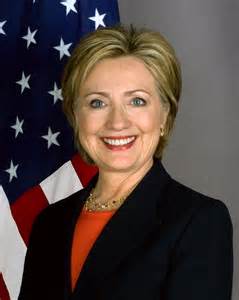
I hear plenty of people blurt out that Hillary Clinton is “untrustworthy” or “they don’t like her” or even that she is a “liar.” But when I press them on this, when I say give me examples and ask them to explain why in any detail they usually can’t tell you. The least prepared will say something like, “I don’t know, I just don’t like her.” (That’s a compelling analysis!) Others will rush to the examples of her email or Benghazi, or if they’re old enough they will mention Whitewater and Vince Foster. These are all attacks on Hillary Clinton designed to damage her even though they have no basis in truth or blaming her is unjustified. It is about time she combats this image with more enthusiasm. The below is as good start and is re-posted from The Guardian
It’s impossible to miss the “Hillary for Prison” signs at Trump rallies. At one of the Democratic debates, the moderator asked Hillary Clinton whether she would drop out of the race if she were indicted over her private email server. “Oh for goodness – that is not going to happen,” she said. “I’m not even going to answer that question.”
Based on what I know about the emails, the idea of her being indicted or going to prison is nonsensical. Nonetheless, the belief that Clinton is dishonest and untrustworthy is pervasive. A recent New York Times-CBS poll found that 40% of Democrats say she cannot be trusted.
For decades she’s been portrayed as a Lady Macbeth involved in nefarious plots, branded as “a congenital liar” and accused of covering up her husband’s misconduct, from Arkansas to Monica Lewinsky. Some of this is sexist caricature. Some is stoked by the “Hillary is a liar” videos that flood Facebook feeds. Some of it she brings on herself by insisting on a perimeter or “zone of privacy” that she protects too fiercely. It’s a natural impulse, given the level of scrutiny she’s attracted, more than any male politician I can think of.
I would be “dead rich”, to adapt an infamous Clinton phrase, if I could bill for all the hours I’ve spent covering just about every “scandal” that has enveloped the Clintons. As an editor I’ve launched investigations into her business dealings, her fundraising, her foundation and her marriage. As a reporter my stories stretch back to Whitewater. I’m not a favorite in Hillaryland. That makes what I want to say next surprising.
Hillary Clinton is fundamentally honest and trustworthy.
The yardsticks I use for measuring a politician’s honesty are pretty simple. Ever since I was an investigative reporter covering the nexus of money and politics, I’ve looked for connections between money (including campaign donations, loans, Super Pac funds, speaking fees, foundation ties) and official actions. I’m on the lookout for lies, scrutinizing statements candidates make in the heat of an election.
The connection between money and action is often fuzzy. Many investigative articles about Clinton end up “raising serious questions” about “potential” conflicts of interest or lapses in her judgment. Of course, she should be held accountable. It was bad judgment, as she has said, to use a private email server. It was colossally stupid to take those hefty speaking fees, but not corrupt. There are no instances I know of where Clinton was doing the bidding of a donor or benefactor.
As for her statements on issues, Politifact, a Pulitzer prize-winning fact-checking organization, gives Clinton the best truth-telling record of any of the 2016 presidential candidates. She beats Sanders and Kasich and crushes Cruz and Trump, who has the biggest “pants on fire” rating and has told whoppers about basic economics that are embarrassing for anyone aiming to be president. (He falsely claimed GDP has dropped the last two quarters and claimed the national unemployment rate was as high as 35%).
I can see why so many voters believe Clinton is hiding something because her instinct is to withhold. As first lady, she refused to turn over Whitewater documents that might have tamped down the controversy. Instead, by not disclosing information, she fueled speculation that she was hiding grave wrongdoing. In his book about his time working in the Clinton White House, All Too Human, ABC’s George Stephanopoulos wrote that failing to convince the first lady to turn over the records of the Arkansas land deal to the Washington Post was his biggest regret.
The same pattern of concealment repeats itself through the current campaign in her refusal to release the transcripts of her highly paid speeches. So the public is left wondering if she made secret promises to Wall Street or is hiding something else. The speeches are probably anodyne (politicians always praise their hosts), so why not release them?
Colin Diersing, a former student of mine who is a leader of Harvard’s Institute of Politics, thinks a gender-related double standard gets applied to Clinton. “We expect purity from women candidates,” he said. When she behaves like other politicians or changes positions, “it’s seen as dishonest”, he adds. CBS anchor Scott Pelley seemed to prove Diersing’s point when he asked Clinton: “Have you always told the truth?” She gave an honest response, “I’ve always tried to, always. Always.” Pelley said she was leaving “wiggle room”. What politician wouldn’t?
Clinton distrusts the press more than any politician I have covered. In her view, journalists breach the perimeter and echo scurrilous claims about her circulated by unreliable rightwing foes. I attended a private gathering in South Carolina a month after Bill Clinton was elected in 1992. Only a few reporters were invited and we sat together at a luncheon where Hillary Clinton spoke. She glared down at us, launching into a diatribe about how the press had invaded the Clintons’ private life. The distrust continues.
These are not new thoughts, but they are fundamental to understanding her. Tough as she can seem, she doesn’t have rhino hide, and during her husband’s first term in the White House, according to Her Way, a critical (and excellent) investigative biography of Clinton by Jeff Gerth and Don Van Natta, she became very depressed during the Whitewater imbroglio. A few friends and aides have told me that the email controversy has upset her as badly.
Like most politicians, she’s switched some of her positions and sometimes shades the truth. In debates with Sanders, she cites her tough record on Wall Street, but her Senate bills, like one curbing executive pay, went nowhere. She favors ending the carried interest loophole cherished by hedge funds and private equity executives because it taxes their incomes at a lower rate than ordinary income. But, according to an article by Gerth, she did not sign on to bipartisan legislation in 2007 that would have closed it. She voted for a bankruptcy bill favored by big banks that she initially opposed, drawing criticism from Elizabeth Warren. Clinton says she improved the bill before voting for passage. Her earlier opposition to gay marriage, which she later endorsed, has hurt her with young people. Labor worries about her different statements on trade deals.
Still, Clinton has mainly been constant on issues and changing positions over time is not dishonest.
It’s fair to expect more transparency. But it’s a double standard to insist on her purity.
Trump’s Racism: How He Morally Excludes Mexicans

Trump is not a smart politician who knows what he’s doing. He doesn’t craft his populist message and ill manners into some clever verbal strategy that is designed to have a particular effect. No, he’s authentic. When you hear him fumble over ideas, encourage violence, display a lack of knowledge, make fun of others, lie, and express his racist and sexist ways he is acting genuinely and organically. This is who he is, someone without the manners or temperament to be the Commander-in-Chief. When he states that a Mexican judge cannot be fair he is expressing an idea clearly representative of his thinking and natural consciousness. When Trump suggests punching a protester in the face, or tries to erase Obama by denying his birth certificate, or expresses disgust toward women and those with handicaps he is offering us the best and most reliable look into his thinking and thought processes.
The clearest and most direct path way into Trump’s consciousness is through his use of language and discourse. By discourse I mean how language is used as a tool for social life and how language carries meaning because it is the most direct link to reality.
For example, the well-known quip that “one man’s terrorist is another man’s freedom fighter” is a good example of the relationship between language and consciousness or the performative expression (the language) of cognitive, sociological, psychological, and political content. An individual act of violence can be framed with all of the assumptions and implications of the term “terrorist” or it can be a noble activity of a group struggling for freedom and human rights – the “freedom fighter.” The language used in particular situations is what evokes the semantic network of meanings, and assumptions, and interpretations that accompany the terminology.
Racists betray themselves through language. They will use a derogatory term to refer to a group (all groups have them, “the N word,” “spic”), associate a particular substandard behavior with a group (“Mexicans are lazy,” “Jews are cheap”) assume commonalities among group members that don’t exist (“all Muslims are violent” “those coming across the border are drug dealers and rapists”), expect bias and distorted interpretations because of group membership (“Israelis and Palestinians perceive things only in accordance with their own interests”), rely on historical stereotypes, and assume that the discriminated against group is less deserving of moral treatment.
There are, of course, volumes written about bias, discrimination, and old-fashioned racism. But one of the more interesting strands in this literature is the practice of morally excluding members of minority groups. In cases of extreme threat and violence (e.g. jihadists) the group is considered unworthy of moral treatment (see Opotow’s research).
Trump’s comment about Mexicans (not to mention women) betrays his attitudes about the moral standing of these groups and the extent to which they can be denied considerations of justice and fairness. Trump has essentially delegitimized Mexicans and by his statement that he could not get fair treatment from a Mexican judge, assumes them to be less developed and worthy. In cases of dangerous violence moral exclusion can justify genocide and extremes. But even if we give Trump more credit than that, he is still expressing an ideology of exclusion which justifies attributions of prejudice and discrimination to the “other” group.
Trumps racism is in line with the tendencies to treat an outgroup (Mexicans) as worthy of special consideration; that is, this group violates some standards assumed to be characteristic of his own ingroup and they are therefore problematic and outside the boundaries of democratic processes. Of course, his reference to the judge as “Mexican” rather than an “American” betrays Trump’s inclination to consider ethnicity as generative and a more explanatory category then being “an American.” That’s rank racism.




 Peace and Conflict Politics