Sacred Values and the “Devoted” Rather than the “Rational”

|
Dying and Killing for Sacred Objects
By Richard A. Koenigsberg
|
|||
Scott Atran developed the concept of “sacred values” to explain terrorism and suicide bombings. Does this concept illuminate Western forms of political violence as well?A Library of Social Science Newsletter (February 2006) was entitled “Dying for the Sacred Ideal.” More recently, my article “Killing and Dying for the Sacred Ideal” appeared in the journal Psychoanalysis, Culture and Society (2009). I discuss how people attach to sacred objects that are conceived as “more significant than the self.” Collective forms of violence arise based on the identification of “enemies” imagined to be acting to destroy a sacred object. Warfare constitutes a vehicle allowing people to demonstrate devotion to a sacred object. Terrorists die and kill for Allah, for a Palestine homeland, or for the Caliphate. Western people in the 20th Century died and killed for sacred objects given names such as Germany, France, Great Britain and America. Suicide bombers die and kill for Allah. A similar “moral proposition” lies at the heart of Western political culture: “It is sweet and fitting to die for one’s country.” Atran observes that devoted actors in the Middle-East commit to a sacred cause and make “costly sacrifices,” including dying and killing. These devoted actors die and kill in the name of moral imperatives “independently of concrete material goals.” Based on 25 years of research on the First World War, I find it astonishing that historians and political scientists cling to a “rational choice” model of political behavior. Nothing was gained or accomplished by virtue of fighting this war—unless one views mass-slaughter and monumental destruction as an “accomplishment.” Jay Winter—one of the best and most prominent historians of the First World War—concludes his magnificent eight-part video series (The Great War and the Shaping of the 20th Century, 1996) in a tone of baffled bewilderment, summing up as follows:
Using Atran’s terminology, it is clear that the way the First World War was fought “defied cost-benefit calculations” (to put it mildly). Actions undertaken by participating nations were “all out of proportion to prospects of success.” Comprehension of the First World War begins by viewing what occurred through the lens of sacred values. The First World War constituted a monumental demonstration of devotion. One might even characterize this war as a sacrificial competition, as each nation fought fanatically in the name of the “transcendent object” with which citizens had fused their beings. Nazism, similarly, is a case study of how “sacred values” may generate death and destruction on a vast scale. Heinrich Himmler—speaking of the extermination of the Jewish People in a speech delivered to SS officers and Nazi officials at Posen in October 1943—declared: “We had the moral right, the duty to our own people, to kill these people who wanted to kill us.” In his speech at Posen, Himmler concludes—speaking about the extermination of the Jews: “We can say that we have carried out this most difficult task out of love for our own people.” Just as a terrorist may claim that he carries out acts of violence for love of Allah, so does Himmler claim that genocide was undertaken out of love for the German people. Hitler framed the moral imperative as follows: “We may be inhumane, but if we rescue Germany we have performed the greatest deed in the world.” Think of any case of political violence with which you are familiar. Doesn’t Hitler’s logic apply? Political actors are usually aware that they generate violent acts that result in death and destruction. Under ordinary circumstances, these actions would be considered inhuman. However, when undertaken in the name of rescuing a sacred object, all other moral values are abandoned. Political violence constitutes a rescue fantasy: performing the noble, necessary task of saving a sacred object. — Richard A. Koenigsberg, PhD. (718) 393-1081 |
The Nature of Ethnic Conflict
 Why does ethnicity figure so centrally in political conflict? One explanation is primordial in nature and suggests that ethnicity is an enduring propensity to gather and support those like us and this is the wellspring of solidarity and mistrust of those not like us. This explanation remains popular among many and seems to explain violence between ethnic groups. It resonates with immigration biases and racist attitudes invoked by certain organizations and groups of people. If ethnic differences are so fundamental, then violence and separation become obvious solutions. But antipathies toward outgroups and preference for ingroups might not be a sufficient explanation for much political behavior marked by ethnic differences. Some theorists posit two alternatives one of which claims that group members work together not because of primordial preferences but because of the efficiency: language and access to information in an environment of scarce resources produces political coalitions along ethnic lines because it’s easier to reap rewards and accomplish necessary tasks. A second explanation is that favorability norms have developed and even if there are no efficiency gains by working with members of your own kind there is a form of reciprocity that advantages your group and protects it from various harms. It is important to distinguish among plausible explanations because each suggests strategies for managing conflict. If the conflict is primordial then separating groups is probably a good idea. But if it is that one group is at an advantage because of efficiencies such as language and information then discovering new ways for cooperation and communication might be more successful. And finally if relying on your own group is the only way to reap the advantages then perhaps investment in institutions and government organizations that will level the playing field and prevent cheating will be most helpful.
But these competing perspectives can be reconciled by noting the results of the study that put people in communicative situations with members of their own and other ethnic groups. The authors did not find evidence that there was a preference for the welfare of one’s own ethnic group. They found that individuals were equally as generous with outgroup members as they were their own group members. Moreover, participants in a study of success rates in accomplishing a task where equally as successful with outgroup members as their own group members. They concluded, therefore, that efficiency gains from regular contact with members of your own group did not account for the results. It was reciprocity that enabled ethnic groups to cooperate for gain. When individuals have to rely on group membership more than legitimate institutions of a government, such norms of reciprocity are important. Conflict resolution, then, would benefit from creating credible institutions that promote cooperation between groups. The importance of these reciprocity norms are particularly activated when individuals have few institutions to rely on. When opportunities to solve problems along with institutions are in place then cooperation across ethnopolitical lines is increased. This is consistent with ideas that emphasize processes for making ethnicity salient rather than the existence of ethnicity itself as a group category. Maintaining reciprocity norms, including boundaries that define who can participate and who cannot, results in defined groups that share advantages.
Others draw some similar insights by pointing out that ethnicity can be used as a marker to recognize group boundaries including enforcing membership and identifying infiltrators. When an ethnic group is large and strong it can compete successfully for resources with another group primarily on the basis of reciprocity norms that advantage one group. Reciprocity norms depend on clear recognition of who is in the group and who is out. When two ethnopolitical groups compete with one another (Blacks and Whites, Israelis and Palestinians, Catholics and Protestants), there is always some bid for resources, and the group that is more clearly defined will be better able to compete partially because of the efficiencies that accompany well understood group boundaries rather than porous ones. It is also the case that predicting the emergence of ethnic conflict is dependent on the distance between contenders. Distance is the degree of differences between group members. Thus, when group membership is dependent on physical differences such as skin color group boundaries are clear and it is impossible to infiltrate the group. It is easy to detect a stranger. But group differences marked by history, psychological identity, or religion give rise to fairly porous boundaries because it is easier to “pass.” This leads to the logic of intergroup conflict which is that smaller minority groups have more to gain by conflict, but larger groups engage in repression against minority groups in order to prevent them from attempting such things.
The model of exploitation identifies resources that groups compete for and concludes that the stronger group will compete successfully even though minorities can mobilize resources (protests, terrorism). Groups maintain and intensify their own identities because switching to another group identity is difficult and costly. The psychic costs are some of the most expensive. If a Palestinian decided to politically and culturally identify with a Zionist Jew then this would mean a serious loss in location-specific capital as well as a host of other identity issues. This results in the typical asymmetrical conflict situation where one group is more powerful with respect to political systems, military, and access to resources. And, interestingly, contemporary ethnopolitical conflicts are characterized by weak groups finding strategies of success. The weak actor strategy that best explains success in asymmetrical conflict is resolve. Regardless of material resources the actor with the most resolve often succeeds. Large and strong groups become more vulnerable politically because they are less resolute because of frustrated publics and required democratic processes.
The Three Levels of Managing Conflict
The table below represents the three levels at which conflicts can and must be confronted and managed. All have implications for different types and assumptions about communication.
Approaches to Conflict
Level Idea of conflict Approach Outcomes
| Macro level: Political conflict | Problem of political order; structural problem of national unit | Diplomacy and power moves | Political settlements | Bargaining and negotiation; media symbolism; promoting understanding |
| Conflict management | Natural homeostatic state of conflict that leads to change but must be kept in control | Civil society development; education; contact between groups | Improved relationships and communication; respect for group identity | Problem-solving groups; civil society coordination; communicative relationships; legal channels; forms of conflict resolution |
| Transformational conflict | Conflict as a means for justice and problem resolution | Inclusive of minority groups; intergroup contact | Power-sharing; grassroots change in dialogue; leveling of differences; respect for different identity groups | Communication competency skills; dialogue; intercultural contact; deliberative communication |

This classification table permits conceptual clarity including characteristics of successful outcomes. It is an adaptation of a Table by Ropers (2004). The first macrolevel political approach seeks to stabilize the political order in an environment of violent conflict. The solutions within this framework are thought to be a balance of interests between competing groups. Communication occurs at the level of advisors, leaders, and diplomats. Bargaining, negotiation, and diplomatic processes are typical types of communication when working with problems on the level of political order. Negotiation is a second order discourse that has goals and procedures of its own. The goals are to maximize interests and construct a particular understanding of problems and potentialities. Parties to conflicts experience negotiation phases where individuals pursue their own preferences. Arguments are important in negotiations but they are tethered to power situations. One party can threaten another if they hold such a power position. A key concern about negotiation communication is that change is possible but usually leaves interests in attitudes intact. An Israeli or Palestinian might negotiate away property or sacred land and although certain negotiation goals would have been met, neither side would be satisfied. A decision might have been based on common understandings of the current situation, but those understandings would not have been subjected to critical reflection. Dialogic communication can have positive effects if the media projects it into the negotiation atmosphere. Citizen participation is typically rejected by official politics but positive influences by grassroots organizations is still possible by working toward socialization of future leaders in the creation of networks of communication with influences that find their way into the political process. Kelman groups are a good example of contact communicatively-based experiences designed to serve the policy process to produce changes in individuals and policy.
The difference between official diplomatic and power approaches to conflict and more “unofficial” interactions is more than simply an opinion about differing legitimacy; rather, to many conflict theorists interaction-based approaches represent a fundamentally different understanding of the conflict. Intractable conflicts are sign of failure to satisfy basic needs with respect to identity, recognition, and participation. The conflict management level deals with conflicts over issues of substance but also with the relationships between the various parties. The goal of communication is not necessarily to win arguments and maximize outcomes as much as it is problem-solving and forming new coordinative communication relationships. The parties begin with a joint recognition of shared problems and work to resolve these problems together. Dialogic forms of communication are important for conflict resolution because they clarify perceptions and help to improve communication. If more citizen level communication can be initiated and sustained over a period of time the chances are higher that the process will create a group of people that have close links and are able to influence political institutions. The problem is always a matter of how to take grassroots communication patterns and move them into the realm of practical consequences for political efficacy. Civil society institutions are important for conflict management because they serve as a legitimate outlet for problem resolution. Work by Varsheny, mediating tensions between Hindus and Muslims in India, demonstrates the importance of civil society and of rationalizing contact between groups. This results in improved relations and respect for group identity.
The conflict transformation approach is devoted to settling differences and conflict resolution, but particularly expresses the importance of structural change as well as fundamental changes resulting in peace. Intractable conflicts and highly divided societies – those traumatized by violence and the ethos of conflict – require conflict approaches designed to moderate inequalities and develop political capacities for deep change. The type of communication most associated with dialogue and deliberation is characteristic of this level of conflict including power-sharing and intercultural sensitivities designed to respect differences and identity groups. Intergroup contact is used to create change by strengthening disadvantaged groups and establishing a dispute settlement political culture. A transformational approach to conflict is necessary for identity-based conflicts. The mirror victimization identities described above between Israelis and Palestinians sense of victimization makes satisfying solutions elusive. Macro level and conflict management approaches to resolution are based on tangible interests and resources. But identity-based conflicts involve existential needs and values. The underlying issue in the conflict is not a disagreement over tangible resources such as food or land but the denial of identity, including respect and recognition, or the experience of humiliation. Such conflicts are about intangible communication and psychological issues rather than scarce resources. On the one hand, the identity issues are more symbolic and thus more difficult to manage. But on the other hand, the establishment of different relationship patterns through a dialogic process along with practical interdependent activities will force identity adjustments to coalesce.
Read more and about some related issues in: Fierce Entanglements: Communication and Ethnopolitical Conflict
Israel’s Democracy Institute’s Message to Government Ministers
 Even as the Israeli-Palestinian conflict continues, and remains the prototypical ethnopolitical intractable conflict, Israel continues to work on the problems of its democracy. Among challenges of international proportions including rising anti-Semitism, rank discrimination against the State of Israel, perversion of language, the ascendant Islamic state, and the complexities of a pluralistic society Israel continues to lengthen and widen its democracy. Below is the Democracy Institute’s message to ministers. You may think the list deserves to be longer or have some different entries but all of the ideas deserve serious consideration. Click below.
Israel’s democracy Institute summarizes the challenges ahead here

9 Headlines You Will See in the Future
The below is from Tom Englehart and I thought it was particularly good and deserving of distribution so I reproduce it here on my blog. Tom runs TomDispatch.com and there’s information at the end of the text if you would like exposure to more of Tom’s thinking. Tom’s point in the second paragraph is well taken – whoever thought we would be on our way to a caliphate that out maneuvers us in social media. I think the issues for what America has to learn are pertinent.
Writing History Before It Happens
Nine Surefire Future Headlines From a Bizarro American World
By Tom Engelhardt
It’s commonplace to speak of “the fog of war,” of what can’t be known in the midst of battle, of the inability of both generals and foot soldiers to foresee developments once fighting is underway. And yet that fog is nothing compared to the murky nature of the future itself, which, you might say, is the fog of human life. As Tomorrowlands at world fairs remind us, despite a human penchant for peering ahead and predicting what our lives will be like, we’re regularly surprised when the future arrives.
Remind me who, even among opponents and critics of the Bush administration’s invasion of Iraq, ever imagined that the decision to take out Saddam Hussein’s regime and occupy the country would lead to a terror caliphate in significant parts of Iraq and Syria that would conquer social media and spread like wildfire. And yet, don’t think that the future is completely unpredictable either.
In fact, there’s a certain repetition factor in our increasingly bizarro American world that lends predictability to that future. In case you hadn’t noticed, a range of U.S. military, intelligence, and national security measures that never have the effects imagined in Washington are nonetheless treasured there. As a result, they are applied again and again, usually with remarkably similar results.
The upside of this is that it offers all of us the chance to be seers (or Cassandras). So, with an emphasis on the U.S. national security state and its follies, here are my top nine American repeat headlines, each a surefire news story guaranteed to appear sometime, possibly many times, between June 2015 and the unknown future.
1. U.S. air power obliterates wedding party: Put this one in the future month and year of your choice, add in a country somewhere in the Greater Middle East or Africa. The possibilities are many, but the end result will be the same. Dead wedding revelers are a repetitious certainty. If you wait, the corpses of brides and grooms (or, as the New York Post put it, “Bride and Boom!”) will come. Over the years, according to the tabulations of TomDispatch, U.S. planes and drones have knocked off at least eight wedding parties in three countries in the Greater Middle East (Iraq, Afghanistan, and Yemen) and possibly more, with perhaps 250 revelers among the casualties.
And here’s a drone headline variant you’re guaranteed to see many times in the years to come: “U.S. drone kills top al-Qaeda/ISIS/al-Qaeda in the Arabian Peninsula/[terror group of your choice] leader” — with the obvious follow-up headlines vividly illustrated in Andrew Cockburn’s new book, Kill Chain: The Rise of the High-Tech Assassins: not the weakening but the further strengthening and spread of such organizations. And yet the White House is stuck on its drone assassination campaigns and the effectiveness of U.S. air power in suppressing terror outfits. In other words, air and drone campaigns of this sort will remain powerful tools not in a war on terror, but in one that creates terror with predictable headlines assured.
2. Latest revelation indicates that FBI [NSA, CIA] surveillance of Americans far worse than imagined: Talk about no-brainers. Stories of this sort appear regularly and, despite a recent court ruling that the NSA’s mass collection of the phone metadata of Americans is illegal, there’s every reason to feel confident that this will not change. Most recently, for instance, an informant-filled FBI program to spy on, surveil, and infiltrate the anti-Keystone XL Pipeline movement made the news (as well as the fact that, in acting as it did, the Bureau had “breached its own internal rules”). In other words, the FBI generally acted as the agency has done since the days of J. Edgar Hoover when it comes to protest in this country.
Beneath such reports lies a deeper reality: the American national security state, which has undergone an era of unprecedented expansion, is now remarkably unconstrained by any kind of serious oversight, the rule of law, or limits of almost any sort. It should be clear by now that the urge for ever more latitude and power has become part of its institutional DNA. It has already created a global surveillance system of a kind never before seen or imagined, not even by the totalitarian regimes of the last century. Its end goal is clearly to have access to everyone on the planet, Americans included, and every imaginable form of communication now in use. There was to be a sole exception to this blanket system of surveillance: the official denizens of the national security state itself. No one was to have the capacity to look at them. This helps explain why its top officials were so viscerally outraged by Edward Snowden and his revelations. When someone surveilled them as they did others, they felt violated and deeply offended.
When you set up a system that is so unconstrained, of course, you also encourage its opposite: the urge to reveal. Hence headline three.
3. FBI [NSA, CIA, DIA, or acronym of your choice] whistleblower charged by administration under the Espionage Act for revealing to reporter [any activity of any sort from within the national security state]: Amid the many potential crimes committed by those in the national security state in this period (including torture, kidnapping, illegal imprisonment, illegal surveillance, and assassination), the record of the Bush and Obama administrations is clear. In the twenty-first century, only one act is a crime in official Washington: revealing directly or indirectly to the American people what their government is doing in their name and without their knowledge. In the single-minded pursuit and prosecution of this single “crime,” the Obama administration has set a record for the use of the Espionage Act. The tossing of Chelsea Manning behind bars for 35 years; the hounding of Edward Snowden; the jailing of Stephen Kim; the attempt to jail CIA whistleblower Jeffrey Sterling for at least 19 years (the judge “only” gave him three and a half); the jailing of John Kiriakou, the sole CIA agent charged in the Agency’s torture scandal (for revealing the name of an agent involved in it to a newspaper reporter), all indicate one thing: that maintaining the aura of secrecy surrounding our “shadow government” is considered of paramount importance to its officials. Their desire to spy on and somehow control the rest of us comes with an urge to protect themselves from exposure. As it happens, no matter what kinds of clampdowns are instituted, the creation of such a system of secrecy invites and in its own perverse way encourages revelation as well. This, in turn, ensures that no matter what the national security state may threaten to do to whistleblowers, disclosures will follow, making such future headlines predictable.
 4. Contending militias and Islamic extremist groups fight for control in shattered [fill in name of country somewhere in the Greater Middle East or Africa] after a U.S. intervention [drone assassination campaign, series of secret raids, or set of military-style activities of your choice]: Look at Libya and Yemen today, look at the fragmentation of Iraq, as well as the partial fragmentation of Pakistan and even Afghanistan. American interventions of the twenty-first century seem to carry with them a virus that infects the nation-state and threatens it from within. These days, it’s also clear that, whether you look at Democrats or Republicans, some version of the war-hawk party in Washington is going to reign supreme for the foreseeable future. Despite the dismal record of Washington’s military-first policies, such power-projection will undoubtedly remain the order of the day in significant parts of the world. As a result, you can expect American interventions of all sorts (even if not full-scale invasions). That means further regional fragmentation, which, in turn, means similar headlines in the future as central governments weaken or crumble and warring militias and terror outfits fight it out in the ruins of the state.
5. [King, emir, prime minister, autocrat, leader] of [name of U.S. ally or proxy state] snubs [rejects, angrily disputes, denounces, ignores] U.S. presidential summit meeting [joint news conference, other event]: This headline is obviously patterned on recent news: the announcement that Saudi King Salman, who was to attend a White House summit of the Gulf states at Camp David, would not be coming. This led to a spate of “snub” headlines, along with accounts of Saudi anger at Obama administration attempts to broker a nuclear peace deal with Iran that would free that country’s economy of sanctions and so potentially allow it to flex its muscles further in the Middle East.
Behind that story lies a far bigger one: the growing inability of the last superpower to apply its might effectively in region after region. Historically, the proxies and dependents of great powers — take Ngo Dinh Diem in Vietnam in the early 1960s — have often been nationalists and found their dependency rankling. But private gripes and public slaps are two very different things. In our moment, Washington’s proxies and allies are visibly restless and increasingly less polite and the Obama administration seems strangely toothless in response. Former President Hamid Karzai in Afghanistan may have led the way on this, but it’s a phenomenon that’s clearly spreading. (Check out, for instance, General Sisi of Egypt or Prime Minister Netanyahu of Israel.) Even Washington’s closest European allies seem to be growing restless. In a recent gesture that (Charles de Gaulle aside) has no companion in post-World War II history, England, Germany, and Italy agreed to become founding members of a new Chinese-led Asian regional investment bank. They did so over the public and private objections of the Obama administration and despite Washington’s attempts to apply pressure on the subject. They were joined by other close U.S. allies in Asia. Given Washington’s difficulty making its power mean something in recent years, it’s not hard to predict more snubs and slaps from proxies and allies alike. Fortunately, Washington has one new ally it might be able to count on: Cuba.
6. Twenty-two-year-old [18-year-old, age of your choice] Arab-American [Somali-American, African-American or Caucasian-American convert to Islam] arrested for planning to bomb [drone attack, shoot up] the Mall of America [Congress, the Empire State Building, other landmark, transportation system, synagogue, church, or commercial location] by the FBI thanks to a Bureau informer: This is yet another no-brainer of a future headline or rather set of headlines. So far, just about every high-profile terror “plot” reported (and broken up) in this country has involved an FBI informer or informers and most of them have been significantly funded, inspired, or even organized by that agency right down to the fake weaponry the “terrorists” used. Most of the “plotters” involved turned out to be needy and confused losers, sometimes simply hapless, big-mouthed drifters, who were essentially incapable, whatever their thinking, of developing and carrying out an organized terror attack on their own. There are only a few exceptions, including the Boston Marathon bombing of 2013 and the Times Square car bombing of 2010 (foiled by two street vendors).
What the FBI has operated in these years is about as close as you can get to an ongoing terrorism sting-cum-scam operation. Though Bureau officials undoubtedly don’t think of it so crudely, it could be considered an effective part of a bureaucratic fundraising exercise. Keep in mind that the massive expansion of the national security state has largely been justified by the fear of one thing: terrorism. In terms of actual casualties in the U.S. since 9/11, terrorism has not been a significant danger and yet the national security state as presently constituted makes no sense without an overwhelming public and congressional fear of terrorism. So evidence of regular terror “plots” is useful indeed. Publicity about them, which runs rampant whenever one of them is “foiled” by the Bureau, generates fear, not to say hysteria here, as well as a sense of the efficiency and accomplishment of the FBI. All of this ensures that, in an era highlighted by belt-tightening in Washington, the funds will continue to flow. As a result, you can count on a future in which FBI-inspired/-organized/-encouraged Islamic terrorism is a repeated fact of life in “the homeland.” (If you want to get an up-close-and-personal look at just how the FBI works with its informers in the business of entrapping of “terrorists,” check out the upcoming documentary film (T)error when it becomes available.)
7. American lone wolf terrorist, inspired by ISIS [al-Qaeda, al-Shabab, terror group of your choice] videos [tweets, Facebook pleas, recordings], guns down two [none, three, six, other number of] Americans at school [church, political gathering, mall, Islamophobic event, or your pick] before being killed [wounded, captured]: Lone wolf terrorism is nothing new. Think of Timothy McVeigh. But the Muslim extremist version of the lone wolf terrorist — and yes, Virginia, there clearly are some in this country unbalanced enough to be stirred to grim action by the videos or tweets of various terror groups — is the new kid on the block. So far, however, among the jostling crowds of American lone mass murderers who strike regularly across the country in schools, colleges, movie theaters, religious venues, workplaces, and other spots, Islamic lone wolves seem to have been a particularly ineffective crew. And yet, as with those FBI-inspired terror plots, the Islamic-American lone wolf turns out to be a perfect vehicle for creating hysteria and so the officials of the national security state wallow in high-octane statements about such dangers, which theoretically envelop us. In financial terms, the lone wolf is to the national security state what the Koch Brothers are to Republican presidential candidates, which means that you can count on terrifying headlines galore into the distant future.
8. Toddler kills mother [father, brother, sister] in [Idaho, Cleveland, Albuquerque, or state or city of your choice] with family gun: Fill in the future blanks as you will, this is a story fated to happen again and again. Statistically, death-by-toddler is a greater danger to Americans living in “the homeland” than death by terrorist, but of course it raises funds for no one. No set of agencies broadcasts hysterical claims about such killings; no set of agencies lives off of or is funded by the threat of them, though they are bound to be on the rise. The math is simple enough. In the U.S., ever more powerful guns are available, while “concealed carrying” is now legal in all 50 states and the places in which you can carry are expanding. Well over 1.3 million people have the right to carry a concealed weapon in Florida alone, and a single lobbying group in favor of such developments, the National Rifle Association, is so powerful that most politicians don’t dare take it on. Add it all up and it’s obvious that more weapons will be carelessly left within the reach of toddlers who will pick them up, pull the trigger, and kill or wound others who are literally and figuratively close to them, a searing life (and death) experience. So the future headlines are predictable.
9. President claims Americans are ‘exceptional’ and the U.S. is ‘indispensible’ to the world: Lest you think this one is a joke headline, here’s what USA Today put up in September 2013: “Obama tells the world: America is exceptional”; and here’s Voice of America in 2012: “Obama: U.S. ‘the one indispensible nation in world affairs.'” In fact, it’s unlikely a president could survive politically these days without repetitiously citing the “exceptional” and “indispensable” nature of this country. Recently, even when apologizing for a CIA drone strike in Pakistan that took out American and Italian hostages of al-Qaeda, the president insisted that we were still “exceptional” on planet Earth — for admitting our mistakes, if nothing else. On this sort of thing, the Republicans running for president and that party’s war hawks in Congress double down when it comes to heaping praise on us, making the president’s exceptionalist comments seem almost recessive by comparison. In fact, this is a relatively new phenomenon in American politics. It only took off in the post-9/11 era and, as with anything emphasized too much and repeated too often, it betrays not strength and confidence but creeping doubt about the nature of our country. Once upon a time, Americans didn’t have to say such things because they seemed obvious. No longer. So await these inane headlines in the future and the repetitive litany of over-the-top self-praise that goes with them, and consider them a way to take the pulse of an increasingly anxious nation at sea with itself.
And mind you, this is just to scratch the surface of what’s predictable in the American future. I’m sure you could come up with nine similarly themed headlines in no time at all. It turns out that the key to such future stories is the lack of a learning curve in Washington, more or less a necessity if the national security state plans to continue to gain power and shed the idea that it is accountable to other Americans for anything it does. If it were capable of learning from its actions, it might not survive its own failures.
Tom Engelhardt is a co-founder of the American Empire Project and the author of The United States of Fear as well as a history of the Cold War, The End of Victory Culture. He is a fellow of the Nation Institute and runs TomDispatch.com. His latest book is Shadow Government: Surveillance, Secret Wars, and a Global Security State in a Single-Superpower World.
Follow TomDispatch on Twitter and join us on Facebook. Check out the newest Dispatch Book, Nick Turse’s Tomorrow’s Battlefield: U.S. Proxy Wars and Secret Ops in Africa, and Tom Engelhardt’s latest book, Shadow Government: Surveillance, Secret Wars, and a Global Security State in a Single-Superpower World.
Copyright 2015 Tom Engelhardt
Cultural Logics and the Israeli-Palestinian Conflict
 A cultural logic is a constellation of beliefs, behaviors, practices, discursive routines, and communication patterns that are organized in a particular way. This results in a logical consistency and coherence for a group of people who classify themselves as a culture. The logic of one culture may be different than the logic of another, and these different logics make for gaps of indeterminacy. The more distinct the logics of two or more cultures the more alien the other culture seems to be. Cultural logics use scripts, behaviors, and communication practices to coalesce around the theme. So, for example, some authors have identified logics that result in cultures characterized as honor cultures, or dignity cultures, or face cultures. An honor culture values people who respect themselves and are respected by society. Shame is a powerful emotion that calls for retribution and interaction and exchanges in honor cultures have strong reciprocity norms which are potentially competitive and escalating. And increasing differentiation is the consequence of violating reciprocity norms. Insults are particularly pointed in honor cultures because they are challenges to the strength and individuality of the other person. Another cultural logic results in a dignity culture. A dignity culture is committed to the conviction that individuals possess intrinsic value. Each individual is considered to be of intrinsic worth and this worth is not dependent on other people and cannot be taken away from them. A person will behave according to their internal standards
There is a cultural logic that characterizes the Israeli and Palestinian historical narratives. Every aspect of the historical narrative of both sides is catapulted toward polarization on the basis of a cultural logic driven by differentiation, separation, and negative identity which means that each side’s identity includes the negation of the other. From the delegitimization of Judaism and Zionism to the difference between expulsion and the right of return, schismogensis has been the governing logic of response to historical and social issues. The Israeli-Palestinian conflict is considered a prototype of a cultural logic driven by between-group differences and variation. Every comparison typically made between the two groups is the complementary extreme of the other. This is the result of group selection devices that reinforce within-group norms and prevent outside groups from influencing the culture of the other. There are three operational processes here (see Henrich, 2004) that have guaranteed escalating differentiation and continue to do so. These processes are first within culture pressures toward conformity. Palestinians and Israeli Jews, primarily through the military and educational systems, both press normative conformity that contributes to the coherence and stable transmission of norms within the culture. This contributes to incommensurability and makes it difficult to bridge cultures. And, secondly, there are various forms of nonconformist threats that must be confronted. Israel’s definition of itself as a security state justifies punishing within-group deviance as well as sharpening distinctions between groups and legitimizing extreme responses to existential threats. And third, persistent intergroup conflict over resources – both natural and symbolic – sets the two groups in competition with one another and exacerbates between-group social, political, economic, and nationalistic distinctions.
These difficult conflicts continue to suffer from cultural logics that perpetuate the problem. For example, the Israelis and Palestinians continue to experience power imbalance which means that a dominant group (e.g., Israeli Jews) compete with the outgroup for definitions of morality, violence, and peace with one group maintaining more military, educational, and economic resources. Again, power asymmetries cause groups to differentiate and continue the cycle of producing incommensurability. Identity conflicts are a second characteristic of these difficult conflicts and they are not resolved easily or by negotiating about tangible resources. These identity issues are particularly intense and problematic because they are more abstract and psychological in nature and based in human needs. Identity conflicts are especially complex when the sides develop negative identities; that is, when the positive identity of one side such as a Palestinian is by definition the opposite of the other side then resolving these conflicts can only happen through deconstruction of this opposition and the construction of new identities. Third, the differences between the conflicting parties represent high levels of disagreement and polarization. This is typically the result of a lack of productive contact between the two sides which results in stereotypes and misinformation that exacerbates the perception of polarized opinions. Intense emotional issues are another quality of these conflicts. Palestinians, for example, feel humiliated by the West and Israelis in particular. The sides feel victimized, disrespected, and report humiliations that cannot be reconciled very easily. Finally, these ethnopolitical conflicts result in persistent trauma and even intergenerational trauma. Exposure to violence and regular tensions including images of horror and atrocities have traumatic effects on children and spawn long-term psychological problems.
Henrich, J. (2004). Cultural group selection, coevolutionary processes and large-scale cooperation. Journal of Economic Behavior & Organization. 53, 3–35.
How to Reassign Meaning and Damage the Art of Conversation
Even though cynics and those who throw their hands up in the air in desperation at the difficulties and frustrations of conversation think that conversation is naïve, they are wrong. If you are going to avoid force or violence or ethically challenged manipulations, then the only way to morally and fully engage in knowledge acquisition and quality decision-making is through the interaction process. The democratic process does not rely on pre-established ideological positions (e.g., “socialism” “communism” “capitalism”) that requires the carrier of these ideologies to simply rigidly and blindly defend such a position. No, the democratic process relies more on the epistemic value of communication and the conversation that produces it.
And democratic cultures have long histories of dictating the importance of education in order to participate in a citizen-based democracy as well as the availability and quality of information. That’s why the press in the United States has as much freedom as it does. The press is afforded special attention. But the kind of conflict I mostly think about and work on (intractable conflicts) don’t usually have people participating on the basis of democratic ideals and deliberation. In fact, the participants are usually entrenched in their beliefs and are as rigid as any true believer.
In an interesting study, published in the Journal of Public Deliberation , the author explains how literacy is not even necessary for deliberation. Being literate and informed is always assumed to be fundamental to a complex democracy. This has led throughout history to institutions and programs devoted to citizen education, school wide programs, and a host of activities concerning the development of citizenship and democratic habits. The relationship between an informed citizenry and the general public has been written about by Plato, Rosseau, John Stuart Mill, Dewey, and any other number of heavyweights. But it turns out that high levels of literacy are not the only requirement for good public deliberation.
I won’t fully engage the concept of “defining literacy” except that I’m thinking about it as the basic inability to read and write. The term “literacy” has flexed its semantic muscles and is now used to refer to “media literacy,” “numeric literacy,” and simple knowledge of issues. But Bhatia, in the article cited above, explains how television can contribute to information acquisition and exposure and brings a person with no or limited knowledge up a rung or two.
A recent essay in Tablet magazine offered up an interesting case of a difficult conversation where the entrenched ideologies are religion and secular politics. Most of my examples in my recent book “Fierce Entanglements” have to do with Jihadis or religious settlers or people with extreme political beliefs. The author of this article, Liel Leibovitz, talks about the uselessness of having a conversation with someone like Noam Chomsky. The article explains what was supposed to be a reasonable attempt to have a conversation between Chomsky and Sam Harris. Chomsky’s beliefs are so fixed and so wrapped up in theories of American conspiracy and violence that the author concludes all conversation between people who disagree should be eliminated.
Chomsky believes that the United States is clearly the most violent and vicious terrorist unit in the world and 9/11 was insignificant by comparison. 9/11 was just America getting a taste of its own. Of course, Chomsky cannot have a discussion without invoking Israel and heaping blame on the Jewish state. What happens during these conversations is that the meanings of words such as “terrorism” begin to drain and become reassigned usually broadened to be more inclusive of things it did not originally include. So there’s a particular definition of terrorism which refers to acts of violence against innocents for the purpose of sowing fear and confusion. Then the meaning gets changed to include anybody who engages in violence whom you don’t like. All context and nuance is lost.
Good vigorous conversation and argument seems to be a fading art. I guess we will have to return to literacy instruction to restore the art of conversation.
Israel as a Jewish State
If you want to listen to one of the finer minds around click here and listen to Ruth Gavison. This is a first-class intellect grappling with the issues of Israel as a Jewish and democratic state and how it can achieve such. Just put your feet up and enjoy. Then read a few opinions of my own. This issue is the classic intersection of politics, philosophy, and culture

Now that Netanyahu has formed a government, a very conservative one, it’s time to think about the “Jewish” definition of Israel. We can explore these issues and expose the difficulties and suffer the different philosophical consequences including the conundrums, logical impossibilities, and damning inevitabilities. Then I’m going to conclude that Israel should be Jewish, that the entire history of the country and the Zionist project makes little sense if Israel is not “Jewish.” You will see, of course, that according to some I’m recommending “Jewish lite” and that will be enough to disqualify my conclusions. But ultimately there’s only one way to meet that goal of Israel being both Jewish and operational and that’s for the Judaism to inform the state but not control it.
This question of Israel’s Judaism is really no small matter because it determines whether or not the state serves Judaism or Judaism serves the state. In other words, if the state is Jewish first and democratic second then the democracy has to be flexible enough to fit the Jewish nature of the state. Strongly religious Jews who want Israel to be a Jewish state begin with Judaism and shape all other forms of government to fit the needs of the Jewish community. Places like the United States begin with democracy and shape the society to fit the democracy. This is known as a liberal democracy and in the more pure sense is impossible in Israel if the state is “Jewish.” I would recommend a reading from the Jerusalem Center for Public affairs available here.
If Israel is devoted to Jewish particularity than it begs the question about what that particularity is and whether or not it is sustainable. A society that is truly communal in the sense that everyone holds a religious or ethnic identity is a society that is truly actualized and expressed by the state. The “state” is truly a full expression of the people and not simply a compromise or the sum of the parts. Even at the risk of some exaggeration the state becomes the full expression of the nature of the people. Now, we’ve seen all this before and it certainly wasn’t pretty (think Fascism or the Soviet Socialist Republic). But it is not inevitable that the state will gravitate toward authoritarianism and oppression – even though constant monitoring is required. But Israel will have trouble if it has a strong sense of Jewish identity wrapped up in the state because the community is not cohesive. An officially Jewish Israel will be oppressive for non-Jewish groups such as the Arabs. Again, this is a situation that simply cannot stand. Israel must find a way to be Jewish but acceptably tolerant of the groups within its confines that are not Jewish. It is easy to describe the state as fundamentally expressing a culture when everyone in the culture is the same or holds the same political or religious values. But government is about managing differences and this is going to be true even of Jewish government.
So this is the primary tension. The tension is between Israel as a modern state and Israel as a continuation of Judaism. In what sense is Israel uniquely Jewish? Well, we could begin with the question of the Jewish people living independently in their own country. How important is it that Jews have a sense of completeness and does this depend on living in certain territory? An Orthodox Jew, although not all strands of orthodoxy, will tell you that the task of completing the Jewish people is dictated by God and an in-tact political system is a means to that end. In fact, the reconstitution of the state of Israel in the biblical and religious sense is a sign of the coming of the Messiah. In the Bible a collection of people make up the nation and they are permanent entity. In this image Israel would become a Torah state that might be an honorable expression of the will of Jews, but it would also be discriminatory not only against non-Jewish groups but include gender and the various intellectual discriminations. To be sure, Israel could create a state of the Jewish people and such a state would struggle in contemporary terms.
We are still confronted with the question of how modern Israel fits into the long tradition of Jewish civilization. And if we decide that Israel is Jewish first then there is the daunting question not of Judaism – which will make adjustments slowly to the modern world – but how Jewish Israel fits into the contemporary culture of justice and fairness for all. More
Now that Netanyahu has formed a government, barely, and it’s composed of some pretty right-wing parties it begs the question of Israel’s Jewish and democratic nature. Let’s think a little bit about this. I’m going to conclude that Israel should be Jewish, that the entire history of the country and the Zionist project makes little sense if Israel is not “Jewish.” You will see, of course, that according to some I’m recommending “Jewish lite” and that will be enough to disqualify my conclusions. But ultimately there’s only one way to meet that goal of Israel being both Jewish and operational and that’s for the Judaism to inform the state but not control it.
This question of Israel’s Judaism is really no small matter because it determines whether or not the state serves Judaism or Judaism serves the state. In other words, if the state is Jewish first and democratic second then the democracy has to be flexible enough to fit the Jewish nature of the state. Strongly religious Jews who want Israel to be a Jewish state begin with Judaism and shape all other forms of government to fit the needs of the Jewish community. Places like the United States begin with democracy and shape the society to fit the democracy. This is known as a liberal democracy and in the more pure sense is impossible in Israel if the state is “Jewish.” I would recommend a reading from the Jerusalem Center for Public affairs available here.
If Israel is devoted to Jewish particularity than it begs the question about what that particularity is and whether or not it is sustainable. A society that is truly communal in the sense that everyone holds a religious or ethnic identity is a society that is truly actualized and expressed by the state. The “state” is truly a full expression of the people and not simply a compromise or the sum of the parts. Even at the risk of some exaggeration the state becomes the full expression of the nature of the people. Now, we’ve seen all this before and it certainly wasn’t pretty (think Fascism or the Soviet Socialist Republic). But it is not inevitable that the state will gravitate toward authoritarianism and oppression – even though constant monitoring is required. But Israel will have trouble if it has a strong sense of Jewish identity wrapped up in the state because the community is not cohesive. An officially Jewish Israel will be oppressive for non-Jewish groups such as the Arabs. Again, this is a situation that simply cannot stand. Israel must find a way to be Jewish but acceptably tolerant of the groups within its confines that are not Jewish. It is easy to describe the state as fundamentally expressing a culture when everyone in the culture is the same or holds the same political or religious values. But government is about managing differences and this is going to be true even of Jewish government.
So this is the primary tension. The tension is between Israel as a modern state and Israel as a continuation of Judaism. In what sense is Israel uniquely Jewish? Well, we could begin with the question of the Jewish people living independently in their own country. How important is it that Jews have a sense of completeness and does this depend on living in certain territory? An Orthodox Jew, although not all strands of orthodoxy, will tell you that the task of completing the Jewish people is dictated by God and an in-tact political system is a means to that end. In fact, the reconstitution of the state of Israel in the biblical and religious sense is a sign of the coming of the Messiah. In the Bible a collection of people make up the nation and they are permanent entity. In this image Israel would become a Torah state that might be an honorable expression of the will of Jews, but it would also be discriminatory not only against non-Jewish groups but include gender and the various intellectual discriminations. To be sure, Israel could create a state of the Jewish people and such a state would struggle in contemporary terms.
We are still confronted with the question of how modern Israel fits into the long tradition of Jewish civilization. And if we decide that Israel is Jewish first then there is the daunting question not of Judaism – which will make adjustments slowly to the modern world – but how Jewish Israel fits into the contemporary culture of justice and fairness for all. More later.
Reprinted from earlier post May 7, 2014
Net Neutrality
 The below is from the Shorenstein Center at Harvard in reprinted here. You can go to the original at this address. I thought it was a particularly clear statement about the issue of net neutrality which is important because I oppose creating two lanes of network traffic – one fast lane for the elite traveler and one slow lane for the clunkers.
The failure of the proposed Comcast-Time Warner Cable merger in April 2015 had many underlying causes, but certainly the substantial amount of public attention to the issue of net neutrality over the past two years contributed to it. How exactly net neutrality rose from a somewhat obscure and technical issue to one of mass attention stands as a compelling case study in new forms of digital communications — and the degree to which online actors may play a role in shaping public policy.
The term “net neutrality” was first coined by Columbia University professor Tim Wu in a 2003 paper. In essence, it is the principle that broadband providers should not be able to create “fast and slow lanes” for Internet traffic based on consumers’ or websites’ willingness or ability to pay (or to block functional access to sites based on their content). Over the past decade, a huge volume of scholarship has been produced on net neutrality’s efficacy, its economic consequences and its potential downsides.
New rules were proposed to protect net neutrality after an earlier legal challenge by Verizon struck down the Federal Communications Commission (FCC)’s 2010 Open Internet Order that embodied guidelines in place up to that point. Initial proposals by the FCC were met with a barrage of protest, as they included proposals that would allow broadband providers and content providers to negotiate deals to prioritize traffic. The FCC subsequently made the move to re-designate broadband services as “telecommunication services” than “information services,” allowing them to put in place much more robust regulations. The debate became even more politically charged when President Obama came out strongly in favor of this new approach.
On April 1, 2015, the FCC sent the new net neutrality rules, first adopted in February, to the Federal Register for publication. This provides the groundwork for the next round in the ongoing battle over net-neutrality: Once the new rules are registered in the official record, lawyers for the telecommunications industry can begin to mount legal challenges against them.
A 2015 study, “Score Another One for the Internet? The Role of the Networked Public Sphere in the U.S. Net Neutrality Policy Debate,” looks at the public debate on net neutrality in the United States as the FCC was rewriting its regulations from January to November 2014, when President Obama made his announcement. The authors utilized the pioneering analysis tool Media Cloud, a joint project between the Berkman Center for Internet and Society at Harvard University and the Center for Civic Media at MIT, to examine more than 16,000 stories published on the subject during that period. The researchers — Robert Faris, Hal Roberts, Bruce Etling, Dalia Othman and Yochai Benkler — also analyzed the connections between media sources formed by more than 10,000 links among the stories. Supplemented with analysis of Twitter trends and search volumes, the study investigates the role of different media sources and advocacy groups in influencing the terms of the debate and mobilizing action on net neutrality.
The study’s findings include:
- A diverse set of media sources played a prominent role in the net neutrality debate. This was assessed by tracking the number of “inlinks” that different stories and media sources received from within the 16,000 stories analyzed by the study, providing a measure of the popularity of different sources amongst those who write on the issue of net neutrality.
- Youtube received the most inlinks, with the most popular video being John Oliver’s June 1 show criticizing the FCC’s proposals for failing to protect net neutrality. A wide range of other sources also featured: from major national newspapers such as the Washington Post, the New York Times and the Wall Street Journal, to government websites for the FCC and the White House, to tech media organizations and net neutrality campaign organizations.
- Six of the nine key events that drove digital media coverage of net neutrality were driven by government action such as policy statements by the FCC or the President.
- Three of the events were related to activity by other actors: A blog post by the CEO of Netflix in March; John Oliver’s TV show in June; and social mobilization efforts by activists in September encouraging websites to display the “spinning wheel of death” to remind users of the frustration of slow load times and encourage them to contact lawmakers to demand action on net neutrality.
- The “link economy” within the stories analyzed gravitated primarily toward sources that either presented both sides of the debate or were in favor of net neutrality. Links through Twitter and bit.ly were even more overwhelmingly pro-net neutrality.
- By comparison, a qualitative assessment of coverage by traditional media found it to be generally down-the-middle, presenting arguments and citing sources from both sides of the argument. Arguments against net neutrality appeared few and far between, and when they were linked to, it was generally in the context of criticizing the author’s opinion.
“In the net neutrality debate, we see a strong example that highlights the power and reach of networked collective action,” the authors conclude. “The likely significant role of lobbying activity taking place behind closed doors makes any claims about the true extent and impact of the networked public sphere and digitally-mediated social mobilization on policy outcomes uncertain. Nevertheless, the available evidence suggests that civil society and non-traditional media activity played an instrumental and perhaps decisive role in turning around this debate.” Further, they note, “Unlike earlier instances of successful online mobilization, which focused on the easier task of stopping a proposed action in a veto-rich environment, the net neutrality debate is the first major example of a successful campaign to achieve an affirmative rule change in the teeth of well-organized lobbying opposition.”
Related research: Harvard and MIT researchers have also used the Media Cloud tool to track the flow of stories, ideas and memes as they unfolded during the SOPA/PIPA legislative debate over digital copyright issues and the Trayvon Martin case.
Obama’s Support for Israel – I’ve Come to the End of My Rope
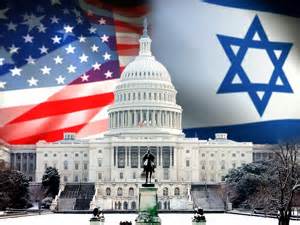 I can barely stand it anymore. The knee-jerk reaction to Obama and his supposed lack of support for Israel is fueled by either rank partisanship or blatant ignorance. Signing the agreement with Iran is part of the protection of Israel not a threat to Israel. Moreover, in terms of traditional support Obama has been strengthening the US-Israel relationship and maintaining its historical bonds.
If you don’t think so then you’re just not paying attention. Below I’m going to be simple, clear, and blunt. For additional information go to the National Jewish Democratic Council. This is a Jewish organization and they are more likely to be demanding in terms of support for Israel. If anything, they are going to be a difficult group to please so when they expressed their satisfaction with Obama’s support you know it must be substantial. On the National Jewish Democratic Council site you can follow links to more original documents and click your way to the original sources of evidence for the issues I list out below.
- In a speech in 2013 Obama stated emphatically that the United States stands with the State of Israel. He pointed out that Israel was recognized quickly by the United States 65 years ago and continues to be Israel’s closest international friend.
- Obama has provided Israel with as much and in many cases more military aid than any time in its history. This includes $275 million for the Iron Dome Missile System which is so important for Israel’s protection from Hamas missiles.
- Obama signed the US-Israel Enhanced Security Act which provides additional weaponry for Israel’s defense. This includes bunker busting bombs, F-35 fighter planes, and fast tracking arms sales.
- As much criticism as Israel receives, Obama has clearly defended Israel’s right to self-defense and has maintained support for the position that the Palestinian issue should be bilateral. The US continues to vote consistently with Israel and has defended Israel’s legitimacy on the world stage.
- Israeli leaders such as Shimon Peres, Michael Oren, Ehud Barak, and on more than one occasion even Benjamin Netanyahu have praised President Obama and noted his strong support and alliance with Israel.
- The US has continued to support Israel behind the scenes in numerous subtle ways. For example the US and Israel continue to coordinate to combat smuggling and engage in military exercises designed to protect Israel.
- Even with the Obama-Netanyahu spat the two allies remain close and it has not been Obama who has wavered in his support.
- A narrow definition of support is what primarily informs those who continually complain about insufficient support for Israel. That definition is typically limited to military aid and other financial means. Obama’s diplomacy, and his slower more deliberative approach to the issues, must be considered a serious form of support and not appeasement. The critics of Obama when it comes to Israel have a narrow definition of the management of conflict and images of peace. No true legitimate third-party can be so blatantly supportive of one side at the expense of the other. If Obama and the United States are going to be true brokers of peace they have to be somewhat more inclusive. Difficult as it is, a truly sustainable relationship between Israel and its neighbors will come when there is some sort of peace agreement. And such an agreement will include the interests of others as well as Israel. That, too, is what it means to be supportive of Israel.



 Peace and Conflict Politics