Category Archives: Communication and Conflict Resolution
How Group Membership Distorts Political Thinking and the Impossibility of Quality Political Communication
 Watching citizens yell at one another during debates and political discussion has reminded me of something more than the loss of civility. It prompts me to recall the distorted communication that occurs so often during political conversation. These distortions in meaning and argument result from the ingroup mentality of belonging to a particular political party. People cling to their own beliefs as driven by reasoned analysis of the real world while the beliefs of others are the result of ideology, emotions, and biases. We easily divide political rivals into simplistic binary categories: red states or blue states, Democrats vs. Republicans, liberals and conservatives. Add to this the combustible mix of bloggers, talk radio hosts, and TV pundits and political discourse becomes hot and hostile rather than deliberative and respectful. Actually, labeling oneself as a member of a preferred group (e.g. “I am a conservative” or “I am a Democrat”) is dangerous and results in information distortions.
Party identifications are the result of people categorizing themselves as a member of an ingroup defined by certain characteristics. By categorizing myself as say “a Republican” I adopt characteristics of similar others, and embrace a list of appropriate beliefs and behaviors. I start to speak and behave in ways that I believe are consistent with my membership in this group called “Republicans.” When my group membership is coupled with motivations to enhance my own group’s self esteem, then I will produce favorable judgments and evaluations about my own ingroup, and unfavorable evaluations about outgroups. Thus, as a Republican I would consider myself a patriot and Democrats as socialists. This is a dangerous situation that produces serious errors and failings in political discourse. Let’s examine a few.
One thing that happens with strong group identification is that the social norms of that group become overly influential. If I identify as a “Democrat” then I will be more than usually influenced by how I imagine Democrats think and behave despite the merits of an issue. I will be more influenced by party membership than policy. In one research study Democrats and Republicans were given a policy statement and told that the policy was supported by either a majority of Democrats or Republicans. Subjects in the study disproportionately favored a policy when it was identified with their own political party. This means that political judgment is too influenced by group identification and not sufficiently the result of objective consideration and analysis.
Secondly, being a member of a political party causes partisans to make biased conclusions. People explain and judge political behavior on the basis of their own political worldviews. Hence, a conservative when confronted with someone from poor economic circumstances will easily attribute this to laziness or lack of ability where a liberal will cite unfavorable social circumstances. Again, the explanations for political events should be based on deep consideration of issues and more complexity (many things explain poor economic circumstances), not simply on consistency with my own group’s ideology.
Excessive suspicion and negativity toward politicians is a third bias of political party membership. During the healthcare debate Obama was called a socialist and even likened to Hitler (a strange confluence of political ideologies!). These extreme negative judgments about a politician’s character result when a politician from the other party (the outgroup) presents a position inconsistent with your own group’s position. Under these circumstances there is a tendency to exaggerate differences and attribute personal blame to the other.
Finally, political party favoritism has a strong emotional reaction because partisans are so motivated to favor their own group. For Democrats, their strong negative emotional reaction to George W. Bush diminished their ability to arrive at logical conclusions. If Bush was for something, Democrats were against it.
The healthcare debate, for example, has to be won on its merits. The above problems can be overcome by increased communicative contact with members of the other party and a widening of goals such that people see themselves more interdependently. Proper political communication is difficult and challenging but given the alternative it is a challenge we must meet.
Just Pay Attention to the Data: Hillary Clinton is fundamentally Honest and Trustworthy
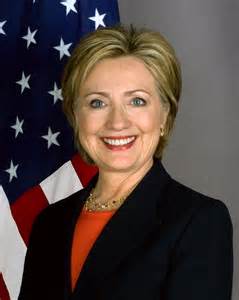
I hear plenty of people blurt out that Hillary Clinton is “untrustworthy” or “they don’t like her” or even that she is a “liar.” But when I press them on this, when I say give me examples and ask them to explain why in any detail they usually can’t tell you. The least prepared will say something like, “I don’t know, I just don’t like her.” (That’s a compelling analysis!) Others will rush to the examples of her email or Benghazi, or if they’re old enough they will mention Whitewater and Vince Foster. These are all attacks on Hillary Clinton designed to damage her even though they have no basis in truth or blaming her is unjustified. It is about time she combats this image with more enthusiasm. The below is as good start and is re-posted from The Guardian
It’s impossible to miss the “Hillary for Prison” signs at Trump rallies. At one of the Democratic debates, the moderator asked Hillary Clinton whether she would drop out of the race if she were indicted over her private email server. “Oh for goodness – that is not going to happen,” she said. “I’m not even going to answer that question.”
Based on what I know about the emails, the idea of her being indicted or going to prison is nonsensical. Nonetheless, the belief that Clinton is dishonest and untrustworthy is pervasive. A recent New York Times-CBS poll found that 40% of Democrats say she cannot be trusted.
For decades she’s been portrayed as a Lady Macbeth involved in nefarious plots, branded as “a congenital liar” and accused of covering up her husband’s misconduct, from Arkansas to Monica Lewinsky. Some of this is sexist caricature. Some is stoked by the “Hillary is a liar” videos that flood Facebook feeds. Some of it she brings on herself by insisting on a perimeter or “zone of privacy” that she protects too fiercely. It’s a natural impulse, given the level of scrutiny she’s attracted, more than any male politician I can think of.
I would be “dead rich”, to adapt an infamous Clinton phrase, if I could bill for all the hours I’ve spent covering just about every “scandal” that has enveloped the Clintons. As an editor I’ve launched investigations into her business dealings, her fundraising, her foundation and her marriage. As a reporter my stories stretch back to Whitewater. I’m not a favorite in Hillaryland. That makes what I want to say next surprising.
Hillary Clinton is fundamentally honest and trustworthy.
The yardsticks I use for measuring a politician’s honesty are pretty simple. Ever since I was an investigative reporter covering the nexus of money and politics, I’ve looked for connections between money (including campaign donations, loans, Super Pac funds, speaking fees, foundation ties) and official actions. I’m on the lookout for lies, scrutinizing statements candidates make in the heat of an election.
The connection between money and action is often fuzzy. Many investigative articles about Clinton end up “raising serious questions” about “potential” conflicts of interest or lapses in her judgment. Of course, she should be held accountable. It was bad judgment, as she has said, to use a private email server. It was colossally stupid to take those hefty speaking fees, but not corrupt. There are no instances I know of where Clinton was doing the bidding of a donor or benefactor.
As for her statements on issues, Politifact, a Pulitzer prize-winning fact-checking organization, gives Clinton the best truth-telling record of any of the 2016 presidential candidates. She beats Sanders and Kasich and crushes Cruz and Trump, who has the biggest “pants on fire” rating and has told whoppers about basic economics that are embarrassing for anyone aiming to be president. (He falsely claimed GDP has dropped the last two quarters and claimed the national unemployment rate was as high as 35%).
I can see why so many voters believe Clinton is hiding something because her instinct is to withhold. As first lady, she refused to turn over Whitewater documents that might have tamped down the controversy. Instead, by not disclosing information, she fueled speculation that she was hiding grave wrongdoing. In his book about his time working in the Clinton White House, All Too Human, ABC’s George Stephanopoulos wrote that failing to convince the first lady to turn over the records of the Arkansas land deal to the Washington Post was his biggest regret.
The same pattern of concealment repeats itself through the current campaign in her refusal to release the transcripts of her highly paid speeches. So the public is left wondering if she made secret promises to Wall Street or is hiding something else. The speeches are probably anodyne (politicians always praise their hosts), so why not release them?
Colin Diersing, a former student of mine who is a leader of Harvard’s Institute of Politics, thinks a gender-related double standard gets applied to Clinton. “We expect purity from women candidates,” he said. When she behaves like other politicians or changes positions, “it’s seen as dishonest”, he adds. CBS anchor Scott Pelley seemed to prove Diersing’s point when he asked Clinton: “Have you always told the truth?” She gave an honest response, “I’ve always tried to, always. Always.” Pelley said she was leaving “wiggle room”. What politician wouldn’t?
Clinton distrusts the press more than any politician I have covered. In her view, journalists breach the perimeter and echo scurrilous claims about her circulated by unreliable rightwing foes. I attended a private gathering in South Carolina a month after Bill Clinton was elected in 1992. Only a few reporters were invited and we sat together at a luncheon where Hillary Clinton spoke. She glared down at us, launching into a diatribe about how the press had invaded the Clintons’ private life. The distrust continues.
These are not new thoughts, but they are fundamental to understanding her. Tough as she can seem, she doesn’t have rhino hide, and during her husband’s first term in the White House, according to Her Way, a critical (and excellent) investigative biography of Clinton by Jeff Gerth and Don Van Natta, she became very depressed during the Whitewater imbroglio. A few friends and aides have told me that the email controversy has upset her as badly.
Like most politicians, she’s switched some of her positions and sometimes shades the truth. In debates with Sanders, she cites her tough record on Wall Street, but her Senate bills, like one curbing executive pay, went nowhere. She favors ending the carried interest loophole cherished by hedge funds and private equity executives because it taxes their incomes at a lower rate than ordinary income. But, according to an article by Gerth, she did not sign on to bipartisan legislation in 2007 that would have closed it. She voted for a bankruptcy bill favored by big banks that she initially opposed, drawing criticism from Elizabeth Warren. Clinton says she improved the bill before voting for passage. Her earlier opposition to gay marriage, which she later endorsed, has hurt her with young people. Labor worries about her different statements on trade deals.
Still, Clinton has mainly been constant on issues and changing positions over time is not dishonest.
It’s fair to expect more transparency. But it’s a double standard to insist on her purity.
How Hillary Wins Especially If Trump Picks Charlie Sheen as His Running Mate
The above video poses a reasonably serious analysis of Trump’s stability and personality disorders. It is a fair campaign issue. Discrediting Trump needs to a key chapter in Hillary’s playbook.
There are two strategic directions that lead Hillary Clinton down a path to victory. The first is the basic campaign function of not only defining yourself but defining your opponent. The second is demographics and the Electoral College strategy. This post will be concerned with how Hillary Clinton should define Donald Trump; what is a winning strategy here and how does Hillary incorporate Trump’s longtime personal and corporate brand into an unacceptable election brand. Next week I will take up the Electoral College and demographic issues that Hillary must exploit.
Hillary, of course, needs to work on her presentation of self as well as her image as someone who is untrustworthy and entitled. But progress on this front will be difficult and I would not spend that much time on it. Secretary Clinton has been around a long time and deep seeded images of her trustworthiness will be difficult to dislodge. The Republicans have been persistent and successful for decades at attacking her and simply letting the attacks do the damage and later walking away from the truth.
Secretary Clinton should spend most of her time not defining herself but defining Donald Trump. And the campaign must be channeling me because last week she initiated attacks on Trump that were perfectly timed, consistent with his negative narrative, believable, and resonant with the electorate. It might have been a pivotal week in the campaign where Hillary Clinton finally captured command of the news cycle as well as the discursive infrastructure necessary to make progress on combating Trump.
I have made the point a few times in previous blog posts, as well as in my everyday discussions with friends and colleagues, that Trump can legitimately be defined as “unstable” in the clinical sense of the term. His instability, and ensuing danger, should be the commanding narrative or “brand” that defines Trump. This strategy is defensible in numerous ways:
First, most of what Trump is arguing is nonsense (wall between the US and Mexico, banning Muslims, sending back immigrants, trade war with China) and completely implausible. Clinton should speak to these things directly by challenging them and pointing out that Trump is incompetent and lacking the legislative skills to enact any policies. This will continue to define Trump as incompetent and by pointing out the logical consequences (even if it is reductio ad absurdum) of his proposals. This strategy will not destabilize his base, but it should be more effective for the rational others and those who do not fit squarely into Trump’s demographics.
Second, Hillary has to walk the line between not falling into Trump’s discursive traps and allowing him to define the rules of discourse but also being tough and finding the right street language to characterize Trump and his policies. This is another way of saying “Hillary can’t bring a knife to a gunfight.” She has to control the negative messages as much as possible.
Third, the “instability” strategy must be the driving theme of her campaign. And this must go beyond name-calling into actually branding Trump as lacking the manners and presidential standing necessary for the job. Successfully characterizing Trump as unstable requires a certain amount of subtlety because if the message is too aggressive there will be a boomerang effect and the message will be rejected as too extreme or implausible.
Soaring Oratory in the British Parliament
The soaring oratory of Tony Benn in defense of airstrikes against Syria harks back to the days when such speech making mattered. References for the material below and another perspective appears here.
So there will be another war. Last night, the House of Commons decided, by 397 votes to 223, to carry out airstrikes in Syria. After the result had been announced, after the morbid spectacle as hundreds of overstuffed suits cheered the news that people would shortly be dying at their hands, the Speaker and a few MPs congratulated each other on an orderly and decorous debate, on being sensible and well-mannered as they discussed whether or not to throw dynamite at people from out of the sky. We will bomb Syria, not because it’ll make anything better, but for purely symbolic and autotelic reasons: to be seen to be bombing, to kill for the sake of having killed. (Who else behaves like this?) So it’s not surprising that as the eternal war continues to spin out forever, all anyone wants to talk about is how great Hilary Benn’s speech was.
During the debate, Hilary Benn MP, son of the great socialist campaigner Tony Benn, delivered a 14-minute speech in which he defied Jeremy Corbyn to express his support for an air war in Syria, and seemingly everyone agrees that it was wonderful, statesmanlike stuff. He might be endorsing a thousand years of blood and slaughter, but what great rhetoric.
The reviews are pouring in, as if this were a West End musical instead of the overture to a massacre. “Truly spellbinding”, the Spectator gushes. “Fizzing with eloquence”, gurgles the Times. “Electric”, gloops the Guardian. The Telegraph‘s Dan Hodges, who can reliably be called upon to provide the worst possible opinion at any given time, goes further. “He did not look like the leader of the opposition,” he writes. “He looked like the prime minister.”
But none of this is true. It is, however, a very convenient stance for those who see failure to drool at the prospect of an aerial bombardment as an unpardonable offence, and something that they hope to turn into fact by constant repetition.
Hilary Benn’s speech was not the masterstroke of a consummate statesman; it was disingenuous nonsense. Even on the level of pure rhetoric: he imitated better speakers by occasionally varying his tone, rising from a sincere whisper to tub-thumping declamation without much regard for the actual content of what he was saying; this is now apparently what passes from great oratory. The speech was liberally garnished with dull clichés: “clear and present danger”, “safe haven”, “shoulder to shoulder”, “play our part”, “do our bit”. He said “Daesh” a lot, and mispronounced it every time.
As if the self-image of the British state were worth a single innocent life.
And then there’s what he actually said. Hilary Benn has form here: he voted for the 2003 war in Iraq (making him far more responsible for the rise of Isis than some of the people who will die in the airstrikes he’s so passionately promoting) and the disastrous 2011 air war in Libya. Much of his speech is familiar invocation of the just war doctrine: laying out the brutality of Isis, as if the eight British jets we’re sending could put an end to it; asking “what message would [not acting] send?”, as if the self-image of the British state were worth a single innocent life.
But along the way Benn made a few comments that were really startling, both callous and clunky. He mentioned the inevitability of civilian casualties only once. “Unlike Daesh”, he said, “none of us today act with the intent to harm civilians. Rather, we act to protect civilians from Daesh, who target innocent people.” Well, that’s fine then. As if our sincere good wishes mean anything when we’re lobbing bombs at a city from 30,000 feet.
He declared that the United Nations had been founded because, “we wanted the nations of the world working together to deal with threats to international peace and security,” rather than with the goal of abolishing wars altogether – wars like the one Hilary Benn MP helped start in 2003, which led to the one he helped start last night.
He gave a strange sort of credence to David Cameron’s absurd claim that there are 70,000 ground troops in the Syrian opposition ready and waiting to help Britain defeat Isis – while admitting that it’s simply not true, he insisted that, “whatever the number, 70,000, 40,000, 80,000,” their existence requires us to act now. Maybe there are a million, he may as well have said. Maybe there’s just one.
All of this was followed by a truly cackhanded coda. Addressing his colleagues in the Labour party, Benn said:
“We are here faced by fascists. […] And what we know about fascists is that they need to be defeated. And it is why, as we have heard tonight, socialists and trade unionists and others joined the International Brigade in the 1930s to fight against Franco. It is why our party has always stood up against the denial of human rights and for justice. And my view, Mr Speaker, is that we must now confront this evil.”
It’s a very strange comparison to make, especially as he aligns himself with a Tory war. During the Spanish Civil War, thousands of British left-wingers did indeed join up to fight against the fascists, but Benn’s new friends weren’t great supporters of the effort. George Orwell writes in The Lion and the Unicorn of the “frightening spectacle of Conservative MPs wildly cheering the news that British ships, bringing food to the Spanish Republican government, had been bombed by Italian aeroplanes.”
The British government choosing to attack a city halfway across the world for no good reason and to no great effect doesn’t have much in common with the heroism of the thousands who travelled to Spain, volunteering their lives against fascism. But there are other analogues. During the Spanish Civil War, the first mass aerial bombardment of a population centre was carried out by German and Italian pilots over the Basque town of Guernica. The town itself had little military importance; it’s possible the fascists committed their slaughter their just to see what their weapons could do. Up to 300 people died as they tried to go about their lives; the town was almost entirely destroyed. Afterwards, the massacre inspired a painting by Pablo Picasso, Guernica; a copy hangs in front of the General Assembly of the United Nations, put there to remind the delegates of the consequences of war. Clearly, as Hilary Benn’s speech shows, it isn’t working.
Trump is Wrong: Comparing the US to Other Countries

This entire article analyzes how the U.S. stacks up against the rest of the world. The data are clear. The summary below is from here by the Council on Foreign Relations. By way of example, these are the issues with respect to trade. Click on the link above for the entire visual data set. Trump is simply wrong about America and just fabricating stories to scare people and serve up red meat for his supporters.
In his recent State of the Union address, President Barack Obama said, “Anyone claiming that America’s economy is in decline is peddling fiction.” Some of Obama’s critics have countered that the United States’ standing in the world is slipping and that the country is losing out to rivals like China. So how does the United States actually measure up?
A new book from the Council on Foreign Relations (CFR), How America Stacks Up: Economic Competitiveness and U.S. Policy, examines how the United States has responded to global economic competition and benchmarks the United States against other advanced economies. The book is an invaluable resource in the 2016 presidential election cycle for assessing the Obama administration’s economic legacy and debating priorities for the next administration.
Clear infographic charts rate the United States against its competitors in eight areas: education, transportation, trade and investment, debt and deficits, worker retraining, corporate taxes, regulation, and innovation. It’s a good read.
Don’t be Fooled by Trump’s Use of Studied Sincerity

The video below is a dramatization (although not much of one) of “common sense” and part of its infrastructure, namely, “sincerity.” Donald Trump has been trying to capitalize on this deep-seated American value where “common sense” or “plain talk” or “telling it like it is” is glorified as the highest form of discourse. John McCain in 2000 termed his campaign tours as the “Straight Talk Express.” Bill O’Reilly’s “No Spin Zone” and the rhetorical technicalities of Bernie Sanders continue this effort to convince people that they are authentic and lack any pretenses. The Norman Rockwell image of the common man standing up to speak plainly is burned into our psyches and is an iconic image of communicative authenticity.
Well, I’m here to point out the dangers and the potential damage of this rhetorical shell game called “straight talk.” Trump is the worst perpetrator of this myth and he is successfully fooling millions into believing he is actually worth listening to. The assumption that one is “telling it like it is” or doing nothing but “talking straight” is a dangerous myth that weakens the quality of decision-making and directs attention away from substantive issues. Of course, for Trump directing attention away from substantive issues is just the point. Since he does not know anything about foreign policy, governance, or macroeconomics he has to redirect the conversation. Thus, he has spent his time trying to convince the populace that he is “sincere”.
Political communication is organized around language and symbols of various types so it is particularly important that we attend to words, their meaning, and how they are used. Otherwise we are confused about the state of political discourse and are likely to come to poor decisions. The myth of straight talk directs attention to a preferred ethical stance related to sincerity rather than the quality of reasoning. Sincerity is, of course, important because we do not want to believe our leaders or communicative partners are lying or manipulating us. But sincerity doesn’t have anything to do with the quality or truth value of what we are saying. You can “sincerely” say something stupid and inaccurate.
But it gets worse. Performing sincerity is designed to convince the listener that the source of the message is not only being truthful but also complete. The implication is that everything of importance and relevance is being said and nothing is left out. The speaker is providing all relevant information and nothing else is pertinent. This blunts the listener’s responsibility to pursue additional information. So when Trump says, “the economy is in terrible shape” (which it certainly and clearly is not) he wants you to accept that statement on the basis of his sincerity and not facts.
And it gets worse again. Convincing someone you are being sincere and speaking “straight” is designed to relieve the source of the message of any further responsibilities. The implication is you no longer need to inquire any further or challenge anything I have to say because I have “laid it all out.” It’s a way of saying a speaker is not responsible for what he says, and thereby sealing him from criticism, because he has fulfilled his responsibilities.
More than a few times I’ve heard people whom I know can barely pay their bills characterize the billionaire narcissist Trump as “telling it like it is” and a “man of the people.” To describe Donald Trump as “like the average guy” – meaning a sincere absence of artifice and symbolic trickery – means you have been thoroughly co-opted by the candidate’s studied sincerity.
Language and symbols are central to political communication, but so is critical inquiry. If leaders and political figures are going to be held responsible for their words, which is crucial to the democratic political process, then the capacities of the subject population must not be limited; it must be possible for them to interrogate leaders and satisfy truth challenges. Trump has skillfully convinced many to substitute his calculated sincerity for thoughtful critical inquiry. This can be dangerous and we have seen historical precedents for this danger.
The Twisted Logic of Cultural Differences

One of the most pressing and distressing cultural and communication problems is how you talk to the “other.” Group and cultural polarization is no longer an interesting insight posed by an academic or intellectual. No, it is common knowledge and easy enough to see even for the most disengaged citizen. It is the problem of perceived incommensurability when the belief that two cultures – especially cultures in conflict – are irreconcilably different. These differences cause distortions in the communication process resulting from the cognitive and political consequences of intergroup contact and the absence of bridging discourse that closes or shrinks cultural gaps. These distortions are apparent in discourses and interactions between the two groups that sustain violence. Although this results in damages and injustices to both sides there are ways to mitigate effects and work to transform the conflict into morally acceptable democratic argument.
The term incommensurability was introduced to refer to scientific values that were so different that they lacked any common unit by which they could be measured. Aristotelian versus Newtonian mechanics is an example. But over time incommensurability became associated with other ideas including concepts related to the humanities and social sciences. Cultures have been termed incommensurable and cultural incommensurability has been associated with diversity and other social agendas. Strong diversity advocates cherish incommensurability as a sign of cultural uniqueness and claim that all group and cultural differences lack some common units by which they can be compared. So, the difference between Palestinians and Israelis, for example, is equivalent to the differences between Aristotelian and Newtonian mechanics. There is no bridging language.
Thomas Kuhn explained that incommensurability referred to “irreconcilable differences” because two or more paradigms involve different sets of problems, definitions, and standards. It is possible to “interpret” the two incommensurable paradigms in a language other than the paradigm, which is what conflict resolution specialists do, but this will always be limited.
Cultures and groups polarize because they engage in a process of increasing differentiation. They develop negative identities such that part of the definition of group or cultural membership involves the rejection of the other. This produces extremes: being Israeli is defined as not being Palestinian, or being a Republican is defined as not being a Democrat.
Increasing differentiation explains how the discourse of difficult conflicts can devolve into contradiction, paradox, and double binds. The natural consequences of differentiation is to gravitate around binaries including binaries of ethnicity (Arab-Jewish), gender (male-female) religion (sacred-secular), history (war of independence-nakba), cultural narratives (victimization-displacement), politics (Republican-Democrat), and so on. Even when groups engage in communicative contact the result can be communication that dissolves into debates, arguments, and blame. These then harden into fixed positions and the sort of interest-based thinking that is not able to deal with identity-based conflicts. The doubly bound messages of conflict groups continue to stimulate the process of differentiation; that is, these groups reify incommensurability through the differentiation described above which results in a type of deformed communication where individuals are trapped by the accusations of the other. Each side of the conflict interprets the other as being responsible for its own oppression and the act of denying such a claim is understood as simply providing additional evidence of the claim in the first place. Thus, you have the twisted logic of group differences.
Attempts to win arguments such as “who started it” or what historical event is responsible for the current situation are typically futile and mostly damage the possibilities for dialogue. These binaries and double binds are so exhausting that the communication resources of both sides are depleted and continuing conflict differences becomes the accepted reality.
Blaming the United States for ISIS and Al Qaeda – Unjustified

It is already the case that it will have taken the US longer to defeat Al Qaeda and ISIS than it did Germany and Japan. There are two reasons for this. The first is the tendency to blame the United States for these problems, and the second is the role of religion in foreign policy.
Blaming the US
I find the argument that the US is responsible for ISIS and we are reaping what we sow to be indefensible and a rather weak argument. Here’s how the current litany of arguments blaming the US goes: ISIS is George Bush’s fault because of Iran. The Taliban are Ronald Reagan’s fault because we armed them to fight the Soviets. The splinter groups in Syria and Yemen are offshoots of Al Qaeda. The PLO, Hezbollah and Hamas are Israeli creations all because of the occupied territories. The jihadists in Libya are our fault because we supported the overthrow of the vicious dictator Qaddafi. I suppose I haven’t heard an explanation for how we are responsible for Boko Haram but I’m sure someone can construct one. We seem to be engaging in “post hoc ergo propter hoc” fallacious reasoning such that the existence of a terrorist group is looking for a cause and pointing to some prior act of United States.
America apparently has more influence than Islam even though jihad has a long history and every Middle Eastern slight gets easily interpreted as caused by Europe or the West. There are more than a few motivations that have their basis in religious imperatives that existed before the United States did. I accept that there are two sides to the argument about the legitimacy of the war in Iraq and related terrorist activity, but there’s a difference between justification for the war in Iraq and its prosecution.
WMDs (nuclear weapons) are one day going to be responsible for catastrophic destruction. The US is going to have to remain diligent and aggressive to prevent a mushroom cloud over New York City. And this is not hyperbole. The most likely political entities to make them available to terrorists are Iraq, Iran, North Korea, Pakistan. Stopping their potentialities in Iraq or anyplace else before they’re able to be used elsewhere is sensible policy. The levels of violence, organizational structure, and ideology associated with Al Qaeda or ISIS is beyond the capabilities of the United States. Even if United States is implicated in the creation of a few of these groups claiming that we are directly responsible seems to be quite a stretch.
And if Bruce Hoffman’s predictions are correct then ISIS and Al Qaeda will merge and the US will be the only “answer” to the problem rather than its cause.
Religion and Foreign Policy
The second reason Al Qaeda and ISIS are so difficult to defeat is the role of religion. This is, of course, a large issue and we can address it more fully at another time. But Jacob Olidort explains how soft power and attempts at democratic and rational conflict management are no match for the pull of theology and religion for ISIS and Al Qaeda followers. Salafism and other tenets of Islam provide a theological basis for jihad and other relationships between religion and politics. The United States is in no position to challenge the theology of ISIS or Al Qaeda when in fact this is exactly what must be done. Foreign policy rooted in religion make problems more recalcitrant and difficult to manage. Religion makes the actors on both sides more “devoted” than “rational” as Scott Atran explains. This makes them less subject to a shared an intersubjective reality that one day can provide the basis for common ground.
Cultural Differences and Conflict

I know, I know. Dichotomies like the ones below are typically exaggerations and overly simplistic. But such distinctions also represent the real world of how people think. And even if differences such as the ones below are not perfect, they are the sorts of differences that must find their way into solutions. These distinctions also necessarily simplify issues and make them more manageable. Besides, they are better than the cartoonish “Clash of Civilizations.”It is simply true that two cultures such as Islam and the West do not share universal standards of argument and reasoning. It is not that they are incommensurate, but they are sufficiently different such that certain points of articulation must be discovered and addressed. Moreover, the religious versus the pragmatic traditions of the East and West respectively make for numerous points of disagreement.
A Islam-West conflict will be considerably different than other international relations conflicts, which might be more subject to rational negotiation and decision-making. But any conflict between an Islamic and Western tradition will be filtered through identity and made more difficult and sensitive by identity. A conflict will always have to recognize the centrality of identity issues and find ways to manage them.
Differences between Islam and the West with Respect to Conflict Resolution
Islam The West
| 1. Believe an image of violent Islam is predominant in the West.
2. Peace is defined by the presence of Islamic values.
3. Issues of “face” and “honor” are particularly important.
4. Discourse of peace is the exception.
5. Modern social science is not very relevant.
|
1. Islam and the West are incompatible and Islam is a threat
2. Peace is the absence of war and found in pragmatism.
3. These issues are important but somewhat less so.
4. Discourse of peace is normal.
5. Importance of the social sciences and managing conflict.
|
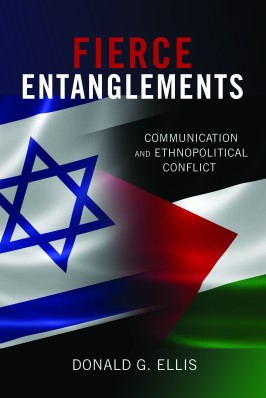
In my book “Fierce Entanglements” I cite 20 of these dichotomies but have only a few here for the sake of brevity and space. I think issues such as these deserve attention and I find that they get relatively little. One of our conundrums is that we currently live in an age of tremendous cultural difference recognition. Subgroups in a society demand recognition of their distinctiveness and the right to practice their culture even though it is at odds with the dominant culture. As a society, we increasingly take great pleasure in pointing to cultural differences.
But we’re much more hesitant when it comes to actually recognizing those differences legally and morally. When we generalize or categorize another culture we are quickly reprimanded and reminded of exceptions and variations. So, I do not know if all the distinctions referred to in the table above are justified, but they do represent a common template and for starters are worthy of discussion.
What do you think?
Trump and Post-Truth Discourse
[I am republishing this because it was an early warning about Trump and violence. The video tells the story of how Trump does not understand what he is responsible for.]
Trump is dangerous and worse yet he’s unaware of how dangerous he is or doesn’t care. Even at the risk of a little hyperbole we are seeing the consequences of a “post-truth” society where information is distorted, low quality, and attached to a cultish individual full of shibboleths rather than data or reasoning. The post-truth society no longer observes and gathers data in the service of a defensible conclusion; rather, one’s established beliefs and group identity seek confirmation and discourse becomes characterized by a series of cognitive shortcuts designed to confirm what you already believe. Below are three qualities of Trump’s discourse.
But first listen to Trump tell an audience that a heckler from the audience should be “punched in the face.” This is a man running for President of the United States encouraging the audience to start a fistfight. Trump does not even have a rudimentary understanding of his own behavior and the likelihood he could start a riot and hurt someone. His own social and political development is so stunted that he does not understand the tinderbox nature of the situation.
Here is Trump telling us he must be smart because he knows a lot of words.
Then again, this is the same presidential candidate who said the only way to defeat ISIS is to kill their family members. This is a candidate for president who is advocating for a war crime and instructing the military to break the law.
Trump is an essentialist. His rhetoric is filled with references to groups of people and their “essential” qualities. He refers to those who are “stupid” and “not the best.” He regularly makes references to a family member who is a professor at an elite university and to his own elite university attendance. He believes himself and his family are of superior descent. In the video Trump embarrassingly tries to perpetrate this myth by referring to how many words he knows.
Trump demonizes the other side. He refers to Hillary Clinton in extreme terms including name-calling, polarizing language, and blame. By creating the opposition as the “devil” incarnate then it becomes easier to scapegoat them and attach blame. He also has no qualms about dehumanizing others also referring to his opposition as “criminal” or “the most incompetent.” This demonization is simply a substitute for his own inadequacies. Trump essentially knows nothing about policy and hasn’t even taken the time to prepare. Moreover, his followers don’t want to hear policy they just want to hear tough talk and demonization.
Third, and more characteristic of Trump than any other candidate, is a strategy that says attack, blame, and accuse and don’t worry about accuracy or justification because the blame and the accusation is what will be remembered and not the explanation or the truth. Hillary Clinton is bombarded with accusations regarding Benghazi, or emails, or accusations about trustworthiness none of which have much merit but are all designed to do damage first and not worry about the truth. These are all tactics associated with authoritarians trying to damage in opposition rather than engage them argumentatively.
A more shocking and deeper question concerns the explanation for why so many people support Trump. He is not so difficult to explain but the collective delusion of the populace is far more troubling.



 Peace and Conflict Politics