Category Archives: Communication and Conflict Resolution

Why Putin’s Support of Syria Is Okay for Israel

Putin and Netanyahu

Even at the risk of overstating the point, Russia has an increasingly more accommodating stance toward Israel than most people realize. One reason for this is Russia’s claim to support political systems that defend their citizens. Edward Luttwak, writing in Tablet, sang Putin’s praises for his “defense of his friends” and criticized the Obama administration for abandoning their partners every time the police shoot at a protester. Putin supports Syria surely because he wants to keep his base at Tartus, but he also wants to establish Russia as a friend who can be counted on.

Putin expresses the same sensibilities about Israel – he respects their right to defend themselves. The more general and encompassing relationship between Russia and Israel is accommodating even though there is a history of contentious disagreement. The Soviet Union did align themselves with Arab nationalist governments and Israel and the Soviet Union were estranged for many years. But they exchanged ambassadors again in 1991 and continue to have a certain amount of trade. Israel occasionally sends fighter-bombers over Syria to hit Hezbollah targets and Netanyahu and Putin have agreed to inform each other about flight plans. Think about this a moment. Russia has accepted Israel’s right to bomb in Syria when Russia has troops and equipment on the ground. That requires a fair amount of trust and cooperation.

According to Michael Katz in the Middle East Quarterly Putin has worked to upgrade Russia’s relations with Israel. There are numerous flights each day from Tel Aviv to Moscow and a large Russian population in Israel. Still, we can’t be too sanguine about this because serious differences remain. Moscow supports Iran’s nuclear development and provides many of the construction contractors. This support for Iran is certainly puzzling because Russia may be a practical political system, but it clearly opposes and objects to ISIS and all the efforts to establish an Islamic state be it Sunni or Shia. Stopping the Islamic state, a goal he shares with Israel, is one of its stated justifications for its Syrian support.

Russia has had its own problems with the Chechnyans and can sympathize with Israel’s struggle with Palestinians and Jihadist Islam. In fact, the declaration of “no negotiations with terrorists” is probably the most characteristic statement that binds Israel and Russia. Putin has pointed out the similarities between the Israeli conflict with the Palestinians and Russia’s with the Chechnyans and this has translated into mutual sympathy. But is sharing terrorism experiences sufficient to move the Russians more toward Israel? I think not. Katz in the article referenced above believes a more recent Russian pro-Israel attitude is the result of Putin’s personal preference. Putin has a deep dislike for the Chechnyans and believes they have no justification for complaints against Russia. He refuses to recognize their complaints or negotiate with them. Couple this with Israel’s general agreement and sympathy for Russia’s stance toward the Chechnyans, and you have the makings of a common enemy resulting in Israel-Russian alignment.

In the end, the relationship between Russia and Israel will remain as complex and multifaceted as the situation in Syria. Israel is certainly gratified that Russia is bombing ISIS targets and considers them a threat. But, on the other hand, Israel has no sympathy for maintaining the Assad regime and will never align with Russia on this matter. Then again, to make matters even more confusing, Russia is attacking militias some of which are supported by the United States – a great friend of Israel.

Before you know it the United States will be siding with its enemy Iran (Shia Muslims) against ISIS (Sunni Muslims) and asking the Russians to stop supporting Alawite Muslims (the Assad regime) and join with the United States and Iran to fight ISIS, while Israel sits safely on the sidelines. Wait a minute! That’s what’s happening now.


Individual Decision-Making Is a Rat’s Nest of Distortions

bad decision-making

As Daniel Kahneman describes, there are two types of thinking. The first called System 1 thinking is quick, immediate, impulsive, emotional, and reptilian. It has its foundation in our early evolutionary development and has the advantage of being responsive quickly and almost automatically. So, sexually charged messages are processed without much thought and on the basis of an immediate emotional and physiological response. System 2 thinking came later in human development and it is slow, deliberative, and reflective. This is how decisions are supposed to be made in democracies and in the context of complex data and argument.

Cass Sunstein in his work on decision-making explains how there are not enough System 2 thinkers and, moreover, there is a tendency to think decision-making is mostly subject to System 2 thinking when much of it is corrupted by the anger and emotions of System 1 thinking. This is the trap of believing that individuals mostly maximize rational preferences and are rational actors. Sunstein and his associates in a number of their publications (cf. Wiser: Getting beyond Groupthink to Make Groups Smarter) claim that groups should be more deliberative and subject to System 2 thinking and therefore make better decisions. But they don’t.

Individuals who are making decisions are a rat’s nest of biases, distortions, and prejudices. They are overconfident, emotional, and will follow the herd. Their thinking is clouded by interpersonal relations including status hierarchies they wish to respect; they repress information that might upset someone; they seek information that confirms what they believe already and they are overly influenced by other individuals who are either attractive, particularly persuasive, or maintain some psychological “hold” on the individual. People who hold on to ideological beliefs with great fortitude and refuse to budge from their belief system, who automatically incorporate every position other than their own as either a threat or something to be embraced devolve into System 1 thinkers. This describes the Congressional Republicans as well as nationalistic and religious zealots.

System 1 thinking is so typically distorted and commonplace in decision-making groups that research has shown that decisions can be improved if members don’t meet. Statistical groups are sometimes superior because they focus on the task and eliminate social influences. But statistical groups do not have the epistemic advantage of communication which, if participants can overcome their distortions and improve their argumentative skills, has the potential of producing new knowledge and creative outcomes.

Statistical non-interactive groups may offer some decision-making advantages that accrue through the cumulative effects of individual knowledge and information. But they are quite deficient when dealing with deep differences and those who are intolerant and prejudice prone. The value and effectiveness of the contact hypothesis is a well-established and even demonstrates positive results with the most intolerant and ideological. Threat and anxiety reduction are one of the theoretical benefits of contact and these apply also to the highly intolerant.


Stories as Arguments

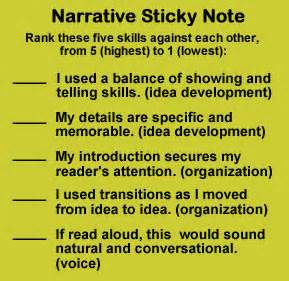
Stories play an important role in asymmetric ethnopolitical conflicts with each side using stories to legitimize their own experiences. Sometimes stories contribute to polarization between the two sides and strengthen the tendency to exclude others and classify them as morally objectionable. But stories play a particularly important role in asymmetric conflicts because the root of such conflicts is the relationship between adversaries and the influences of culture and history on these relationships. It is stories that carry meaning and narrate culture and history. Stories are the data that conflict participants in asymmetric conflicts use to support their version of history. Consequently, stories serve as powerful expressions of subjective reality that on the one hand must be taken seriously as a picture of the lived world of the participant, but are also used as arguments that can be examined and challenged.
narrative as argument

Stories as Arguments

Treating stories as arguments is a powerful form of communication analysis that resonates with human experiences. For asymmetrical conflict, narrative can be a communicative technique for pursuing common interests. In other words, a narrative is a story that relates to events and people. It has a plot, a storyline, and cast of characters. When someone tells a story, even an ethnopolitical narrative characterized by loss or violence, the story illustrates a reality of their life. The narrative has personal and ideological value to the individual and represents a lived experience that must be made sensible. A story that relates a real experience is the basic mechanism for conveying the nature of reality including judgments and the truth value of certain statements. It is both an individual subjectivity that is susceptible to all of the confusions and distortions individuals are capable of, as well as a story built on argument principles. If an Israeli is listening to the story of a Palestinian and the Palestinian tells the tale of oppression and difficult circumstances, along with subplots of personal experiences concerning confrontations with the military and violence, then that story is real to the individual and subject to debate and discussion, albeit difficult debate and discussion. The same is true for a Palestinian listening to an Israeli talk about historical discrimination, the state of Israel, and the moral and legal difficulties of the conflict. The stories are part of personal experiences and representative of the different ways of speaking and knowing that must be explored in dialogue by all participants.

The high standard of argument proposed by deliberation theorists is realistically out of reach and not descriptive of actual deliberation, which is more emotional than rational and rooted in “conversation argument” rather than theoretical models of argument. In the traditional description of an argument it is a formal structure that exists independently of individuals. Hence, it is not unusual to see diagrams illustrating formal relationships about claims, data, and conclusions. But conversational reasoning, which is where storytelling that functions as argument is expressed, views communication as pragmatic. A “conversational” argument is concerned with presumptive reasoning rather than logic.

Presumptive reasoning is based on pragmatics and draws conclusions from context in general usage of the term rather than from formal structure. This type of conversational reasoning is statistical in that it assumes a certain relationship exists. For example, I might say John (x) supports government welfare programs (A) and is therefore a Democrat (B). The relationship between (A) and (B) is presumptive or statistical in that the association is defensible but certainly not logically required. There are situations where (A) is not (B) and there can be conversational inconsistency. Certainly the idea of “supporting government programs” and “being a Democrat” can be definitionally inconsistent.

Reasoning processes like these develop their own standards of defensibility. The form of argument that occurs in everyday interactions is not dependent on logic but is informed more by how people reach acceptable conclusions. It is a frequent and persistent form of communicating between members of asymmetric groups. The presumptive relationship between supporting government welfare programs and being a Democrat will change over time and be influenced by many communication variables including contexts. The implications of this relationship between (A) and (B) and the questions and critical inquiry it stimulates are central to the deliberation process. Various psychological factors and levels of commitment will also influence deliberative communication. One could believe in the presumptive relationship and be emotionally committed to it even though it is indefensible on numerous evidentiary grounds. Arguments can be more easily inconsistent as well as failing to meet principles of proper inferential reasoning but still be influential. This is the nature of stories as argument.

How to Beat ISIS

defeating ISIS map

ISIS or the Islamic state is one of the most vicious and retrograde political and military forces to emerge in recent history. Their cruelty and wanton destruction of culture and history, along with a desire to install a restrictive and punishing religious order such as the caliphate, has attracted attention and stimulated jihadists. Most even minimally enlightened world leaders believe ISIS is a sufficient threat to warrant some sort of action. The issue is how to do it. Do we send in troops composed of Americans or do we maintain some distance and simply try to contain ISIS?

ISIS is a political system with a religious basis. It claims to be a state but rules primarily by force rather than political principle. It is also a terrorist organization. It must be stopped from acquiring territory or controlling geographic communities because that simply legitimizes them further and increases their capacity to operate. ISIS is determined and sophisticated (note their skilled media use) and the combination of their religious, political, and ruthless nature poses a particular difficulty and dilemma.

The best soldiers, the most ideal, would be Sunni who oppose ISIS. If you compose an opposition force of Shia then ISIS will just be further convinced that they are surrounded by an enemy that must be stopped. A Sunni opposition force requires money and training and this puts the US in the same place it is now – training a foreign force to fight the battles we want but are often a little bit less motivated. Between Vietnam, Iraq, and Afghanistan, we have not had all that much success at training soldiers in other cultures to fight the enemy we choose. The reasons for this are complex but it remains so difficult that it’s worth considering other avenues of influence. There is a tendency to fantasize about powerful and skilled US troops simply overwhelming and outsmarting the evil ISIS. Almost a movie version of how the good guys prevail. But it’s time we wake up from this dream and try more diplomatic maneuvering. Clearly, there is a place for military action and we should exploit it whenever possible.

Consequently, an alternative approach would be to persuade supporters of Syria to remove Assad but do it in a way that an Islamic state does not replace it. The presence of Assad is a recruiting tool because many extremists join ISIS pleasured by the thought of eliminating Assad and overthrowing a minority Islamic leader who is killing Sunnis. ISIS is a Sunni organization and no friend of Shia Iran. In fact, we have experienced US-Iran cooperation and coordination in the battle against ISIS. We should continue to cultivate a more cooperative relationship with Iran and enlist their help whenever possible. The nuclear treaty might play a significant role in improving the relationship between the United States and Iran (that’s one of its goals). The US should also be prepared to offer considerable humanitarian aid to the disadvantaged people of Syria.

We have to remember how difficult and intractable religious wars are. They are the most vicious and resistant to change because of the deeply held beliefs rooted in theology by both sides. Religious wars in Europe lasted for centuries. Borders were unclear and populations where displaced, destroyed, and disadvantaged. I would not expect such religiously motivated wars to be any different in the modern Middle East.

Finally, we have to remember that we are fighting an ideological war. Military action is called for but will certainly be insufficient by itself. The US and its allies will require a deep penetration into the workings of ISIS and the jihadist states that support it. There is a tendency to believe that ISIS is an independent operator when in fact they are supported by jihadist states. It is also typical to think that ISIS and jihadist states are so religiously committed and motivated that they cannot be deterred. There is some truth to this but it does not diminish our ability to weaken them and deter their supporters such as arms dealers, financiers, and other institutional forms of support. Defeating this aggressive, subversive, and expansionist politico-religious movement will not be easy.


The Donald Trump Help File: The Difference between Hamas and Hezbollah

Trump

I don’t usually write about domestic politics in this blog space but since Trump is so uninformed, and proud of it, I thought I would help him out a little bit. Trump barely knows what he’s talking about – and on other occasions knows nothing about what he’s talking about – but is actually one of the few candidates who has turned that into a positive because he gets aggressive with anybody who questions him. During a radio interview the other day he was asked about the differences between has Hezbollah and Hamas. When his ignorance is challenged he returns the aggression by accusing the questioner of asking “gotcha” questions, as if the leader of the free world isn’t supposed to know anything. Trump continues to claim he’s is an excellent delegator who will get the best people in place and five minutes after he’s President he’ll be thoroughly informed and know more than everybody else. I guess Trump believes that the American people are electing a delegator not a leader. In one interview when Trump was asked what he would do about Obama care he answered by saying, “I’ll get rid of it and replace it with something terrific.” It was comforting to hear that his health care program will be “terrific.”

Trump whines like a baby every time someone asks him a question that requires a substantive answer. So I thought I would help him out a little bit since the issues do fall within the confines of this blog. I’ll briefly outline some distinctions for him that should be sufficient to get him through the next debate. If he wants more detail – and I’m sure he doesn’t – he will have to dig it up himself or have one of his delegates do it.

For starters, Hamas and Hezbollah share a few things in common as both oppose the West and Israel and they are fundamentally animated by Islamic extremism. But the differences remain clear enough and the Donald can strut his stuff if he learns them. If Trump offers up even a morsel of accurate information his credibility will soar.

Hamas is based in Palestine and has a military wing. It was founded by Shaeikh Yassin and is rooted in the Muslim brotherhood. It operates primarily in the West Bank and Gaza and when it’s not challenging Israel it emphasizes social services for the people of those areas. The Israelis started out by supporting Hamas because they thought it would be a counter influence to secular Fatah. But after a number of Hamas attacks Israel altered its relationship.

In 2006 Hamas was successful at winning a majority of seats in the Palestinian legislature thus establishing themselves as the representatives of Gaza. Interestingly, Hamas and Hezbollah share a common hatred and opposition to Israel but differ fiercely with respect to their own brand of Islam. Hamas is primarily a Sunni organization and Hezbollah is Shia. This is a significant difference between the two.

Hezbollah is based in Lebanon not Palestine and fights Israel from southern Lebanon. Hezbollah means “army of God” and carries out suicide bombing, kidnappings, along with support from Iran.

Both of these groups are dangerous threats to Israel and have easy access to weapons, especially Hezbollah who receive sophisticated military support from Iran.

I could provide Trump some reading but how simple it is to Google these two groups and just do it himself. Or, Trump could delegate the task since he is such a skilled delegator. Have one of his delegates Google it for him.


The ISIS Group Nightmare

ISIS T-shirt

Just when you thought you had heard of about every atrocity and psychotic group behavior, ISIS creeps into your dreams like a nightmare from ancient history. Beheadings, chemical warfare, mass murder, destruction of cultural, religious, and artistic sites are all tools for new political theory. Then, as the world sort of drifts into a coma rather than sleep we get nightmare 2.0 in the form of theocratized rape and slavery. Apparently, the Quran justifies rape and slavery as long as you pray properly beforehand and stay within the religious leaders “Handbook Governing Rape”. Yes, as David Brooks reported in the New York Times on August 28, ISIS leaders have a handbook to govern how to handle rape and slavery and it even has a helpful question and answer section. The example section below is from the David Brooks opinion article on Friday, August 28, page A21. Question 13 below is from the religious leader’s handbook of when rape and slavery are theocraticly justified

“Question 13: Is it permissible to have intercourse with a female slave who hasn’t reached puberty?

“It is permissible to have intercourse with a female slave who hasn’t reached puberty if she is fit for intercourse; however, if she is not fit for intercourse it is enough to enjoy her without intercourse.”

Anonymous, writing in the New York Review of Books, and Paul Berman writing in Tablet have confessed to confusion about how ISIS seems to defy some of the standard explanations for revolutionary movements. ISIS continues to succeed in gaining the respect of local communities, attracting foreign fighters from all sorts of cultures (some Islamic some not) and even managing an infrastructure of administrative efficiency, police services, military strength, and economic development.

How can this be!? Most experts, as Anonymous explains in the New York Review of Books, don’t get it. They admit to being confused. One explanation is that ISIS inherited Saddam Hussein’s Baathist administrative structure including a security apparatus and an officer corps. There is probably some truth to this but it’s not much of an explanation for the barbarism that defies human history. ISIS has transgressed every tick of human progress. Just when you thought there were times in history when the moral carcass of human nature lifted its head to inch forward in progress – the times of democratic flowering in Greece, the Reformation, religious tolerance, the Enlightenment, the Magna Carta, the Declaration of Independence, world organizations for peace – when you thought we had learned something and were progressing, ISIS comes along and reminds us that mankind has not really learned its lesson.

I suppose we are not capable of learning. Some generation seems to make progress, and we experience something like the Nazis and assume we’ve learned a lesson. But the lesson is for naught because a new generation is born of a blank slate; we can’t pass the lessons onto the next generation except through education which is itself subject to so many influences the that it is an unreliable teacher.

ISIS is raw and naked group identity. The individual members share a set of basic values and belief in enduring characteristics. This sense that a group’s history is unique and its traditions preserve the group’s identity and comprise it is particularly true of religious groups. ISIS’s desire for positive evaluation is so great that they can justify anything. They make intergroup comparisons and of course value their own group to such an extreme that anything, even the most despicable violence, is justified in the service of their group identity.

Durkheim theorized, probably correctly, that all societies made the distinction between the sacred and the profane and something becomes sacred the more it is associated with the collectivity and the power of the collectivity to protect, reward, and punish. The sense of tribal or group identity is the building block of religion.

Future posts will take up this issue and explain how intergroup conflict is particularly recalcitrant when it comes to religious group identities – but “recalcitrant” is too mild a word for the existence of ISIS.

You can read more about these issues here


The Pull of Nationalism

Nationalism

Nationalism is the love of nation. It is the love of your group and usually your ethnicity and those who look and behave like you. I’ve written before that nationalism and group identity are natural and even a source of pleasure and security. It’s a strong impulse based on the belief that you are of common descent with others like you. I had a student last year who was Irish and claimed to love all things Irish and was a fierce defender of Ireland. He had never been to Ireland and knew little more about Ireland than green beer on St. Patrick’s Day. But he felt this kinship with Ireland.

Of course the most vicious nationalist was Hitler and he and his glorification of Germany represents certainly the extreme. I don’t care to focus or write about Hitler because it is too easy and so much has been said that his character is almost cartoonish, which is not to say that he should not be studied and understood. And nationalism can rear its ugly head even if it is not in this extreme form of Hitler’s National Socialism or the Nazi party. But there are some interesting qualities of nationalism that I think are common to the idea personifying the nation whether it be benign and warm nationalism or the vicious extreme. Three of these qualities are described below.

  1. It is pretty much impossible to fight a war without it being associated with a “nation.” Again, nation is typically associated with a large political collective, but small groups who consider themselves oppressed and victimized can see themselves as consistent with the ideas of nationalism and the nation. ISIS is both a political and a religious group and while they are typically not described as nationalists there impulse to glorify Islam and political Islam is fueled by the fires of a nationalist psychology. Relatively few wars these days are purely over pragmatic and rational resources. Most of the difficult conflicts in the world have some element of nationalism or ethnic identity that stimulates violence.
  2. Nationalism wraps its ideas in sanctity. There is a sense that the state, or the land, or the people are sanctified which makes them special and above the fray. Nationalist literature refers to the ease with which soldiers go off to their death because they know they are defending sanctified land and ideas. Groups like ISIS justify unimaginable horrors (beheadings, sexual assault, slavery) on the basis of their presumed sacred ideas. And there is nothing sophisticated in any intellectual or political sense about these ideas.
  3. When issues and ideas are sanctified it’s easy to turn them into binaries; that is, the contest becomes between the forces of “good” and “evil.” You see in their literature metaphors of darkness and light. This creates a virulent form of competition and discourse where the only way to win is to annihilate the other and defend yourself which is justifiable because the threat is existential. There is no talk that might develop new relationships or negotiation in the service of common goals of “tolerance” or “give-and-take” or “compromise.” The struggle is only between life and death.

Psychologies that are conducive to sustaining the type of intensity and extremes associated with an Armageddon mentality begin to crop up and develop. Ordinary people begin to believe their leaders and nationalist entrepreneurs who are telling them that they are a “chosen elect” who are duty-bound to rid the world of an enemy. People are not born with these ideas and extremist capabilities. They are recruited into a smaller group environment and socialized (the common term “brainwashing” applies here) into a set of beliefs and psychological states of readiness to accept what seems to be indefensible and outrageous beliefs.

Of course, the first thing to do is to identify a threatening outgroup and begin the process of heaping blame on the group on your way to justifying any sort of treatment of this “enemy.” This group can be Jews, the West, democracy, or any convenient outgroup. It is the extremes of nationalism that are important to pay attention to. I reiterate that common ingroup identity is probably evolutionarily necessary and capable of individual protection and reinsurance. We may think that Hitler and Nazi Germany were extreme examples, but you do not have to look far to see it happening again.


The Deal with Iran

The case against the deal with Iran.

Obama on phone


The case for the deal by Thomas Pickering


Key Communication Elements of Dialogue

Conflict! I’m interested in the efficacy of communication and write regularly about how communication works and why it is fundamentally and by definition the best way to elicit change. One of the most important contemporary questions is how differences engage one another; how do individuals and groups with incommensurate realities and significant cultural variation manage their relationship? One way is intergroup dialogue which has been written about but remains an ethereal concept considered by many to be an idealized form of communication that is difficult to achieve. I remain resolute in my conviction to continue to discuss dialogue as a pragmatic and achievable form of communication that is not overly romanticized. Dialogue is a particular type of communication designed to solve problems that require mutuality, cooperation, and change. In these terms – mutuality, cooperation, and change – are not niceties but theoretical requirements.

Intergroup dialogue is really about action. It’s about how you collaborate with others across differences with the goal of social justice and problem solving in mind. Solidarity-based communication is that between similar people working on a similar problem. The interaction is cohesive and reinforcing with goals of stimulation and accomplishment of objectives to bring about any desired change. But bridging discourse, as termed by Dryzek, is between people of who are different and trying to find ways to manage the differences between them, trying to reach across information, cultural, and intellectual divides. Most important dialogue struggles with bridging discourse and it is of course the most difficult.

There are a variety of perspectives and approaches to dialogue, but one of the most thoughtful and theoretically well-developed perspectives is critical-dialogue as described by Nagda, Gurin, and others. These authors have identified four communication processes that are particularly important and pertinent to the dialogic process. Each of these four is required and part of the challenge of establishing conditions for successful dialogue. You can read more about these processes here.

  1. Engagement: This is primarily the requirement that dialogue be taken seriously and individuals be personally involved and committed. These are not the conditions for social loafing; dialogic contact with somebody of difference, when the problems are real and significant, needs the participants to engage in the full range of committed communication. Participants must take risks, assert themselves into the story, and do the hard work of listening empathically as well as critically without overweighting one.
  2. Appreciate differences: Politics is essentially the management of differences. Solving problems in general conflict resolution is the same. Differences are fundamental and the goal is not to eliminate them but to manage them. For this reason, an appreciation for differences is crucial. Democracies in particular use the communication process to manage differences. There is simply no peaceful resolution to problems without understanding the perspective of others, creating trust across differences, and even trying to participate and when appropriate adopt differences. Again, the goal is not simply the aesthetic appreciation of differences but the pragmatic issues of empathy, understanding, and the ability to argue and communicate in a manner that resonates with the other.
  3. Critical reflection: Again, the unreflective and rigid presentation of self is always limited by the boundaries of the self. Critical reflection is the ability to examine one’s own assumptions including finding those places characterized by bias, stereotypes, and distortions related to how the other is perceived including unfair sources of power and manipulation. Any genuine attempt to solve problems requires participants to think critically about their own patterns of communication and thought processes. Moreover, participants in dialogue must be able to recognize the sources of bias and inequality in both themselves and others but in particular themselves.
  4. And finally, building associative relationships: Participants in dialogue groups must build something together. As often as it has been said, and as easy as it sounds participants in conflict must eventually explore common goals to develop new associative relationships that are conducive to resolving intergroup conflict. There is plenty of research that supports the impact of intergroup dialogue. Its goal is to foster the bridging of differences and these four communication patterns of the mechanisms that accomplish these goals. True enough they require additional research and operationalization but these form the foundational theoretical underpinnings

Paul Berman on the Confederate Flag and What BDS (Boycott, Divest, Sanction) Does not Seem to Understand

Confederate flag


The article by Paul Berman on the Confederate flag debate is just too good to pass up. Click here to read it.


The BDS movement (which stands for boycott, divest, and sanction) against Israel is an aggressive social movement designed to challenge the existence of the State of Israel. The video below is a typical example of the BDS arguments against Israel. They are the standard exaggerations designed to criminalize and delegitimize Israel. The goal is not simply to pressure Israel but to challenge the very existence of the Jewish polity. Take a few minutes to watch the video.

A report on just who runs, funds, and supports BDS is available here. The report explains how BDS presents itself as a movement for human rights designed to economically pressure Israel. The BDS organization claims it is doing little more than engaging in the democratic process by organizing for a social cause. They present themselves as a grassroots Palestinian organization inspired by issues in human rights. The truth is that BDS is part of the ongoing campaign to subvert the Israeli economy in an effort to damage the state.

The BDS movement misleads institutions and international organizations into believing that they are a benign social movement looking to establish a Palestinian state and the peaceful coexistence of Israelis and Palestinians. The truth is that they are far more aggressive and have malicious intentions with respect to the state of Israel.

What the BDS Does Not Understand

But interestingly the BDS movement does not realize the damage it does to Palestinians. They are so preoccupied with their own ideology that they are, in fact, doing more damage to the Palestinians and the prospect of peace than they are to Israel.

The BDS is making things worse for the Palestinians. BDS is misreading the relationship between the Palestinian economy and the Israeli economy. A recent article in the publication Fathom explains how Palestinian unemployment is related to strains in the Israeli economy. There has been a marked decline in Palestinian employment in Israel which the authors estimate amounts to 13% of Palestinian GDP in 2005-2006. Palestinian work in Israel is central to the good health of the Palestinian economy. And this will remain true even after some future peace agreement is signed. The state of one side’s economy in a conflict is important to the peace process because economic stability is necessary after treaties and agreements are signed. Otherwise, economic problems are the primary reason peace accords fail. Estimates are that the size of the Palestinian labor force needs to double. The report in Fathom goes on to clarify the impact of restrictions on Palestinian labor and on the future importance of a flow of labor into Israel from Palestine.

BDS is raising poverty levels in Palestine. When BDS opposes economic ties with Israel – Palestinians go hungry. The settlements are a problem and Israel must confront them in the future. There is little doubt that a hypothetical future peace arrangement will include the removal of many settlements. But to boycott settlement products only damages Palestinians. Settlements provide work for Palestinians who are paid on the average twice as much as those employed elsewhere. Moreover, there are some successfully Israeli-Palestinian business arrangements that will be important as future models of coexistence but boycotts threaten these partnerships.

Economic partnerships and interdependence creates unity and trust. They are an important foundation for peace. Organizations such as Hamas gained popularity through their social support programs and Hamas will be more attractive as economic conditions worsen. Boycotts and divestment will not lead to cooperation, improved fiscal infrastructures, and energized entrepreneurship. Any successful consequences of BDS will harm only Palestinians and, ironically, slow the removal of settlers from the West Bank.