Category Archives: Political Conflict
The Agony of Contentious Language in the Israeli-Palestinian Conflict
 There is a tendency, even for those who know better, to think of language as a simple carrier of meaning. That is, language is the mechanism that packages up meaning and does the work of transferring it from one person to another. So we refer to the “war” in the Middle East and this term “war” carries the vast and complex array of images and meanings that attend to the concept of war. But language is a symbol system that connects a sound or visual image with meaning and this connection is tenuous and changeable. It is not stable and simple. Language not only reflects cultural differences and nuances of meaning but also” constitutes” and creates meanings. Calling the Israel Palestine conflict a “war” implies images of purposeful behavior on the part of both parties to engage in violence, identify territory that one side is defending, and images of clashes between the two sides. But this does not describe the Israel Palestine conflict very accurately.
There are two qualities of language that are pertinent here: the first is this constitutive quality of language where if I refer to something in a particular way I can influence your perception of it and “constitute” a version of reality. This is a relatively simple notion. If I use a racial or ethnic epithet to describe someone or their group I am creating an image of them. I can manipulate the importance of an issue by changing the way I refer to it. During the Vietnam War there used to be “search and destroy missions” but this made the image of the American soldier to aggressive and violent so the term was changed to “reconnaissance in force.” Labeling the unintended killing of innocents as “collateral damage” is a well-known example of constituting desired meaning. These sorts of things are not simple verbal trickery but attempts to alter how you understand an action. A recent article in the Forward noted how the situation in Gaza changed Hebrew and the Hebrew adapted to the conflict. In the beginning the Israelis referred to the fighting in Gaza as mivtza or an “operation” and not as milhama which is the everyday term for “war” in Hebrew.
So is Israel engaged in an “operation” or a “war?” The implications for word choice are clear enough. War implies a greater commitment of effort and resources along with potential existential threats and of course the legal right to benefits for soldiers of various types. This is all less true of a simple “operation.” A culture, especially the military dimension of the culture, tends to build a linguistic structure and vocabulary around its own narrative and political interests. This is fine and understandable but remains an obstacle to peace and changing the language into a structure of peace and conflict management that is necessary for resolution.
The second maddening quality of language is the obverse of its power to parse reality and define it. It is the fact that language is never sufficiently precise to describe the reality you desire; it never quite captures or always falls a little short of just what you want to express. For example, we have the words “tall” and “short.” We use these words easily and regularly and describe people who are tall” or “short.” We are comfortable with these two terms and they easily describe the realities of “tall” and “short.” But what about all those places between “tall” and “short?” What about all those portions of reality that don’t fit into “tall” or “short?” We are stuck with clumsy modifiers such as “sort of tall,” or “a little bit short.” Is the conflict in Gaza an “operation” or “a war?” And if it is something in between or “sort of” both then what language do we use to describe it? It is an asymmetrical conflict but what all is exactly included in that semantic category?
Language is powerful enough and has the ability to either stimulate or constrain conversations. Perhaps one day the structure of language around the conflict between the Israelis and the Palestinians will include some of the following: “dialogue” (the search for mutuality), “pluralism” (a recognition and respect for differences), “kiyum mishutaf” (a true shared in common experience), “Sulha” (Arab conflict resolution).
The noted political theorists Charles Tilly and Sidney Tarrow have recognized how culture laden language is. They have demonstrated how examining changes in language help understand long-term changes in behavior. In particular these two theorists have studied the language of contention and demonstrated how it can be creative and facilitative of a transformation from one state of contention to something else – namely, something less contentious.
Why Israel Wins the Military War but Loses the Narrative


Israel supporters are struck dumb by what they consider to be the great moral inversion. In fact, as Jeffrey Goldberg writing in The Atlantic states, “Hamas is a theocratic fascist cult committed to the obliteration of Israel.” It is an organization committed to genocide. Hamas represents nothing of modern democratic political theory– religious tolerance, political participation, association rights, liberal values, etc. But to the chagrin of many Hamas is treated as if it were a legitimate political party committed to the interests of Gazans rather than itself. Hamas is fighting a war in which they are trying to kill as many of their enemy as possible (Israelis); Israel is fighting a war in which they are trying to avoid killing as many people as possible. The moral inversion continues.
John Kerry is currently struggling with a cease-fire agreement because he insists on granting Hamas various rights rather than treating it according to his own State Department’s designation as a terrorist group. Kerry’s defense is that Hamas is a reality that must be dealt with and I agree with that, but one does not cave in to a terrorist group’s demand for their own security, funding, and freedom of movement in order to secure a cease-fire. On the contrary, that would be a reward for the group’s behavior and will probably encourage future violence if such rewards are available.
So what explains this? Why is this violent anti-Semitic group being treated seriously while Israel takes a perceptual and public relations beating? Why do the Palestinians, who are equally as blameworthy for the failure of conflict management, win the narrative? Why are they the sympathetic underdog? Here are a few suggestions:
Imagine some tough guy big kids in your neighborhood who are teased and taunted by a bunch of little kids. The little kids throw rocks, break the windows at houses, and spread false or distorted stories about these big kids to others in the neighborhood. The big kids defend their houses and respond to the rock throwing with fistfights they easily win, and throwing back bigger and harder rocks. The big kids do more damage and bloody the noses of the little kids and are “blamed” for inflicting damage even though they were defending themselves and the little kids initiated the aggression. And so it is with the Israelis and Palestinians. It doesn’t seem to matter how the Palestinians or Hamas behave, the Israelis get blamed because they are capable of inflicting more damage. The big kids and the Israelis lose if they defend themselves and if they do not defend themselves. So Hamas wins the narrative battle every time they manipulate Israel into killing Palestinians. Israel cannot escape the paradox.
Secondly, the Palestinians have mastered the underdog narrative. During pre-state Israel, and even in the early days of the state, Jews were the underdog and the center of world attention and sympathy. But now the left has switched its allegiance to the newest minority group. There is a spectrum of the left that never met a minority group it did not consider oppressed and the Palestinians are a perfect example.
And third, the second point above is informed by the context of anti-Semitism. I dislike and reject the notion that anti-Semitism is everywhere and always the explanation for criticism of Israel. Surely Israel can be criticized without it being anti-Semitic. But sometimes the criticism of Israel is so bizarre, so morally inverted, that only anti-Semitism explains it. And new media has brought violent and vitriolic anti-Semitism to the forefront. Anti-Semitism was of hallucinogenic proportions during the Holocaust, completely unjustified by reality, and there are moments when I feel the same conditions returning.
Finally, everyone has to do more. Israel has to make its case better to the world. They need spokespersons and better public relations to be sure. But that’s only a small part of the problem. It is not a public relations problem but an argument one. It is incumbent on Israel to do a better job of explaining to the world who they are and what they are fighting against. Moreover, Israel has to begin addressing those issues where change is inevitable. Settlements, for example, are just not going to be there in the end – at least in their present form. The only way Israel remains a nation of Jews, for Jews, and defined as a Jewish state devoted to some sense of Jewish particularity is by allowing the Palestinians to do the same for themselves in their own state. Israel must make more aggressive progress toward this goal.
Until then, Israel will continue to win military battles and kill more of the other side (which is never a very good measure of anything), but lose the narrative battle.
This will not stop if we don’t talk
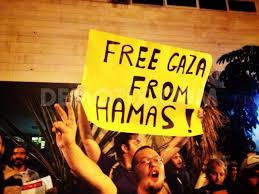

ze lo y’gamer im lo n’daber
This won’t stop if we don’t talk
It is probably unimaginable to think of Hamas and Israel actually talking civilly but getting to the negotiating table is the only answer. Here are some thoughts on doing that.
The above phrase in transliterated Hebrew is going around Israel. It means “this will not stop if we don’t talk” and it appears on protest signs, news stories, and casual conversation. It rhymes in Hebrew. Truer words have never been spoken. The issue is not how to talk to each other or what form those talks should take, the issue is getting to the table. All of our knowledge and skill at communication, dialogue and deliberation, is wasted and unavailable if you cannot get the two parties to the table. If Hamas or Israel insists that the other side must be destroyed or their incompatibilities are irreversible and there’s nothing to talk about, then the violence and conflict will simply continue.
At the moment I’m concerned about getting to the table. Essentially, this is the issue of “ripeness” which you can read more about here. Ripeness refers to the right time or the belief that the conditions are best for talking and solving problems. Right now no one would consider the time “ripe” for conflict management between Israel and Hamas for example. The time might be necessary or the most urgent given the violence but the situation is not ripe. “Ripeness” is a delicate matter because it is a little subjective and difficult to know when exactly is the “right time.” One can move too early, too late, too fast, or misjudge the other. Moreover, conflicts usually have more than one ripe time.
But I do not advocate sitting around waiting for the ripe moment. Participants in a conflict sometimes avoid ripe situations because they get more out of prolonging the conflict. Hamas always says it has “time on its side” because the status attributions it receives from war with Israel outweigh any benefits of negotiation and talk. One question becomes then how you create ripeness, how do you construct conditions that will increase the chances of bringing two sides to the table? Here are some strategies:
1. Third parties are always good sources of incentives. The Middle East has been most calm and in control when there is a significant international polity (the Ottoman Empire, the British Mandate, the United States,) that can provide incentives for talks. Actually, anytime a third-party is willing to intervene and try to mediate the conflict it is a good indication of ripeness.
2. The second strategy for getting people to the table, although a less pleasant one, is waiting until things are so bad that negotiation becomes attractive. As the saying goes, “sometimes things have to get worse before they can get better.”
3. Sometimes it’s possible to get people to the negotiating table by promising them more than they expect. Perhaps some symbolic recognition that was earlier denied, or a tangible resource.
4. New ways to be interdependent that benefit both sides are always strong strategies. Interdependence creates common interest and overlapping concerns and the two parties will talk if the reward possibilities are sufficient.
5. Pre-negotiations or “talking about talk.” Finally, it is sometimes useful to get the two parties to talk about how they would organize and develop dialogue or deliberation. Don’t engage in actual discussion and deliberation and do not term the conversation as official negotiation or discussion. But get the two parties together and have them imagine what the process would look like. This should move them closer to the actual experience of problem-solving deliberation.
Persuading the two parties to talk and find a way to negotiate a settlement – to get them to the table – is typically more difficult than constructing an actual settlement package. There are lots of solutions and proposals to end and contain the Israeli-Palestinian conflict. Many of them are understood and accepted by both parties and not very controversial. But none of this matters if the two parties do not talk.
Is This Editorial Cartoon Funny?
 People enjoy political cartoons. They make for fast iconic processing and cut to the quick of a point. This cartoon by Steve Bell is clearly cynical and anti-Israel. Its essential point is clear enough – that Israel values its own lives greater than that of the Palestinians. An even deeper and more cynical and insensitive interpretation would be that “only” three lives are considered more significant than all of the Palestinians.
But the cartoon does represent the mindset that characterizes the perception of Israel. On the one hand, any culture disproportionally prefers its own people and interpretations of its culture that are favorable. Why wouldn’t an Israeli, or an American, or member of any other culture be at least just a little biased towards its own people and political conditions? But this cartoon doesn’t state an obvious political reality; it’s not a simple statement of support and preference for one’s own that anyone can understand. No, it’s an indictment. It is a charge that Israel considers itself to be superior, that the lives of three teenagers (three coffins draped in an Israeli flag) are considered more important than all the Palestinian suffering.
Political cartoons that are rich in interpretive possibilities lend themselves to multiple issues and implications. This one not only accuses Israel of unfair and biased attitudes about human life but also speaks to the issues of moral superiority and moral equivalence. It accuses Israel of considering themselves to be morally superior, which is why the death of the three teens outweighs the Palestinian experience or the other side of the scale. And even though, as referred to above, this is common enough and true of any political culture in the hands of a cynical cartoonist it becomes an accusation. Moreover, as part of this bias towards one’s own group, there is the matter of moral equivalence or the belief that your own group is equally as justified as any other group. If the killing of the three teenagers was the act of a crazed individual (such as in the case of Baruch Goldstein) then that is different than it being a political act. But if Hamas for example consciously planned to kidnap and kill three Israeli kids coming home from school as part of a political statement, then an aggressive response is justified.
One of the most pernicious aspects of the Israeli-Palestinian conflict is the sense of moral equivalence on both sides. The Palestinians believe they are morally superior because more of them have died, and the Israelis believe they are morally superior because of their developed political culture as well as the conviction that they are a legitimately established state that is surrounded by enemies and simply defending themselves.
Research on political cartoons reports that cartoonists want to expose the system and encourage resistance. They clearly have an agenda, which is fine because that’s their job. But a persistent bias toward one issue is no different than any journalist engaging in conscious and systematic bias with respect to an issue. An editorial cartoonist is particularly adept at exposing hypocrisy and absurdity and these cartoon moments are powerful when there is a consensus recognizing hypocrisy and absurdity. But a cartoonist who simply hammers away portraying his or her own biased political perspective is little more than a journalist hack.
Political cartoons are naturally critical and typically have a sharp cutting-edge humor and insight to them. And this is why we enjoy them. If they subvert those in power and draw attention to the corruption of deep or sacred principles than editorial cartoons are powerful communication forces. A cartoon may not prompt revolution in the streets but it can be and should be oppositional in the most honorable sense. If we laugh or see ourselves in bitter recognition then the cartoon is successful. But propagating an indefensible cultural stereotype aimed at one culture and interpreting that culture through a single lens (the accusation of Israeli moral superiority in this case) moves beyond insightful cartoons into the realm of rank bias.
Evidence-Based Thinking is Necessary for Proper Deliberation
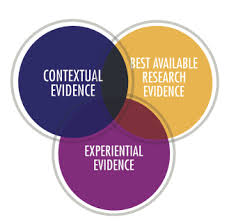
I have a sinking sense that schools don’t teach much “evidence-based thinking” anymore. They do teach critical thinking which is related but students are remarkably poor at defending propositions and recognizing thoughts and beliefs worth having. Although here is a blog site devoted to evidence-based thinking by two energetic young fellows. This spills over into the deliberative process because many citizens and political activists suffer from some of the same deficiencies. For some time now we have seen the diminution of the effects of Enlightenment thinking and science. From religious extremists to Tea Party members there’s plenty of anti-rationalist thinking and pseudo-intellectual discourse.
But things get worse. There is a clear disdain for logic and reasoning in some circles with many holding a toxic dependency on popular culture. This is not a particularly new phenomenon because Richard Hofstadter’s Anti-Intellectualism in American Life published in 1963 began to note the decline of the principled and evidentiary intellectual society and its replacement – the persuasion of single-minded people tenaciously holding onto a belief, opinion, or feeling and doing nothing but looking for support for that belief rather than its improvements, or accuracy, or truth value. I term this, the backside of evidence based thinking, confirmatory thinking in honor of the confirmation bias which is that people favor information that confirms what they already believe. But it gets worse. I count four ways that thinking is deficient because it is not evidence-based.
The difference between coincidence and causality is sometimes not completely clear but important to understand. Those who oppose vaccinations believe that all drugs have negative effects and any new vaccination would be the same thereby confirming their depreciated knowledge about medicine. They hold a mistrust of government and consequently any government program – even a highly evidence-based program that saves children’s lives – is rejected. A consistency of their own belief is more important than the evidence that supports the value of vaccinations.
A second sign of diminished capacity for evidence is simply how science and methods for making decisions work. The past and knowledge is strewn with failures and disappointments. Even when studies are unsuccessful and wrongheaded they make for a certain amount of information that is still of scientific value. It is comparable to the quip attributed to Edison that after he failed 200 times to make a light bulb he was not frustrated because he learned 200 ways not to make a light bulb. Evidence-based thinking requires developmental and evolutionary attitudes towards the unfolding of better and more precise information. Even though information can be wrong and lead you down wasteful paths, these paths are part of the process.
Basic misunderstanding of the logic of research is also a third issue. I’m not talking about standard logic or sophisticated mathematics but about basic principles of research and conclusions based on quantitative data. What it means for something to have a mean (average) and variation around the mean. Or, to have a sense of why and how numbers are influenced and change over time. This would include the logic of the experiment and the quality of conclusions when conditions are controlled and only a single experimental factor could have caused variation.
Lastly, one of the easiest ways to never get out of your own head and to hold fast to wrongheaded beliefs is to dispute, challenge, and dismiss those who are credible; in other words, to care more about maintaining your own consistency by rejecting experts and those more knowledgeable. We cannot all be experts on scientific and political matters so we must often rely on the expertise of others. And even though challenging and checking on the credentials of others to ensure source reliability is an important critical stance, this is not the same as knee-jerk rejection of experts. It seems as if those on the conservative end of the spectrum are quick to label all sorts of science as biased against the environment, or the climate, or finance because they inherently mistrust the source of any information and easily gravitate toward rejecting inconsistency with their own ideas then truly exploring and integrating new information.
There are all sorts of ways to distort information or disengage from it. And even the most conscientious thinker allows biases to creep in. But the attitude and willingness to engage, integrate new information on the basis of sound evidentiary principles, and change as a result of this evidence is what makes for more rigorous thinking.
Hamas and Fatah Unity: The Theory of Contamination at Work

The unity and reconciliation agreement between Fatah and Hamas holds promise for the future. Clearly, we have to take a wait-and-see attitude. But I consider it potentially a turning point in the relationship between Israelis and Palestinians. Many Israelis reacted negatively to the news and quickly assumed that Hamas would dominate. But let’s consider a few issues.
Hamas and the Theory of Contamination
The argument that this reconciliation will result in something positive is based on the assumption that the PLA will moderate Hamas rather than Hamas “contaminating” the PLA. The theory of contamination is based on the theory of disgust. Briefly, disgust is an evolutionary emotion probably related to knowing what to eat and avoiding food that is bad or contaminated. We always assume that contamination passes from the dirty to the clean and therefore “contaminates” the clean. If I drop a piece of food on the floor, the dirty floor contaminates the clean food. Nobody assumes that cleanliness passes to the dirty and purifies it; the “clean” food does not pass to the dirty floor and make it cleaner.
And so it is psychologically. Things that are considered dirty, harmful, or just plain “bad” are always assumed to contaminate the “good.” A racist will consider his or her neighborhood “contaminated” if a member of an undesirable minority group moves in. Most people assume that Hamas will “contaminate” the PLA. But in the realm of human interaction, in the socio-symbolic world, it is possible to avoid contamination and have influence move in the other direction. The normal theory of contamination would clearly have Hamas contaminating the PLA and making matters worse between Israelis and Palestinians.
But the extension of theories of contamination and disgust into the social world has its limits. It is not inevitable that desirable social processes be contaminated; in fact, contamination as a psychological construct is culturally created. It was learned, and that means it can be unlearned. Let’s hope the PLA can withstand the normal flow of contamination and have a positive influence on the culture of Hamas.
First, a united Palestinian people are going to be more responsive to the peace process. Did anyone ever really think the peace process would be successful with Hamas and Fatah separated and in conflict with one another? Did anyone ever really think a solution to the conflict would include a separate West Bank and Gaza, under separate political entities? The unity of Hamas and Fatah was inevitable. This will be especially true if the two groups unite on some fundamental issues regarding the peace process and international recognition. The United Nations and European Union welcomed the efforts toward reconciliation and the possibility for new dialogue.
Everybody with an opinion on this matter could turn out to be wrong. Two possibilities bound the ends of the continuum. The worst-case scenario is Hamas overtaking the PLA and the government and security services. Hamas maintains its rigidity and continues to call for the destruction of Israel. Hezbollah continues to prosper in Lebanon and the Islamic Brotherhood gains a stronger foothold and provides support for a Hamas driven Palestinian Authority. This scenario will guarantee war, not peace.
The best case scenario, and the one that I think is most likely, is that Hamas is moderated by the PLA and becomes more normally integrated into a Palestinian governing body that realizes the need for certain practicalities. The new Palestinian unity government gains credibility and brings a fresh voice to the peace process. It will take some time for the Palestinian unity government to prove itself to the Israelis. Netanyahu will not go gently into a relationship with Hamas. The Israelis and PLA currently share certain security responsibilities, and it’s hard to imagine continuing this shared security relationship with Hamas. But a Fatah Hamas reconciliation is necessary to a successful peace process. It solves the problem of Israel needing someone to talk to who represents all of the Palestinians.
Hamas is an Islamic militant group and Fatah is a secularist party. The two groups have always opposed one another with respect to tactics and their relationship to Israel. They have separate security systems and there are plenty of stories of Palestinians who are arrested one day by the PLA and the next day by Hamas. But the unity arrangement will strengthen the Palestinians in their quest for a Palestinian state – not two states (Gaza and the West Bank) but one state. This unity agreement could be a new era for the Palestinians.
According to some analysts, it was Hamas who made most of the concessions that enabled the unity agreement. They are perceived as weak and known to have difficulty carrying out legitimate elections. The reconciliation between Hamas and the PLA will present a unified stance for the Palestinians. There is a clever sleight-of-hand operating here also. The United Nations will undoubtedly support a Palestinian state and this will confer legitimacy on Hamas. Hamas will go from a militant Islamist party steeped in violence with extreme political attitudes that are unsustainable in any context, to an internationally recognized political operation that represents the Palestinian people. Although there is an irony to this, it does pressure Hamas to yield to international demands.
The United States and Israel should see this reconciliation as an opportunity. Hopefully, talks can continue and Hamas will find itself in a situation where it must cooperate and engage with United States and Israel. This will include stronger pressures on Hamas to maintain cease fires, eliminate rocket attacks into Israel, and control violence. There’s a good chance that any resultant political platform will be more consistent with the PLA than Hamas. The hope is that Hamas will not contaminate the PLA, but the influence will run in the other direction.
Revised slightly from May 8, 2011.
How Many More Decades Do We Have To Watch This Silly Shuttle Diplomacy between Israel and Palestinians? It doesn’t work!
How much longer do we have to watch an American diplomat shuttle back and forth between Israel and some neighboring country? From Henry Kissinger in the 1970s to John Kerry it’s all the same process. The tennis match image comes to mind and I would use it if it were not such a cliché. I’m increasingly coming to the conclusion that it’s all pointless and that comes from somebody who believes in talk. Even though I recognize that talk is slow and there’s nothing magical about it, there comes a point when you have to ask yourself whether it’s all worth it.

When talk fails it is usually for one or a combination of three reasons. One, it’s the wrong kind of talk. Two, the wrong people are talking, or three the structural conditions are interfering. All three are at work in the Israel-Palestine shuttle diplomacy. It’s the wrong kind of talk because the two sides are unprepared to have serious political conversations when they need more authentic mutuality. The wrong people are talking because there should be more conversational work at the civil society and interpersonal levels. The structural conditions could be improved to increase democratic forms of communication, inclusion, and more creative and grassroots routes to problem-solving.
Palestinian supporters often boldly claim that resolving the Israel-Palestine conflict is the key to bringing greater peace to the region and although this is an exaggeration supporters have been successful at turning the conflict into the symbolic prototype for all the world’s problems. I think about the ugliness in Syria, the savagery of militant groups, rising religious authoritarianism, escalating economic inequality, Iran and the spread of nuclear weapons, and then discover that serious people in Washington want to talk about West Bank Palestinians!
Of course the conflict must be resolved or at least managed into agreement. But the biggest beneficiary of any resolution is going to be Israel. How long can Israel continue to occupy the West Bank? How long can it remain a security state? How long can Israel maintain its successful democracy and market economy if it has to oversee 2 million Palestinians?
There will not be peace between Israelis and Palestinians – real peace when barriers can be removed – until it emerges from democratic impulses born in civil society. When Palestinians demand more of their own rights from their own leadership they will be in the position to demand rights from Israel. America should be supporting Palestinian political infrastructure by working on the economy, improving governance and civil liberties, and expanding business practices that can rationalize relationships and serve as a foundation for future democratic relationships. But the conflict remains intractable and diplomats like Kerry are operating at the wrong levels.
Muslims and the Jews tell two different stories both of which are fueled by media and policy decisions. Israel tells a story of historical oppression and discrimination culminating in the Holocaust and the creation of the state of Israel. Jews feel vulnerable and threatened. Muslims feel disrespected by the West and the victims of media biases that portray them as fundamentalist and inherently backward, not to mention violent and religiously extreme.
These narratives produce tensions between Islam and the West and are decisive. They make for a cultural divide which results in polarization of identity issues, adversarial framing of historical matters, and rejection of any sense of shared responsibility for conflict. US policy and world media circulate these images and messages to the detriment of any sense of complementarity between the two.
In my opinion, there are two things that can happen: the differences between these stories can be emphasized, which will lead to increased intensification leaving the disputants to be trapped inside their own threatened identity. And the macro level of official contact will continue to founder. Or, these narratives can be reframed in order to seek points of convergence where it is possible to formulate cooperation and mutual affinities that direct them away from a “conflict-saturated” reality. Rather than rival narratives, Jews and Muslims can avoid the drift toward polarization and begin to tell a new story, one that affirms a distinctive identity while acknowledging the “other.” I choose this direction.
Language And Its Power
Language certainly has the power to direct you towards pre-selected portions of reality. It makes it possible for false comparisons and confusion over categories of meaning. For example, there is a common statement that circulates in the public that is not only a facile generality but dangerous. If you actually believe this statement, if you are ensnared by its rhetorical trickery and literally accept the two propositions as being equal, then it reveals you as a less than rigorous thinker who cannot recognize or make important distinctions. If you accept the equivalence of the two propositions you are likely to put yourself and others in danger by being paralyzed with an inability to act and justify definitional clarity that allows for clear decision-making. The dangerous cliché I’m talking about is:
One man’s terrorist is another man’s freedom fighter.
If you believe this then Osama bin Laden and Al Qaeda are the same as what might be considered a defensible national liberation movement. The semantic foundation of the cliché implies that nothing matters except perspective. It’s a cliché championed by terrorists because they want to present their own causes as positive and justified. And the logical extension of this thinking is that no violent act can be too odious because it is all in the service of national liberation. Terrorists love this phrase because it blurs the distinction between goals and the means to achieve the goals, when in fact no political movement can serve as a justification for terrorism.
This cliché cannot stand and we need more political leaders and public intellectuals to condemn it. There needs to be public discussion and argument. Freedom fighters who are truly struggling against oppression do not kill innocent people and sow panic and confusion – murderers do. Why would the democracies and liberal political regimes around the world allow the word “freedom” to be used in this way? Terrorists do not bring freedom they carry fear and oppression. The best reading on this is by Boaz Ganor and can be found here. It is crucial to make the distinction between terrorism and national liberation.
Let’s try to be a little clearer about terrorism. As Ganor describes, terror is (1) violent. Peaceful protests and demonstrations are not terrorism. Terrorism is (2) political. Violence without politics is simply criminal behavior. And (3) terrorism is against civilians with the goal of creating fear and confusion. It mixes with the media to produce anxiety. So what is not terrorism? Terrorism is not accidental collateral damage when the original target is military. Using citizens as shields places the onus of responsibility on those manipulating the citizenry, not those who initiated the attack if it was against a military target. It is also important to recognize those situations where targets of violence are clearly military and uniformed soldiers. Using guerrilla tactics does not necessarily mean terrorism.
It is important, too, that motives be taken into consideration. The real thorny problem is the idea that any form of national liberation – believed sincerely by a presumably oppressed group – justifies violence that is not considered terrorism. This perpetuates the dangerous relativism of the cliché. The hard mental work of distinguishing terrorism from other forms of violence is important if we are going to pass legislation to protect the public, have effective international cooperation, and assist those states struggling with terrorism.
If enough people genuinely accept this relativist cliché then all bets are off. Any sort of violence can be justified and the international community will have a collective shrug of its shoulders essentially saying, “who cares” because someone considers the violent group “freedom fighters” wrapped in vacuous rhetoric designed to justify violence. As difficult as it is to fashion a precise definition of terrorism, it is equally as difficult to imagine accepting Al Qaeda and jihadist attacks against the United States as the work of “freedom fighters.”
Are You Offended by This Picture?
Are you offended by the picture below? Perhaps not but many people are. It violates a variety of moral foundations with respect to the interpretation of political messages (see a review here).

The photo is of an American soldier hugging a Muslim woman in a niqab. It is an actual ad inspired by a real couple. At first glance it looks like a political statement with respect to American forces and their concern for local citizens in Iraq or Afghanistan. But the billboard is an ad for a throat spray that is supposed to help people stop snoring and thus keep them “together.” The ad does successfully pass the first rule of advertising which is to capture attention. But for some people this togetherness is too soon after 9/11, and for others it is shoving political correctness down our throats. Others find the ad endearing.
Some research did reveal that the soldier is real and one question that can be asked is why is an American soldier in uniform doing an ad for a commercial company? Well, that’s a good question but not what I’m interested in. It’s more interesting to examine the various responses to the ad and why some find it loving and inclusive and others distasteful and offensive. How you respond seems to be a matter of what sort of moral issues you are concerned with.
Jonathan Haidt of course in his book Moral Foundations Theory (http://righteousmind.com) has explained how liberals and conservatives differ with respect to which moral systems they respond to. Haidt identifies six moral foundations and they are briefly: care/harm, liberty/suppression, fairness/cheating, loyalty/betrayal, authority/subversion, and sanctity/degradation. I won’t elaborate on them all for space considerations but a few insights are worthy.
The care/harm distinction evolved from the need to care for children and is now stimulated by messages about suffering in distress. Compassion is a strong emotion here. For conservatives, however, that compassion is more associated with members of your own group than an outgroup. Conservatives are more likely to help members of an ingroup rather than an outgroup. For liberals, care and compassion are more universal and might be triggered by anyone suffering. There is a subtle element of this in the photograph as the soldier seems to be caring for the woman. Liberals who are more responsive to universal care are more likely to accept the photograph and find it less troublesome.
The sanctity/degradation continuum is also particularly important to those with a conservative ideology. Early in our evolutionary history there was a survival advantage to avoiding human waste, decaying food, and health threats of all types. Haidt argues that many objects as a consequence became sacred and we wanted to protect them against desecration, thus setting into motion “sacred” images, flags, and words. American conservatives tend to bestow sanctity quite easily on objects such as flags, ideologies such as capitalism, and desecration on the other things such as homosexuality and foreign objects. The image of the Muslim has become contaminated and clearly by many with strong conservative ideologies seen as a threat and something to be avoided. The most conservative viewers of the photograph are the most “put off” because they see the sanctity of the American soldier being degraded by contact with an impure other.
We respond to things not only according to our economic interests our moral ones. The argument that we have evolved these moral standards over time and as a result of evolutionary needs does seem to be defensible enough. A few of these moral standards such as “caring,” “fairness,” and “sanctity,” are clearly the divides that separate moral reasoning. A strong liberal will be more supportive of using government to level the playing field and achieve a sense of fairness; whereas, a conservative who is consistent with conservative values will defend traditions and infuse some objects and ideas with “sanctity.”
The soldier in the photograph is more sanctified than the woman and that’s why we immediately perceive his threat and express suspicion about her. So what you see and how you interpreted is certainly not an objective processing of an image, but an interpretive act that includes the interaction of your political predispositions with the object of interest.
Learning How to Talk to People
The polarization that currently characterizes the American political environment, and is graphically depicted above, is a consequence of the degeneration of political relationships. Political friendships treat opponents as respectful adversaries, not enemies, that have common interests in problem resolution as much as anything else. The issue sophistication that comes with political relationships is quite compatible with the ability to sustain “reasonable disagreement.” Solving political and ethnopolitical conflicts involves initiating the two conflicting groups into the larger cultural conversation, where the understanding is that the conversation is about the relationship between the two groups. This involves creating a relationship where members of each group understand that they must engage in reasonable discourse, accept the burdens of justification, and reject illiberal attitudes and behaviors. Another way to think about it is as a network of weak ties. Weak ties are important forms of relationships that are more casual friendships or work relationships (e.g., acquaintance or coworkers) and engage in less intimate exchanges and share fewer types of information and support than those who report stronger relationships. Strong ties include in their exchanges a higher level of intimacy, more self disclosure, emotional as well as instrumental exchanges, reciprocity in exchanges, and more frequent interaction. We have fewer strong ties and they are more important to our personal lives. Facebook and electronic contacts create numerous weak ties that serve important functions.
What Danielle Allen (2004), in her book “Talking to Strangers”, describes as “political friendship” is a sort of important weak tie. This is the sort of friendship that goes beyond the close relationships we have with family members and intimates. Political friendship is a set of practices and habits used to solve problems and bridge difficult differences. Emotional attachment to the other is less important than the realization of interdependence and the need for practical problem resolution. This form of a communicative relationship serves as a useful outlet for conflict resolution, and allows minority groups in multicultural societies to establish mature relationships with the dominant group.
The concept of political friendship is important and deserving of some elaboration. It is necessary to develop a healthy path to the resolution and reconciliation of group conflicts in order to provide either citizens or members of competing groups with political and interpersonal agency. The idea of political friendship is particularly associated with citizenship which is not necessarily a matter of civic duties but a communicative role that values negotiation and reciprocity. It is an excellent relationship to cultivate between members of different cultural and political groups because it is based more on trust than self-interest. Political friendship recognizes self-interest but develops a relationship that rests on equitable self-interest; that is, a relationship where each attends to the utilitarian needs of the other. As Allen (2004) writes, “Equity entails, above all else and as in friendship a habit of attention by which citizens are attuned to the balances and imbalances in what citizens are giving up for each other.” (p. 134). Political friendship is less concerned with intimacy because intimacy is reserved for relatively few relationships that are more absorbing and based on sacrifice and strong identity with the other. But utilitarian political relationships can apply to large numbers of people and is focused on the pragmatics of problem solving or resource gratification. Parent-child, ruler and ruled, or superior- subordinate relationships are not political relationships because they limit the autonomy and agency of one person (the child, ruled, or subordinate) and are based on maximization of differences. In short, the political friendship relationship is central to the problems associated with multicultural contact and the ability of groups to develop their capacities for trust and communication. As Allen (2004) points out, we have to teach people how to “talk to strangers.”
It is necessary to identify some conditions of political friendship. These are habits of communication that facilitate the relationship. They include recognizing and publicly acknowledging groups and their differences as well as promoting deliberative environments and intelligent judgment. Many of these communication behaviors require exceptional sensitivity and tolerance. Recognizing a group, for example, that is less talkative or more remote from Western habits of thinking and either accepting the differences or trying to meld cultural norms is difficult. So minority groups simply need to learn communication skills most associated with success depending on the nature of the dominant culture. Diverse groups must understand their problems as “public” problems. Under the best conditions different groups will have secure knowledge of each other and a similar level of understanding about what is occurring between them.



 Peace and Conflict Politics